

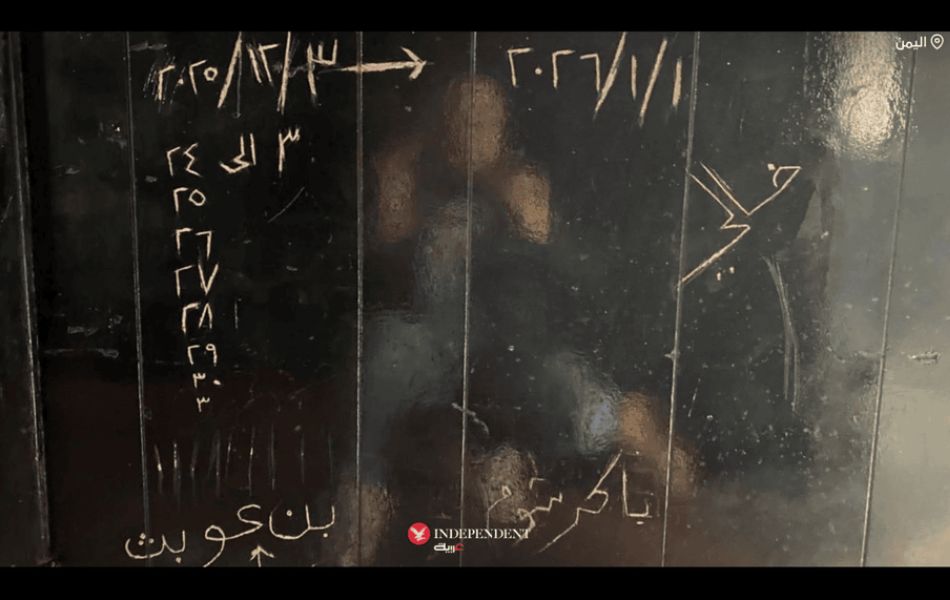
Violations in Detention in Areas Formerly Controlled by the Southern Transitional Council
Since the outbreak of the conflict in Yemen, human rights reports, media coverage, and testimonies from survivors and their families have referred to the existence of unofficial detention facilities in areas in the south of Yemen, particularly in governorates controlled by armed groups affiliated with the Southern Transitional Council (STC) and forces supported by the United Arab Emirates (UAE). From 2015 to 2025, reports have detailed repeated allegations of arbitrary detention, enforced disappearance, detention outside the judicial framework and torture within these facilities.
In 2016, the city of Aden experienced a significant deterioration in its security environment including a wave of attacks and assassinations. Authorities deployed widespread checkpoints, fortified barriers, and intensified security measures. During the same period, the Security Belt Forces began conducting raids and arrest campaigns, detaining and deporting hundreds of individuals from northern governorates. Since then, areas under the control of the STC in Yemen, particularly Aden, have experienced a security environment characterized by an overlap between formal counterterrorism operations, and extrajudicial detentions and abuses carried out under the pretext of maintaining security. These abuses have reportedly included regional discrimination, and forced deportations conducted outside of judicial authority.
In June 2017, Associated Press reported on the existence of unlawful detention facilities operated by UAE-backed forces in the south of Yemen, where former detainees described enforced disappearance, detention without judicial orders, and torture. AP reported that approximately 2,000 individuals had disappeared within secret detention facilities in areas under the control of the STC, a figure which likely increased in recent years though Yemeni Archive was unable to identify a more recent comprehensive estimate.
As the influence of UAE-backed forces expanded following the 2017 establishment of the STC, with those forces imposing security measures in areas under their control, secret detention facilities and detention outside judicial oversight emerged as prominent human rights concerns. This trend reportedly extended to Socotra Island, where armed elements affiliated with the STC carried out arrest campaigns targeting local officials and activists.
In this investigation, Yemeni Archive and SAM Organization for Rights and Liberties (SAM) review open-source information on violations associated with arbitrary detention campaigns in areas that were under the control of the STC, with a focus on specific detention facilities that were repeatedly referenced in human rights reports, media coverage, and testimonies. The investigation also examines a number of names mentioned in open-sources as entities or individuals allegedly responsible for these violations. This investigation forms part of a broader series by Yemeni Archive examining patterns of arrest and detention across areas controlled by different actors, with the aim of providing a broader understanding of the varying contexts of these practices across conflict-affected areas, and preserving related digital evidence.
This investigation contains graphic visual and written content, including descriptions of individuals killed and references to torture methods, as well as visuals of injured and deceased persons. Sources containing graphic audiovisual or written material may be redacted or accompanied by warning notices. To request access to an unredacted version, please email us at: requests@yemeniarchive.org.
In collaboration with SAM, Yemeni Archive conducted this investigation using a multi-stage open-source research approach, which included:
Collecting, preserving, and analyzing 366 digital records of which 195 were cited in this report, including visual materials, reports published on news websites and social media platforms, and reports issued by local and international organizations.
Geolocating selected detention sites using available online materials.
Systematically reviewing allegations related to arrests and detention, and analyzing the actors reportedly responsible.
Verifying information by cross-referencing official reports, testimonies from survivors and their families, and accounts shared by activists on social media, checking for consistency across multiple independent sources.
For more information about Yemeni Archive’s research methodology, please visit our website.
In mid-June 2015, coordinated southern resistance forces’ ground offensives, backed by a Saudi- and UAE-led coalition air campaign, led to the withdrawal of Ansar Allah (Houthi) and allied forces from their remaining positions in Aden, including the airport, the port, and various urban districts. The Internationally Recognized Government (IRG) then announced the full liberation of Aden.
The STC was formally established on 4 May 2017, as a political body with a secessionist orientation, following months of escalating political and security tensions in Aden. Its formation came in direct response to a decree issued on 27 April 2017 by IRG President Abdrabbuh Mansur Hadi, dismissing Aidarous Qassem al-Zubaidi from his post as governor of Aden and Hani bin Breik from his position as Minister of State. Those decisions sparked large-scale protests in Aden in early May 2017, with demonstrators calling for a southern leadership that would represent the aspirations of Southerners.
The council’s leadership structure includes a number of governors, local officials, and military figures from governorates in the south of Yemen, particularly those that were part of the former state of South Yemen. In April 2020, the STC declared a state of emergency and announced self-administration in the south of Yemen. A July 2020 statement by the IRG, however, rejected these claims, describing the STC’s declaration of “self-administration” as a rebellion and a violation of the Riyadh Agreement, which threatened the country’s unity.
Structurally, the STC emerged as the most influential actor within the broader Southern Movement, though it was not the only component. According to the German Institute for Global and Area Studies (GIGA), the council received substantial military and financial backing from the United Arab Emirates, including support for the formation of the Security Belt Forces and other military units operating outside the formal structure of Yemen’s Ministry of Defense. This support has provided the STC with a significant military arm, enabling it to consolidate control across Aden and other governorates in the south of Yemen. In contrast, Saudi Arabia has sought, through the Riyadh Agreement and subsequent efforts, to integrate STC-affiliated forces into formal state institutions, to curb the council’s autonomous military power and rebalance authority in the south of Yemen.
According to the Arab Center Washington DC, the relationship between the STC and the IRG was described as problematic, due to accumulated southern grievances following unification and the 1994 war. These tensions deepened after 2015, particularly amid the government’s inability to provide basic services in Aden in 2018, and the clashes of 2019. In April 2022, the STC and the IRG were brought together under a single Presidential Leadership Council, creating a temporary pragmatic arrangement in which the project of “restoring a southern state” coexisted with the frameworks of internationally recognized “legitimacy.” At this time, news reports indicated that the relationship was characterized by cooperation, with both parties participating in joint security and political arrangements.
During this period, three main armed actors came to dominate the security landscape in Aden. Among them, the Security Belt Forces emerged as one of the most prominent in terms of reach and influence and the core of the STC’s security apparatus, controlling the city’s land, sea, and air entry points, with operations extending into the governorates of al-Dhalea, Abyan, and Lahj. According to a report by Defense Line, these forces were established in 2015 with Emirati support and were later incorporated under the umbrella of the STC, maintaining an organizational structure independent from Yemen’s IRG Ministry of Interior, operating through parallel command but alongside formal state institutions. Brigadier Mohsen Abdullah al-Wali reportedly assumed command of the Security Belt Forces in 2020 as part of UAE-backed security arrangements. In January 2026, the Security Belt Forces were rebranded as the National Security Forces, accompanied by a change in insignia. This shift coincided with broader efforts to restructure certain security formations within the framework of the Ministry of Interior under the IRG. This rebranding came in the aftermath of the December 2025–January 2026 clashes.

Screenshot from the Defense Line website showing the changes to the Security Belt Forces logo over the past years. The image was captured by Yemeni Archive on 18 March 2026.
The second force was Aden Security, one of the official security bodies affiliated with the Ministry of Interior in the IRG. In 2015, Major General Shalal Ali Shaye was appointed Director of Aden Security as part of efforts to reorganize the security apparatus during that period. The mandate of Aden Security included carrying out counterterrorism operations, which later evolved into more specialized units. Over time, these functions developed further, leading to the establishment of an independent counterterrorism agency, with Shalal Shaye appointed as its head in January 2024. With the rise of STC influence, particularly after the events of August 2019 that resulted in its control over Aden, the relationship between Aden Security and STC underwent notable shifts, with both coordination and overlap in certain security areas including counterterrorism operations; alongside periods of tension and competition over influence.
The third force was the Hadrami Elite Forces, established in 2016 with support from the UAE. These forces were deployed in Hadramout Governorate, particularly in the city of Mukalla, as part of security arrangements aimed at confronting armed groups and strengthening local control. They were linked to local leadership figures, including Faraj Salmin al Bahsani, who previously served as commander of the Second Military Region and governor of Hadramout. Later, the Shabwani Elite Forces were established in Shabwa Governorate with support from the UAE, which played a central role in their training and development. The Forces assumed security and counterterrorism responsibilities across several districts in the governorate and operated as part of a broader network of UAE-backed local security formations. According to Amnesty International, these forces were also linked to the management of detention facilities in areas under their control, including sites in Mukalla and Shabwa, where allegations of arbitrary detention and abuses were documented.
An additional armed actor, the Giants Brigades, were a military formation that emerged after 2015 from fighters with Salafi affiliations, and played a prominent role in military operations along Yemen’s western coast, particularly during the battles of Bab al-Mandab and Mokha. Media reports indicate that these forces received support from the coalition, particularly the UAE, and were led by Abdulrahman al-Mahrami (Abu Zara’a), who later became a member of the Presidential Leadership Council. As of early 2026, the Giants Brigades remained an active force and were redeployed in security roles.
Decline and Restructuring of the STC
Reporting suggests that following the December 2025 / January 2026 clashes, security formations affiliated with the STC, including the Security Belt Forces and the Giants Brigades, continued to operate on the ground while undergoing attempts at restructuring and integration into state institutions. In 2026, these formations witnessed organizational changes, including the renaming of some units as part of new security arrangements in Aden. The Giants Brigades assumed security responsibilities in the city following the withdrawal of STC-affiliated forces, including securing key sites such as Ma’ashiq Palace and the Central Bank, as part of a broader redistribution of influence.

Illustrative diagram of the main forces that were affiliated with the STC. Image designed by Yemeni Archive.
During January 2026 the STC experienced unprecedented political and military decline, amid escalating tensions with the IRG and growing divisions within the regional coalition supporting it. Following attempts at military expansion across a number of governorates in the south of Yemen in December 2025, the council faced setbacks on the ground and increasing political pressure including from Saudi Arabia. This was followed by the withdrawal of its leadership from Yemen and a rise in internal divisions within its organizational structure. In early 2026, steps were announced to restructure the council and reduce its institutional presence as part of Saudi-led arrangements aimed at reconfiguring the balance of power in the south of Yemen, in preparation for a broader negotiation track within efforts toward a comprehensive political settlement in Yemen. These developments reflect the fragility of the council’s political structure; its structural dependence on external support; and its shift from a dominant actor in the south of Yemen to a party subject to regional and international recalibration within the ongoing Yemeni conflict.
United Arab Emirates’ Direct Involvement
In addition to supporting the STC and affiliated armed groups, the UAE also participated directly in the conflict. Upon joining the military coalition in Yemen in 2015, the UAE stated that its participation aimed to support the IRG, achieve stability, and contribute to counterterrorism efforts. Despite this stated position, the following years witnessed incidents in which Emirati aircraft carried out airstrikes targeting units of the Yemeni army and forces aligned with the IRG, particularly in southern areas. Among the most notable of these incidents were the strikes that took place in Aden in August 2019, which resulted in dozens of government soldiers being killed and injured. The UAE justified these strikes at the time as a response to what it described as threats from “extremist groups” within the targeted forces. On 30 December 2025, the UAE announced the withdrawal of its remaining counterterrorism teams from Yemen, citing a review of the security situation and operational requirements.
Based on media reports and content circulated on social media, certain patterns of violations during detention appear repeatedly in areas under the control of STC forces. These include detention outside judicial oversight and without clear legal warrants; enforced disappearance through the transfer of detainees to facilities not subject to prosecutorial supervision; and denial of visits and communication with families. Reports also point to ill-treatment and torture during interrogation, as well as medical neglect, which exacerbates the physical and psychological risks faced by detainees and undermines any guarantees of due process.
Night raids and home intrusions
Media and human rights documenters have reported a pattern of night raids on homes. These operations were reportedly carried out by armed forces and, according to reports by SAM Organization and Human Rights Watch, included acts described as intimidation targeting residents, such as firing weapons in residential areas. The reports claimed that these raids were accompanied by verbal and physical assaults against women, looting of personal belongings, and the use of force during arrest operations. Amnesty International also reported that witnesses described masked individuals who did not identify themselves and used excessive force during such raids.
Detentions at checkpoints and abduction of civilians from streets
Human rights organisations documented testimonies that point to a recurring pattern of arbitrary detention at security checkpoints across several governorates in the south of Yemen, particularly in Aden, Shabwa, and Hadramout. This included major checkpoints such as Al Alam checkpoint at the eastern entrance of Aden; checkpoints operated by the Hadrami Elite Forces in Hadramout; and Security Belt checkpoints spread across the outskirts of Hadramout.
According to these testimonies and open-source information, detention practices were not limited to checkpoints, but also included the abduction of civilians directly from the streets, particularly in Aden city. Reported cases frequently involved targeting travelers arriving from other governorates, or individuals on their way to or returning from Seiyun Airport or Aden Airport.
Detention outside the judicial framework
open-source information indicates that detentions in areas under the control of STC forces were, in many cases, conducted outside of any judicial process. This included the absence of formal arrest warrants, failure to bring charges, and denial of access to legal counsel or appearance before a judge. According to a detainee’s lawyer via Human Rights Watch, prosecutors had received orders from the STC and UAE officials not to release a client. Detainees were reportedly held for extended periods in facilities affiliated with the Security Belt Forces without being referred to prosecutors or the judiciary, and without access to legal assistance.
Targeting of specific social and political groups
Human rights sources and documented testimonies point to a recurring pattern of targeted arrests affecting specific social and political groups. These included lawyers, journalists, and political activists known for their criticism of the STC or the Emirati presence, as well as individuals politically affiliated with Al-Islah (Yemeni Congregation for Reform) Party.
open-source materials including published interviews indicate that detention facilities in STC-controlled areas were characterized by harsh conditions, including severe overcrowding, lack of basic hygiene, and inadequate medical care. Sources reported that detainees were held in narrow cells, with limited access to water, food and healthcare, leading to the spread of disease and deterioration of health conditions. Interviews also documented the systematic use of physical and psychological torture, as well as prolonged isolation and denial of communication with families or the outside world. Overall the available sources portray a detention environment marked by humiliation and the absence of basic humanitarian guarantees.

Two images pubished by Insan Organization (hyperlink removed for privacy of vulnerable person, but materials archived and available on request) reportedly showing signs of physical torture sustained by a detainee following their arrest at a checkpoint affiliated with the STC in Abyan Governorate. Captured by SAM on 2 February 2026.

Image (hyperlink removed for privacy of vulnerable person, but materials archived and available on request) reportedly showing signs of physical torture on the back of a detainee, allegedly sustained following their abduction by an unspecified Aden security force. Captured by SAM on 2 February 2026.
Image (hyperlink removed for privacy of vulnerable person, but materials archived and available on request) posted by journalist Adel al Hassani reportedly showing signs of physical torture on the back of a detainee, allegedly sustained while held in secret detention facilities in the city of Aden. Captured by SAM on 3 February 2026.
Since the outbreak of the conflict and the expansion of influence by military and security actors across governorates in the south of Yemen, multiple human rights and media reports have described a network of unofficial detention facilities operating outside the judicial framework, associated with allegations of arbitrary detention, enforced disappearance, torture, and other ill-treatment.
This is a longstanding issue: in June 2017 Human Rights Watch documented the existence of 11 unofficial detention sites in Aden and Hadramout Governorates - including six sites within the city of Aden alone. Also in June 2017 Associated Press published a report referring to a widespread informal detention network in the south of Yemen, where hundreds of individuals were believed to have been held in at least 18 detention sites operated or overseen by local forces supported by the UAE. More recent data from the Abductees' Mothers Association indicates that there are up to 15 illegal detention sites likely located in the city of Aden as of January 2026.
In light of the large number of sites referenced, Yemeni Archive and SAM, in this investigation, focused on three specific detention facilities: Waddah Hall detention site in Aden,and the detention facilities at Al Rayan Airport and Al Dhabba oil facility in Hadramout Governorate.
The selection of these three sites is based on several considerations, including the volume of testimonies and open-source material associated with them; their repeated mention in reports by international and local human rights organizations; and the availability of visual and geospatial information that supports their identification and analysis within an open-source investigation methodology. These sites also represent different types of unofficial detention facilities in terms of their nature as locations - a former civilian building, a military site, and a strategic economic facility - allowing for a broader understanding of how diverse sites have been used as detention centers outside the legal framework during the years of conflict.
Based on a report by Mwatana, Yemeni Archive identified the Waddah Hall detention site as located adjacent to STC headquarters and Aden Independent Channel (a satellite media channel affiliated with the STC), within the Counter Terrorism Camp in Al Tawahi district (Gold Mohur), Aden. The building was originally a venue used for public events and celebrations, and was converted into an unofficial detention facility in 2016 following the expansion of influence by STC-affiliated security formations, according to Cairo Institute for Human Rights Studies and Abductees' Mothers Association. According to Mwatana for Human Rights, Waddah Hall detention site consists of two halls located below ground level, and several rooms that were used as solitary confinement cells.
According to testimonies from survivors and reports by organizations including SAM, Abductees’ Mothers Association, and Cairo Institute, the facility was implicated in cases of severe torture, including beatings, electric shocks, prolonged sleep deprivation, sexual threats, nail removal, and suspension by the feet. Mwatana documented the detention of at least 51 individuals in this facility, of whom at least 21 were reportedly subjected to severe forms of physical and psychological torture. Mwatana also recorded at least 37 cases of lengthy enforced disappearance involving individuals transferred to this site. Testimonies from several former detainees indicate that some individuals who died inside the facility were buried within the compound itself, rather than having their bodies transferred outside or returned to their families. Journalist Adel al Hassani published a widely circulated video (warning: graphic video) showing a body claimed to be floating in the waters of the Gulf of Aden, tied with a rope and appearing to be weighted at the feet. He claimed that the body was found near Waddah Hall detention site, suggesting it may belong to a detainee who died inside the facility. Yemeni Archive could not geolocate or chronolocate this video, however the persons filmed seem to be speaking in a southern Yemeni dialect.