

Reporting Period: 17–19 October 2026, with Humanitarian Updates Published During the Same Period
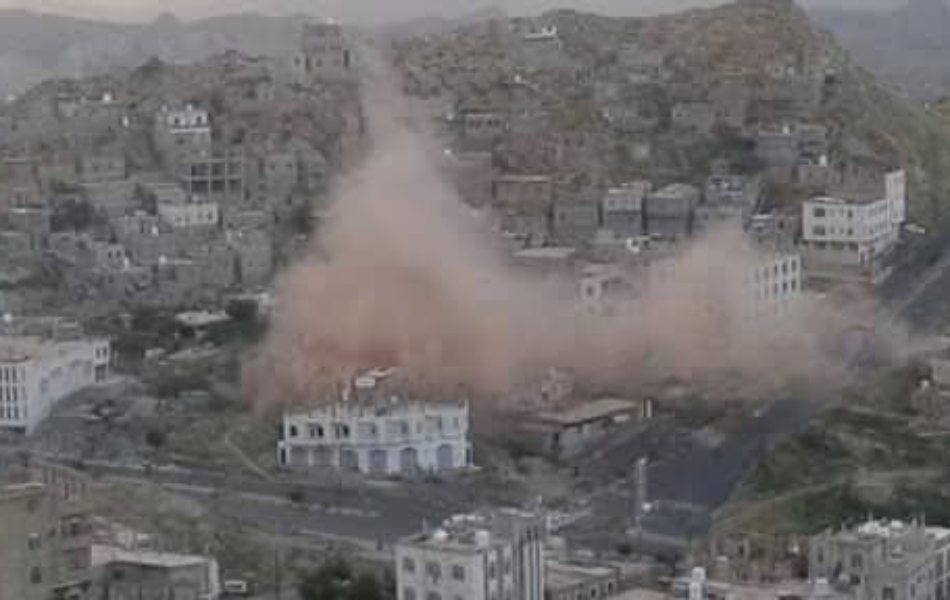
SAM for Rights and Liberties monitored a series of serious human rights violations and humanitarian developments in Yemen between 17 and 19 October 2026, including continued attacks by the Houthi group against residential neighborhoods and villages in Taiz, Ibb, and Lahj governorates. Incidents for which specific casualty figures were available during this period resulted in the deaths of three civilians, all women, and injuries to 13 others, including children. These figures exclude cases for which complete information was unavailable and are not combined with broader United Nations casualty statistics.
The developments also included the injury of a 15-year-old boy by mortar shrapnel in Al-Misrakh District, the shooting of a 50-year-old civilian by a Houthi sniper in Sabir Al-Mawadim District, the killing of a woman and injury of two people in Ibb Governorate after a Houthi missile fell shortly after launch, and the shelling of a civilian home in Lahj Governorate, destroying parts of the building and killing livestock.
The violations extended to the arrest of approximately 20 civilians in the Qadas area of Al-Mawasit District, the storming and looting of displaced persons' homes in Al-Shamayatayn District, the destruction of a culvert on the Hayjat Al-Abd road connecting Taiz and Lahj, and the endangerment of travelers through the movement of military vehicles among civilian cars. In Marib, local authorities reported the launch of eight ballistic missiles, bringing the total to 24 missiles and projectiles over 72 hours.
On the humanitarian front, a new report by the United Nations Office for the Coordination of Humanitarian Affairs (OCHA) revealed that 231,991 people had been displaced between 1 August and 14 October. The United Nations Office of the High Commissioner for Human Rights (OHCHR) also verified 55 civilian deaths and 178 injuries during the reporting period covered by the report. Media and humanitarian reports highlighted a severe deterioration in water, food, and health services in Taiz, posing direct threats to the lives of dialysis patients and newborn babies, alongside growing health and humanitarian needs in displacement camps.
In preparing this briefing, SAM for Rights and Liberties relied on field monitoring conducted by its monitors and firsthand accounts collected from victims, witnesses, and local sources, alongside the review and analysis of information available from open sources, including human rights reports, statements issued by UN agencies and official bodies, and media coverage. Wherever possible, the organization sought to cross-check information against multiple sources and compare accounts and data concerning the dates and locations of incidents, victims’ identities, and the nature of the violations. This approach was intended to strengthen the reliability of the documentation, minimize duplication and inconsistencies, and distinguish between incidents documented directly by SAM and those based on published sources.
Violations
On 17 and 18 October 2026, Taiz city and Sabir Al-Mawadim District witnessed a series of artillery and sniper attacks by the Houthi group against residential neighborhoods and villages, killing two women and injuring nine civilians, including one woman and two children, according to field information obtained by SAM and the updated casualty figures issued by the Taiz Human Rights Center.
On 17 October, Nadia Ali bin Ali Abdu Hassan, 40, was killed after being shot by a Houthi sniper while she was in the Al-Aqaqah neighborhood, west of Taiz city.
Four other civilians were injured by shrapnel from shells fired by the group at residential areas in western Taiz. They were Faza'a Ali Ahmed, 50, in the Old Airport area; Abdulhamid Hizam Mohammed Ghalib, 45, on 30th Street; Yaseen Abdulaleem Abdu, 30, in the Al-Dumaynah neighborhood; and Yousef Mohammed Hassan Saeed, 35, on 30th Street.
According to the Taiz Siege Affairs Office, Faza'a and Abdulhamid sustained chest injuries, while Yaseen was injured in the back. The Office's initial report documented three injuries before Yousef Mohammed Hassan Saeed was added to the updated casualty figures.
On 18 October, SAM obtained field information concerning the killing of Fatima Ahmed Abdulqader, wife of Abdu Abdullah Abdulwali Al-Azzani, following an artillery attack carried out by the Houthi group using mortar shells against the Al-Najjadah area of Sabir Al-Mawadim District, south of Taiz, shortly before sunset.
According to information received by the organization, Fatima was killed after sustaining shrapnel injuries from a mortar shell. This information is corroborated by documentation from the Taiz Human Rights Center and a statement from the Taiz Siege Affairs Office, both of which confirmed her death as a result of Houthi shelling of Al-Najjadah.
Mohammed Al-Haydari also reported that the shelling occurred at approximately 5:30 p.m. and identified the victim as 57 years old. SAM relies on the name and family information it obtained directly to establish the victim's identity.
Regarding the injured on 18 October, SAM obtained field information concerning four civilian cases.
The first concerns Naji Abdulqawi Qaed Abdullah Al-Kabsh, 47, who sustained a shrapnel injury to the head during Houthi shelling of the Al-Aqaqah neighborhood. SAM's information is corroborated by a report from the Taiz Siege Affairs Office, which confirmed that he sustained serious injuries at approximately 7:20 p.m. Although the published report differs regarding his age and the nature of his injury, SAM relies on its field information identifying him as 47 years old and describing his injury as a shrapnel wound to the head.
The second case concerns Abdullah Muqbil Ali, 55, who sustained a gunshot wound to the head in the Al-Aqaqah neighborhood after being shot by members of the Houthi group. This information is consistent with a report from the Taiz Siege Affairs Office, which confirmed that he was shot by a Houthi sniper.
SAM also documented the injury of Ra'fat Ali Saeed, a seven-year-old boy, who sustained shrapnel injuries to his hand during Houthi shelling of the 30th Street neighborhood. The Taiz Siege Affairs Office confirmed that he was injured by shell fragments in the same neighborhood.
The fourth case concerns Hadeel Haitham Najeeb Abdullah, an 11-year-old girl from Al-Shaqab village, who sustained shrapnel injuries to the head during Houthi shelling. According to medical information obtained by SAM, she arrived at the emergency department of Al-Thawra General Hospital on 18 October at 8:22 p.m., consistent with a statement from the Taiz Siege Affairs Office.
In addition to the four cases for which SAM obtained firsthand information, the Taiz Human Rights Center documented a fifth civilian casualty, Raseel Abdulhakim Mohammed, 27, who sustained chest injuries from shrapnel after a Houthi shell struck the Al-Aqaqah neighborhood. The Taiz Siege Affairs Office identified him as Raseel Abdulhakim Mohammed Salam and specified that the injury was on the left side of his chest.
The total casualty figures for the two days therefore stand at two women killed and nine civilians injured, without counting corroborating reports concerning the same victims as additional cases.
SAM for Rights and Liberties obtained a field account concerning the injury of Mu'tasim Mohammed Abdu Abdullah, a 15-year-old boy, who sustained a mortar shrapnel wound to the lower abdomen on Monday, 19 October 2026, at approximately noon.
According to information obtained by the organization, the incident occurred in Daba village in the Al-Aqrood area of Al-Misrakh District, Taiz Governorate. A mortar shell was fired from Al-Matali village, located in the same area and under the control of the Houthi group, causing the boy's injury.
The account identifies the victim's age, the location and approximate time of the injury, the direction from which the mortar shell was fired, and the village from which it originated.
The incident illustrates the continuing risks faced by children in populated villages as a result of artillery shelling, including injuries that may cause serious complications because of their location in the abdomen and the potential damage to internal organs.
SAM emphasizes that attacks directed against civilians are prohibited under international humanitarian law. The use of mortar shells in circumstances that endanger civilians requires investigation into the circumstances of the attack, the intended target, and the precautions taken, as well as accountability for those responsible for any unlawful attack.
The organization further stresses the need to provide the injured child with urgent and continued medical care, treatment, rehabilitation, and other necessary services to prevent long-term complications.
SAM obtained a field account concerning the injury of Yousef Hael Hazza Al-Azzani, 50, who was shot by a sniper belonging to the Houthi group on Monday, 19 October 2026, at approximately 8:30 a.m.
According to information received by the organization, the incident occurred in Al-Rahn village in Sabir Al-Mawadim District, Taiz Governorate. The civilian sustained a gunshot wound to the right thigh, fired by a Houthi sniper positioned in Sanamat village.
The account identifies the victim's location, the sniper's position, the approximate time of the incident, and the nature of the injury, providing important details for documenting and investigating the attack.
The incident occurred amid the continued use of sniper fire against civilians in residential areas of Sabir Al-Mawadim District, threatening residents' safety and freedom of movement as they go about their daily activities.
SAM emphasizes that deliberately firing on a civilian who is not taking part in hostilities constitutes a serious violation of international humanitarian law and may amount to a war crime. Such conduct requires investigation, accountability, and appropriate medical care for the injured person.
On 19 October, Al-Masdar Online, citing local residents, reported that a woman had been killed and two people seriously injured when a Houthi missile fell on Al-Akr village in the Al-Ashraf area of Dhi Al-Sufal District, southern Ibb Governorate, shortly before sunset on Sunday, 18 October.
According to residents, the woman killed was Asma Abdulmalik Al-Obaidi. Another woman sustained a severe injury resulting in the amputation of her hand, while a third civilian was also injured. Both injured persons were taken to hospital for treatment.
Residents explained that the missile fell shortly after being launched and that the Houthi group had installed missile launchers near the area before one of its missiles malfunctioned and fell on the village.
The group, however, claimed that the incident resulted from an airstrike against the village. Residents interviewed by the news outlet rejected that account, stating that the missile had been launched from nearby positions belonging to the group.
The incident illustrates the risks posed by positioning missile launchers near residential communities and the direct harm civilians may suffer when projectiles malfunction or fall after launch.
SAM emphasizes that parties to the conflict are obliged to take feasible precautions to protect civilians from the effects of military operations, including avoiding, to the extent feasible, the placement of military installations and equipment within or near densely populated areas. The incident requires an independent technical investigation into the missile's origin, trajectory, and circumstances of impact, as well as accountability for those responsible for the unlawful killing of the woman and injuries to civilians.
On 19 October, Yemen Monitor, citing local sources, reported that Houthi artillery shelling had struck the Upper Al-Mudaribah area in northern Lahj Governorate, destroying parts of the home of Taha Ali Abdu Al-Mushkali and killing several livestock animals kept inside.
The published information did not report any civilian deaths or injuries resulting from the incident.
The incident highlights the damage inflicted on civilian property and livelihoods in rural areas, where some families depend on livestock farming for their subsistence. The loss of livestock creates additional economic and livelihood hardships.
SAM emphasizes that homes and civilian property are protected under international humanitarian law and that damage resulting from unlawful attacks requires accountability and reparations, including compensation for the loss of property and means of livelihood.
On 17 October, the Taiz Siege Affairs Office reported that the Houthi group had shelled Si'ah village in Sabir Al-Mawadim District, amid continued artillery attacks against villages and populated areas south of Taiz city.
On 18 October, the Taiz Human Rights Center published video testimony from a female resident of the district, who described dozens of shells striking homes, property, and civilian objects over the preceding days, causing casualties and extensive damage.
In an update published on 19 October, Belqees TV, citing local sources, reported continued Houthi artillery shelling of residential areas in Al-Shaqab, Kahlan, and Al-Najjadah in Sabir District.
The latest update did not provide new casualty figures. It is therefore not added to the figures for previously documented incidents but serves as an indication that attacks continued in the same areas.
SAM emphasizes that repeated shelling of residential areas increases the risks of death, injury, displacement, and property destruction, requiring an end to unlawful attacks and the protection of civilians and civilian objects.
On 18 October, the Yemeni Ministry of Transport announced that the Houthi group had destroyed a culvert on the Hayjat Al-Abd road connecting Taiz and Lahj, severing the route, disrupting commercial and public-service transport, and obstructing the delivery of goods and essential supplies.
The Ministry stated that the destruction of the civilian infrastructure compounded humanitarian and economic hardships, particularly in Taiz Governorate, by disrupting supply routes and increasing transportation costs.
The Taiz Siege Affairs Office reported that the destruction made passage through the Karbat Al-Suhha mountain pass more difficult. Two freight trucks overturned while attempting to cross the rugged route, exposing drivers and travelers to danger.
Salah Al-Rahhal also published a photograph that he said showed the road closed following the destruction of the culvert.
SAM emphasizes that the unlawful destruction of civilian transport infrastructure disrupts supply chains, raises the prices of essential goods, and endangers travelers. It calls for the reopening of roads, safe transportation, and accountability for attacks against civilian infrastructure.
On 17 October, the Taiz Siege Affairs Office reported that the Houthi group had prevented travelers from passing through the Al-Hangar–Al-Dhabab checkpoint since the morning. At approximately 9:00 p.m., the group allowed civilian vehicles to pass while simultaneously moving military pickup trucks and armored vehicles among them.
The Office quoted travelers who said they experienced fear and panic because of these practices, which endangered their lives.
International humanitarian law prohibits using the presence or movement of civilians to shield military forces and equipment from attack.
SAM emphasizes that using civilian traffic to conceal military movements raises questions regarding the Houthi group's responsibility for endangering civilians. These practices must cease, and military movements must be separated from civilian traffic.
On 18 October, the Taiz Siege Affairs Office reported that the Houthi group had carried out an arrest campaign targeting approximately 20 civilians in Al-Makeeshah village in the Qadas area of Al-Mawasit District, Taiz Governorate.
The campaign coincided with an increased armed presence and the establishment of new checkpoints. The names of the detainees, their places of detention, and the reasons for their arrest were not disclosed.
SAM calls for immediate disclosure of the detainees' fate and whereabouts, guarantees for their safety and fundamental rights, access to communication with their families, and the release of all those arbitrarily detained.
On 18 October, the Taiz Siege Affairs Office reported that members of the Houthi group had stormed homes belonging to displaced residents from the Al-Alqamah area of Al-Shamayatayn District, broken down their doors, and looted their contents.
This information is corroborated by a report published by journalist Ahmed Al-Shelfi on 19 October, citing local sources, concerning the storming of displaced persons' homes and the looting of their belongings amid growing concerns over continued raids and arrests in rural Taiz.
The looting of displaced persons' property violates the protection afforded to civilian property and compounds the suffering of families who have lost their homes or been forced to abandon them, while also hindering their safe return.
SAM emphasizes that forced displacement does not extinguish residents' rights to their homes and property. It calls for an end to these attacks, restitution of looted belongings, reparations, and accountability for those responsible.
On 18 October, the Marib Governorate Media Office announced that the Houthi group had launched eight ballistic missiles toward the populated city of Marib.
The Office stated that the total number of missiles and projectiles fired by the group over the preceding 72 hours had reached 24, including the eight missiles mentioned in the latest update.
The published information did not specify casualty figures or the impact locations of all the projectiles.
SAM emphasizes that missile attacks affecting populated areas are governed by the principles of distinction, proportionality, and precautions in attack, and that indiscriminate or disproportionate attacks require investigation and accountability.
A new report issued by the United Nations Office for the Coordination of Humanitarian Affairs, Situation Update No. 5 on the escalation of hostilities and displacement in Yemen, published on 18 October, revealed a substantial increase in civilian casualties, displacement, and humanitarian needs.
According to the report, the United Nations Office of the High Commissioner for Human Rights verified 94 incidents during the reporting period from 1 August to 15 October 2026, resulting in 233 civilian casualties, including 55 people killed and 178 injured.
Children accounted for more than one-third of all casualties, with 27 children killed and 57 injured.
These figures represent UN-verified casualties over a reporting period preceding the new incidents recorded on 17–19 October and are therefore not combined with those incidents when calculating casualty totals.
Regarding displacement, the report stated that 231,991 people, representing 38,664 households, had been displaced by conflict between 1 August and 14 October 2026.
It explained that 99% of displacement was recorded from 31 August onwards, following the intensification of hostilities, and that three-quarters of displaced people had fled from Taiz Governorate. Taiz hosted 52% of all displaced people, followed by Lahj at 23%, Aden at 13%, and Abyan at 5%.
In early October, fighting in the Al-Turba area of Taiz Governorate displaced approximately 4,500 households over three days. Meanwhile, IOM's Displacement Tracking Matrix recorded a further 44,202 newly displaced people, representing 7,367 households, between 4 and 14 October.
The report noted that fighting near existing displacement sites was forcing families who had already fled their homes to move again, while road closures were reducing their ability to reach Lahj and Aden. Further displacement toward Taiz city was considered likely if fighting continued.
SAM emphasizes that these figures demonstrate the growing harm suffered by civilians and the urgent need to strengthen protection and emergency assistance for displaced persons and host communities, particularly in areas experiencing repeated displacement.
The fifth UN situation update on Yemen revealed a severe deterioration in humanitarian conditions in Taiz city due to road restrictions and disruptions to commercial and humanitarian supplies.
The report stated that water production in the city had fallen by approximately half, while fuel and cooking gas had become scarce. Food prices had risen by around 50%, and humanitarian partners had run out of food baskets inside the city.
Hospitals were also approaching depletion of medicines, oxygen, and fuel, while supplies stored in Aden and Al-Turba could not reach Taiz.
Since 8 October, humanitarian partners had been unable to move between Taiz city and the southern districts. Continued insecurity, road closures, and telecommunications outages were delaying assistance and the registration of newly displaced families.
These developments increase risks to patients, wounded persons, and impoverished families, while threatening the continued provision of health care, water, and food supplies throughout the city.
SAM emphasizes that restrictions obstructing the delivery of essential supplies, particularly water, food, medicine, and fuel, pose a direct threat to civilian lives and require safe and sustained access routes for humanitarian and commercial supplies.
The fifth OCHA situation report stated that the Rapid Response Mechanism had provided first-line assistance to 152,222 displaced people, representing 21,746 households, equivalent to 56% of registered displaced households.
Emergency cash assistance had been provided to 13,243 households, food assistance to 12,594 households, and water, sanitation, and hygiene support to 9,391 households.
Health services had reached more than 38,500 displaced people, while 67,468 children and pregnant and breastfeeding women and girls had been screened for malnutrition.
Despite these efforts, the report confirmed that the humanitarian response was not keeping pace with growing needs. Four out of ten verified households had yet to receive emergency food assistance, while most assisted families had received only the first of three planned food assistance cycles.
Shelter assistance had reached fewer than one in ten households in need, while water, sanitation, and hygiene services covered only about one-quarter of the requirements.
The report also indicated that 84% of verified displaced households were located in districts classified under Phase 4, Emergency, of the Integrated Food Security Phase Classification (IPC).
It warned that displacement into overcrowded sites was increasing the risk of disease transmission, particularly cholera, amid weak water and sanitation services and rising alerts of suspected cases in displacement sites.
SAM emphasizes that these indicators reveal a widening gap between humanitarian needs and available resources, requiring increased funding, an expanded response, and unhindered humanitarian access to affected areas.
A video report published by Al Arabiya on 19 October highlighted the crisis facing the neonatal unit at the Yemeni-Swedish Hospital in Taiz city, following the tightening of the siege and shortages of fuel, electricity, and medical supplies.
The report explained that the neonatal department had previously received approximately 40 newborns each day before the siege intensified in early October, while fuel shortages had reduced its operational capacity to ten incubators.
A hospital staff member told the broadcaster that the lack of fuel had forced the department to reduce the number of available incubators, while electricity outages threatened the continued operation of life-support equipment on which newborns depend.
The report also noted that the neonatal and infant wards had been moved from an upper floor to a lower location within the hospital because of shelling in the surrounding neighborhood.
As hospital revenues declined and operating, living, and transportation costs increased, the department was forced to reduce its nursing staff by half, amid warnings that it could close if current conditions persisted.
SAM emphasizes that the potential disruption of incubators and intensive care services due to shortages of electricity and medical supplies poses a direct threat to newborn babies' lives. Urgent access to fuel, electricity, and medical supplies must be guaranteed, alongside protection for health facilities and their personnel.
An Agence France-Presse report published on 16 October documented a serious crisis affecting kidney failure patients in Taiz city as a result of shortages of fuel, medicines, and medical supplies caused by the siege and disruption of supply routes.
The report stated that the Artificial Kidney Center provides dialysis treatment to approximately 420 patients who depend on regular treatment sessions to survive.
AFP quoted patient Ahmed Al-Eisi, who requires two dialysis sessions a week, comparing the dependence of kidney failure patients on dialysis machines to a fish's dependence on water, illustrating the immediate threat to their lives if treatment is interrupted.
The center's director, Yousef Al-Zakri, said the facility was experiencing a shortage of diesel needed for its operation and that its remaining medical supplies, at the time of the interview, would last only approximately 14 days. He warned that interruption of dialysis sessions could result in patients' deaths.
The report also quoted Ilan Abdulhaq, Deputy Governor of Taiz for Health Affairs, warning that most health facilities in Taiz could face closure because of diesel shortages, alongside a lack of medicines and medical supplies even in commercial markets.
At Al-Jumhuriya General Teaching Hospital, the AFP correspondent observed doctors providing treatment with limited resources, while patients with chronic illnesses described difficulties obtaining medications because of the siege and disrupted supplies.
The report also cited warnings from the International Committee of the Red Cross about increasing pressure on hospitals due to rising numbers of war-wounded patients, and a statement from the World Food Programme indicating that it could no longer reach 800,000 people because shifting front lines were obstructing the delivery of humanitarian assistance.
SAM emphasizes that depriving patients of medicines, fuel, and supplies essential to treatment poses a grave threat to the rights to life and health. Safe and sustained access to medical supplies must be guaranteed, particularly for facilities providing life-saving services such as dialysis and intensive care.
In a report published on 18 October, the International Committee of the Red Cross (ICRC) warned that Yemen's health system was coming under increasing pressure from escalating hostilities and rising numbers of wounded patients, alongside critical shortages of medicines, surgical supplies, staff, and specialized care.
The ICRC stated that all front lines had witnessed an unprecedented surge in weapon-wounded cases, with Marib, Taiz, and the Red Sea Coast recording some of the highest casualty burdens.
It noted that some health facilities near front lines had recorded more than 700 admissions in a single week, while mass-casualty influxes were becoming increasingly frequent.
ICRC Health Coordinator Feras Abusamra said that trauma care teams were under enormous pressure and that only a small proportion of functioning health facilities in Yemen had the capacity to provide comprehensive treatment for severe injuries.
The organization warned that rising numbers of wounded patients were reducing hospitals' capacity to treat people suffering from conditions unrelated to the conflict, including pregnant women, children, and patients with chronic illnesses.
Regarding its response, the ICRC explained that since the escalation began, it had transported more than 500 tonnes of life-saving medical supplies to Sana'a and Aden and was currently supporting more than 40 health facilities, including facilities near the front lines.
The organization also reported support for more than 60 ambulances in cooperation with the Yemen Red Crescent Society, as well as the provision of surgical, rehabilitation, and emergency medical services to wounded and sick people.
SAM emphasizes that the continued influx of wounded patients, combined with medical resource shortages, threatens the health system's capacity to respond. Medical supplies must be provided, health workers and ambulances protected, and the safe movement of patients and wounded persons to medical facilities guaranteed without obstruction.
On 18 October, the United Nations in Yemen published a video addressing health and humanitarian conditions at Al-Ferdaws displacement camp in Aden, amid continued displacement caused by escalating conflict.
The video stated that approximately 200,000 people had been displaced across ten governorates since 6 August and that Al-Ferdaws camp was hosting nearly 4,000 displaced people.
In a recorded testimony, a displaced woman named Souad said that her family had lived in acceptable conditions before displacement despite limited resources. After arriving at the camp, however, they lacked clothing, water containers, soap, food, and cooking facilities, having arrived with almost no possessions.
Another displaced resident, Salem, described how his two children, a girl and a boy, had fallen ill over the preceding two days. He took them to the camp clinic, where they received tablets and oral rehydration solutions, but they still needed further medical tests that were unavailable at the camp.
In the video, the World Health Organization (WHO) Representative in Yemen, Dr. Sayed Jaffar, explained that the team had identified extensive health needs, while only a limited range of primary health care services was available and several essential services were absent.
He noted that patients requiring medical referrals had to travel to the city, approximately 25–30 minutes away, placing an additional burden on displaced families.
He confirmed that WHO was working with the Ministry of Public Health and Population and UNICEF to urgently launch vaccination campaigns, particularly against measles amid the ongoing outbreak, alongside the need to establish disease surveillance systems to prevent epidemics from spreading in overcrowded camps.
He stressed that neither the government, the United Nations, nor nongovernmental organizations could meet these needs alone, calling for the necessary funding and resources to ensure that displaced children and mothers receive essential health care.
SAM emphasizes the need to strengthen health services inside displacement camps and provide basic medical tests, medicines, vaccinations, safe water, and hygiene services, prioritizing children, women, patients, and groups particularly vulnerable to infectious diseases.
In an interview on Al Jazeera English's Inside Story programme, published by IOM Yemen on 18 October, IOM Chief of Mission in Yemen Abdusattor Esoev discussed the sharp increase in displacement and the impact of renewed fighting on civilian families.
Esoev explained that the number of displaced people had exceeded 200,000, compared with approximately 70,000 to 76,000 only a few weeks earlier, reflecting the rapidly expanding humanitarian crisis.
He said that field teams were not merely recording displacement figures but were also gathering information about people's immediate needs, particularly shelter, food, and financial support.
He noted that approximately half of the displaced people included in the data had remained within Taiz Governorate, making access and assistance more difficult because of continuing hostilities and movement restrictions.
He also clarified that published figures covered only areas humanitarian teams could reach, while additional displaced families could be living in inaccessible areas because of fighting or continuing to move in search of safety.
Esoev warned that new displacement waves were placing further pressure on humanitarian resources that were already severely limited in a country that had experienced one of the world's largest internal displacement crises for years.
SAM emphasizes that the inability to access some areas may result in humanitarian statistics failing to capture all people in need. Safe and sustained humanitarian access must therefore be guaranteed, alongside increased funding for shelter, food, and cash assistance.
In an analysis published on 19 October, Saferworld warned that escalating fighting in Taiz Governorate was threatening civilian lifelines, including roads, food and water supplies, health care, and humanitarian assistance.
The organization shared the testimony of a displaced mother of four who said she could afford only 500 Yemeni rials' worth of bread, an amount insufficient for her entire family, forcing her to divide it among her children and go without food herself.
Saferworld explained that road closures and insecurity were disrupting commercial supplies, while shortages of food, cooking gas, and fuel were driving up prices and reducing the availability of goods in local markets.
It also warned that shortages of medicines, fuel, and medical supplies were threatening emergency care, surgery, intensive care, dialysis, and neonatal services.
The organization noted that children, older persons, and persons with disabilities faced additional barriers to accessing services, while women and girls needed continued health care and protection services, including support for survivors of gender-based violence.
Saferworld warned that difficulties accessing affected communities could leave gaps in information about humanitarian needs, meaning that available data might not fully reflect the scale of the crisis.
SAM emphasizes that these testimonies reveal worsening food deprivation and the loss of households' ability to secure basic necessities. Road restrictions must be lifted, supplies and humanitarian assistance allowed through, and families most vulnerable to hunger, illness, and displacement protected.
On 18 October, the International Organization for Migration published information about an emergency project originally announced in a statement dated 8 October. Funded by the Government of Japan with USD 2 million, the project aims to provide shelter and essential non-food household items to 18,200 people, representing approximately 2,600 families affected by conflict and displacement.
The project targets the most vulnerable families in Taiz, Lahj, Aden, Abyan, and Marib governorates, helping them obtain shelter and essential supplies lost during their flight.
IOM Chief of Mission Abdusattor Esoev explained that displaced families often have to leave most of their belongings behind and that providing tents, blankets, and mattresses helps restore a measure of safety, dignity, and stability during the first days and weeks of displacement.
SAM emphasizes the importance of expanding these initiatives, ensuring assistance reaches the most vulnerable families according to need and without discrimination, and linking emergency relief to sustainable services covering shelter, water, health care, protection, and livelihoods.
On 18 October, the United Nations Office for the Coordination of Humanitarian Affairs in Yemen published a video addressing the suffering of displaced families amid escalating conflict, noting that more than 200,000 people had been forced to flee in just over a month.
The video featured the testimony of a displaced woman known as Um Khadija, who said she had fled with her children because of extreme fear, without the family being able to take any of its belongings.
The video explained that the inter-agency United Nations Rapid Response Mechanism (RRM), led by the United Nations Population Fund (UNFPA) in coordination with UNICEF, the World Food Programme (WFP), and IOM, works to provide emergency assistance to displaced families within 72 hours.
Assistance included ready-to-eat food, hygiene kits, and essential women's hygiene supplies. Information presented in the video indicated that more than 100,000 displaced people had received assistance, with support from the European Union.
UNFPA Representative in Yemen Francesco Galtieri explained that the first-line response had been activated within days of the escalation, helping deliver essential assistance to affected families.
SAM emphasizes that continued repeated displacement and the loss of shelter and livelihoods require an expanded humanitarian response and guaranteed access to assistance for all affected people, particularly children, women, older persons, and persons with disabilities.
The developments documented during the reporting period reveal the continued exposure of civilians to multiple violations and forms of harm in the context of armed conflict. These include artillery and missile attacks against populated areas, killings and injuries caused by sniper fire, destruction of property and civilian infrastructure, arrests, the looting of displaced persons' homes, and the endangerment of travelers through military movements.
International humanitarian law requires all parties to a conflict to distinguish between civilians and combatants and between civilian objects and military objectives. It prohibits direct attacks against civilians, indiscriminate and disproportionate attacks, and requires feasible precautions to avoid or minimize harm to the civilian population.
Deliberate attacks against civilians, including shooting civilians with sniper fire, constitute serious violations that may amount to war crimes. Artillery and missile attacks causing civilian harm also require investigations into the nature of the targets, the weapons used, launch and impact locations, and precautions taken during the attacks.
The injuries sustained by Mu'tasim Mohammed Abdu Abdullah and Yousef Hael Hazza Al-Azzani on 19 October demonstrate the continuing threat that attacks pose to civilians in Taiz. The incident in Al-Akr village, Ibb Governorate, further illustrates the risks arising from launching missiles near residential areas and from malfunctioning projectiles falling on civilians.
Homes, civilian property, transportation and water infrastructure, and health facilities enjoy protection under international humanitarian law. They may not be targeted except in circumstances permitted by law and subject to the applicable conditions and precautions. Pillage, arbitrary detention, and the use of civilians as human shields are also prohibited.
On the humanitarian front, UN data reveal rising civilian casualties, expanding displacement, and deteriorating food security and health services, including life-threatening risks to dialysis patients, newborn babies, and patients with chronic illnesses because of shortages of fuel, medicines, and essential supplies.
SAM emphasizes that parties to the conflict are obliged to respect and protect the wounded and sick, medical facilities, and humanitarian personnel; facilitate the passage of essential supplies; and refrain from imposing unlawful restrictions that deprive civilians of materials and services indispensable to their survival.
The organization also stresses the importance of preserving medical and technical evidence, documenting victims' and witnesses' testimonies, conducting independent investigations into violations, establishing individual and command responsibility, and guaranteeing victims' rights to an effective remedy and reparations.
SAM for Rights and Liberties condemns the continued attacks carried out by the Houthi group against civilians, homes, and residential neighborhoods in Taiz and other areas of Yemen, together with the resulting deaths, injuries, destruction of property and infrastructure. It emphasizes the urgent need to end these violations and protect the civilian population.
The organization calls for an immediate cessation of unlawful attacks against civilians and civilian objects, an end to indiscriminate shelling and sniper fire targeting residents, and full compliance with the principles of distinction, proportionality, and precautions in attack.
SAM also calls for independent and effective investigations into the injury of Mu'tasim Mohammed Abdu Abdullah in Al-Misrakh District; the shooting of Yousef Hael Hazza Al-Azzani by a sniper in Sabir Al-Mawadim; the missile impact in Al-Akr village, Ibb Governorate; and the shelling of Taha Ali Abdu Al-Mushkali's home in Lahj. These investigations must preserve medical and technical evidence and identify those responsible for unlawful attacks.
The organization further stresses the need to reopen roads and crossing points, including the Hayjat Al-Abd road; guarantee the delivery of food, water, fuel, medicines, and medical supplies to Taiz city and other affected areas; and ensure safe passage for civilians, humanitarian workers, and ambulance teams.
It calls for disclosure of the fate of civilians detained in the Qadas area, the release of all arbitrarily detained persons, an end to the storming and looting of displaced persons' homes, and guarantees of restitution of stolen property and reparations.
Regarding health care, SAM demands the provision of fuel, electricity, and essential supplies to maintain dialysis services, neonatal incubators, intensive care, surgery, and emergency treatment, alongside protection for hospitals, health care personnel, and ambulances against attacks and obstruction.
The organization also calls on the international community and donors to increase humanitarian funding and expand food and cash assistance, shelter, water and sanitation services, vaccinations, and health care, prioritizing children, women, displaced persons, older persons, persons with disabilities, and patients with chronic illnesses.
SAM emphasizes that protecting civilians and civilian objects and guaranteeing access to humanitarian assistance and life-saving services are legal obligations that must not be subordinated to military or political considerations. Continued attacks, the siege, disruption of essential supplies, and expanding displacement threaten to deepen Yemen's humanitarian catastrophe and require an urgent and effective international response.