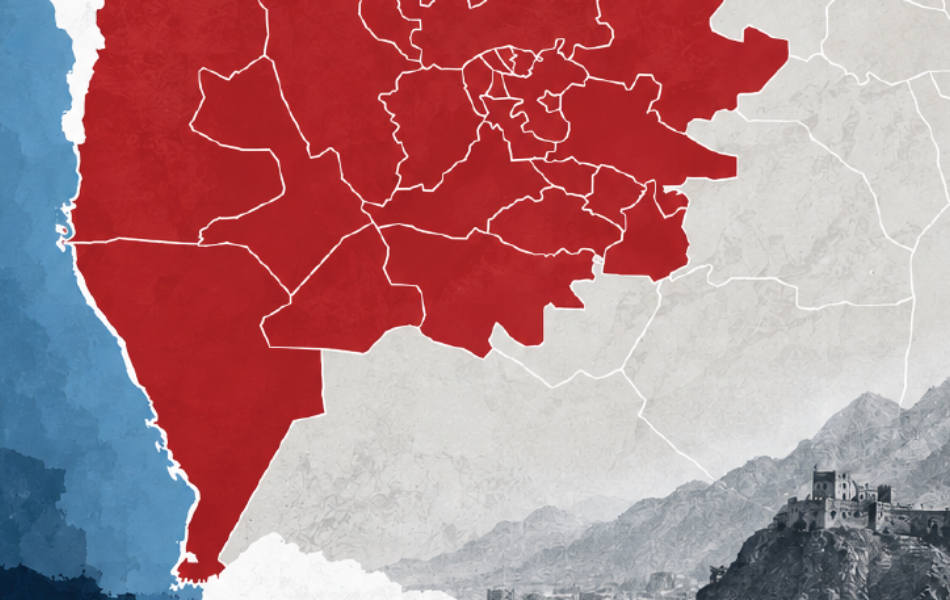
In a New Report on Rural Taiz: SAM Documents 4 Deaths and 6 Injuries—Including Two Children Killed—and Warns of Threats to Over Two Million Civilians
The report reveals three cases of detention, home raids, and reports of two destroyed homes, warning that the spread of fighting to vital roads risks re-isolating Taiz city and choking off access to food, medicine, and essential services for its residents.
October 14, 2026
In a newly released human rights report, SAM Organization for Rights and Liberties uncovered a series of violations targeting civilians and civilian property in the southern and western rural areas of Taiz Governorate. Documented incidents include the killing of four people—including two children and a woman—and the injury of six others—including three women—alongside three cases of detention, house raids and searches, and reports of two destroyed homes. The organization warned that the expansion of military operations into rural areas and vital transit corridors threatens to exacerbate the humanitarian crisis endured by more than two million people in Taiz city.
The report, issued by the organization on October 7, 2026, under the title "Southern and Western Rural Taiz: Violations Against Civilians and Civilian Objects, and Fighting Threatens the City's Lifeline," warned that ongoing clashes in villages south and west of the city could transform the roadways relied upon by residents for food, medicine, fuel, and access to hospitals and markets into danger zones or active frontlines. This risks recreating the conditions of siege and isolation suffered by Taiz residents over past years, but in an even more severe form.
The report noted that incidents compiled by the organization involved artillery and mortar shelling, drone strikes, killings of civilians inside their homes, raids, detentions—with some individuals transferred to undisclosed locations—as well as house break-ins, searches, and reports of the demolition and destruction of civilian property. These events occurred against the backdrop of a military escalation that began on September 3, 2026, along the western coast of Taiz Governorate, followed by Houthi advances and territorial gains in Bab al-Mandab, before clashes spilled over into the governorate's southern and western rural belt.
SAM emphasized that the figures presented reflect verified individual cases documented in the report rather than a comprehensive census of all violations or casualties in the affected areas. It noted that certain incidents remain under verification due to challenges in field access, security risks facing monitors and witnesses, and local residents’ fears of retaliation or communications surveillance.
Two Children and a Woman Among the Dead in Attacks on Populated Areas
In detailing the violations, SAM documented the death of 15-year-old child Yousef Abdulwarith Ali Mohammed and the injury of 29-year-old Awatef Abdullah due to mortar shelling that struck the Wadi Thabat area, east of Taiz city, on September 30, 2026.
According to information gathered from field sources, the mortar rounds were fired from positions that were, at the time of the attack, under the control of the Houthi group in the Tabat al-Salal area. The rounds struck a populated neighborhood, causing multiple fatal shrapnel wounds to the child's head and injuring Awatef with shrapnel across various parts of her body.
SAM clarified that it was unable to independently verify the presence of any distinct military target at the impact site or its immediate vicinity. This raises serious questions regarding compliance with the rules of distinction and precaution during attacks, warranting an independent investigation into the nature of the target, the munitions deployed, and the launch and impact coordinates.
In a separate incident, the report cited the killing of 17-year-old Ahmed Fawaz and the injury of his mother after a projectile hit the village of Al-Mun’im. Preliminary information indicates that the round was fired from an area under Houthi control. As of the report's drafting, the organization had not completed full verification of the exact date and certain surrounding military circumstances.
These two incidents highlight the grave perils faced by children and families in villages and populated localities, where homes and the perimeters of residential clusters can quickly become sites of death and injury the moment shelling and ground fighting spread toward them.
On October 7, SAM documented the killing of Hasiba Abdulwahid, a resident of Al-Naqeel village below Mount Dahiyeh in Al-Misrakh District, following artillery and mortar shelling that struck the perimeter of populated villages amid active clashes that had erupted at dawn.
The organization noted that the shelling took place amidst advance attempts by Houthi-affiliated fighters toward populated rural villages. However, SAM could not pinpoint the precise launch sites or determine the nature of the military targets at which the shelling was directed, requiring further investigation.
The report also detailed the killing of Khalil Mohammed Saif inside his home in the Al-Hujariyah area after armed men—attributed by field sources to the Houthi group—stormed the residence. Accounts indicate he was executed in front of his wife and children.
SAM stressed the necessity of an independent investigation to establish the circumstances of the killing, identify the perpetrators, and determine the legal status of the victim at the time of the incident. It reiterated that the willful killing of a civilian or a person hors de combat constitutes a grave breach of international humanitarian law and may amount to a war crime when statutory legal elements are met.
Six Injured, Including Three Women, and Drone Strikes
Regarding casualties, the organization documented the arrival of three wounded civilians at the emergency department of Al-Thawra Public Hospital in Taiz on October 5, following an attack or a cluster of closely timed strikes in the Al-Hanjar area.
The injured included:
-
Abdulaziz Amin Ali (25), a resident of Wadi Al-Qadi, admitted with a fracture in his left leg.
-
Mona Ali Saif Abdullah (60), from the same area, who sustained shrapnel wounds across both legs, her right thigh, and her left shoulder.
-
Mufid Abdulmajeed Al-Dhababi (30), a resident of Bir Basha, who suffered shrapnel wounds to his left thigh and head.
Preliminary reports tied the injuries of Abdulaziz and Mona to one or two drone strikes attributed to Houthi forces. SAM continues to verify whether all three casualties resulted from a single strike or multiple attacks, as well as the nature of potential military targets in the vicinity at the time.
The organization further documented the injury of 60-year-old Abdullah Mahyoub Sultan Al-Buraihi, a resident of the Al-Adf area in Jabal Habashy District, who suffered multiple shrapnel wounds to his legs on the evening of October 4 in an incident attributed by field reports to Houthi forces.
SAM highlighted that the employment of drones, mortar fire, and explosive weapons in populated rural areas significantly heightens civilian casualty risks. This vulnerability is compounded by the proximity of homes, farmland, roads, markets, and water points, alongside the inability of vulnerable populations—especially the elderly, the sick, and children—to swiftly evacuate once hostilities break out.
Three Detentions and House Raids in Sama' and Mocha
The report disclosed three cases of detention connected to the recent military developments, including the detention of Mohammed Ahmed Abdu and Hazaa Abdullah Naji following raids carried out by Houthi-affiliated forces on homes in the villages of Al-Madh’abah and Waq’an, in the Al-Jabal sub-district of Sama’ District.
Information gathered by SAM indicates their detention was linked to their opposition to the Houthi group and rejection of its control. The organization has been unable to obtain official statements regarding the legal basis for their detention, their current whereabouts, or whether they have been allowed contact with their families.
In the coastal city of Mocha (Al-Makha), SAM received reports that Houthi-affiliated gunmen broke into the home of Mohammed Abdulsalam Nasser Ali and took him to an undisclosed location, confiscating his mobile phone and national identity card without notifying his family of his place of detention or the reasons behind it.
SAM stated that the absence of information regarding the fate of the three detainees raises grave concerns for their physical and psychological integrity. It demanded the immediate disclosure of their locations, an assessment of the legality of their detention, and a determination of whether these cases constitute arbitrary detention or enforced disappearance under applicable international law.
Raids on Homes of Military Commanders and Reports of Demolitions
In a related development, the report cited preliminary data regarding the storming and searching of three homes belonging to military and security commanders in Taiz's southern countryside:
-
The home of Brigadier General Abdulrahman Al-Shamsani, Commander of the 35th Armored Brigade, in the Al-Ashrouh area of Qadas.
-
The home of Colonel Adel Al-Hammadi, Chief of Operations of the 35th Armored Brigade, in Bani Hammad.
-
The home of Brigadier General Jamil Aqlan, Commander of the Special Security Forces, in the Al-Makishah area of Qadas.
The organization confirmed it is investigating the circumstances of these raids, including whether homeowners or their families were present, and whether searches were accompanied by property confiscation, vandalism, or arrests.
SAM also received reports regarding the blowing up of citizen Ibrahim Al-Maqrami’s home in the Al-Maqarikah area, alongside the destruction of another residence in Hayfan District. The organization noted it has not finalized verification of the precise dates, the responsible parties, or how the properties were being utilized at the time of destruction.
SAM reiterated that an owner's military status or a family member's affiliation with a warring faction does not automatically transform a civilian home into a legitimate military objective. The destruction of dwellings as a reprisal against their occupants or relatives, absent absolute military necessity, constitutes a grave breach of the rules protecting civilian property.
Over Two Million People Threatened by Severe Humanitarian Isolation
SAM warned that the gravest repercussions of military escalation in rural Taiz extend beyond direct casualties to the network of secondary arteries and transit corridors that sustain daily life in the city. More than two million people face escalating risks to their access to food, medical supplies, healthcare, and safe movement.
The report explained that the areas of Al-Hujariyah, Al-Turbah, Al-Misrakh, Jabal Habashy, and the western countryside form an interconnected geographical grid of vital roads linking the city to rural districts and neighboring governorates—including Lahj, Aden, and the western coast. These corridors are crucial for trucking food, pharmaceuticals, fuel, and potable water, as well as facilitating ambulance runs, patient transit, and local commerce.
These routes took on extraordinary importance during the years of blockade and closure of the city's primary entry points, which forced inhabitants to rely on arduous, prolonged mountain roads to reach the rest of the country.
The report referenced previous documentation by Human Rights Watch demonstrating that main road closures around Taiz since 2015 turned the trip between Taiz city and Al-Hawban—once a 10- to 15-minute commute—into an exhausting six-to-eight-hour trek, while other one-hour journeys expanded to eight hours.
It also cited Human Rights Watch data regarding water costs in Taiz, showing that transporting roughly 2,000 liters of water via tanker truck cost approximately $25 USD, compared to $10–$15 USD in Aden—an indicator of how movement curbs and soaring fuel and transport overhead directly hit basic services.
The organization emphasized that persistent clashes or severed southern and western lifelines will drive up consumer prices for food, water, and fuel; hamper hospital and market operations; obstruct humanitarian aid and patient transfers; and trigger displacement and loss of livelihoods.
SAM warned that the humanitarian fallout from any renewed road closure begins well before supplies completely vanish from store shelves: surging shipping tariffs erode household purchasing power, forcing families to slash food intake, defer critical medical care, incur debt, or liquidate household assets to survive.
Five Million People Suffer Food Insecurity in Government-Controlled Areas
Reviewing humanitarian and economic indicators, the report drew on analysis published by the World Food Programme (WFP) in June 2026, which revealed that roughly five million people—representing 47% of the population in areas controlled by the Yemeni government—face "Crisis" (IPC Phase 3) or worse levels of acute food insecurity, including 1.4 million in "Emergency" (IPC Phase 4).
The analysis projected that this figure would climb to 51% during the lean season spanning June through September 2026, driven by elevated food and fuel prices, diminished household earnings, and curtailed humanitarian assistance.
The report also cited World Bank data showing that the cost of the Minimum Survival Food Basket in government-held areas rose by 26% by June 2025 compared to the previous year, before dipping slightly following exchange-rate improvements and central monetary measures.
SAM clarified that while these macroeconomic figures encompass all government-held areas and are not limited to Taiz Governorate alone, they underscore the baseline economic and nutritional fragility that leaves the population utterly vulnerable: any further breakdown in logistics and corridors acts as a severe force multiplier on the humanitarian crisis.
The report highlighted that 2025 food security assessments recorded deterioration in food consumption across parts of Taiz, pinpointing pockets of severe hunger in Al-Mawasit District and compounding fears over the fallout of new transit closures.
Documentation Challenges and Fears of Widening Violations
SAM explained that its methodology relied on data gathered by its field monitors and local sources, cross-referencing casualty information, timestamps, and strike coordinates, and corroborating witness accounts across multiple sources where possible, while keeping unfinalized cases under open review.
The organization noted that the spread of ground hostilities into rural villages posed severe field and security constraints. Fear of reprisal or detention made several residents and witnesses reluctant to provide testimonies—especially via telephone calls and messaging applications—due to pervasive fears of communications surveillance in Houthi-held areas.
SAM affirmed that the cases compiled in the report do not represent an exhaustive tally of all violations in rural Taiz, but rather the documented facts it could independently access within existing security realities.
The organization concluded that the recurring pattern of shelling, killings, home raids, arbitrary detentions, and property destruction across multiple locations within a narrow window demands scrutiny into whether these acts reflect a broader, systematic pattern impacting the protection of civilians.
Violations That May Amount to War Crimes
In its legal assessment, SAM affirmed that the acts documented in the report fall under the rules of International Humanitarian Law (IHL) governing non-international armed conflicts, primarily Common Article 3 to the four Geneva Conventions, Additional Protocol II, and customary IHL rules.
The organization emphasized that IHL strictly prohibits direct attacks against civilians and civilian objects, as well as indiscriminate and disproportionate strikes, obligating all parties to take all feasible precautions to avoid or minimize civilian harm.
It underscored that the presence of fighters within or near a village does not render the entire village a military target, nor do private homes forfeit civilian protection merely because their owners are military personnel or affiliated with a party to the conflict.
SAM explained that the intentional killing of protected persons, directing attacks against civilians, or destroying property without imperative military necessity can constitute war crimes when requisite statutory elements are satisfied. Establishing individual criminal liability requires examining each incident independently—evaluating the nature of the target, weapon systems utilized, precautions taken, and identifying the commanders who ordered or executed the strike.
It further warned that using road closures or movement restrictions with the intent to starve civilians or deprive them of objects indispensable to their survival represents a grave breach of IHL, which strictly bans starvation as a method of warfare and mandates parties to allow and facilitate unimpeded passage of humanitarian relief.
Calls for Independent Inquiries and Corridor Protection
SAM called on the Houthi group to immediately cease attacks against civilians and civilian infrastructure, strictly adhere to the principles of distinction, proportionality, and precaution, and halt all demolition, seizure, or looting of civilian property not justified by absolute military necessity.
The organization demanded independent, effective, and transparent investigations into the shelling incidents that caused civilian casualties in Wadi Thabat, Al-Mun’im, Mount Dahiyeh, Jabal Habashy, Al-Hanjar, and other areas, as well as into the summary killing of Khalil Mohammed Saif in his home. It urged the determination of individual responsibility to ensure accountability and combat impunity.
SAM also called for the immediate disclosure of the fate and whereabouts of Mohammed Ahmed Abdu, Hazaa Abdullah Naji, Mohammed Abdulsalam Nasser Ali, and all other individuals deprived of their liberty during the military operations, ensuring their physical safety, family visitation rights, and fundamental legal guarantees.
The organization urged all parties to the conflict to protect roads and corridors relied upon by civilians, avoid disrupting transit except where strictly permitted under IHL rules, and guarantee the safe, unhindered passage of patients, ambulances, commercial food and medical supplies, and humanitarian shipments.
Finally, SAM urged the Office of the United Nations High Commissioner for Human Rights (OHCHR) and UN mechanisms on Yemen to scale up monitoring, documentation, and reporting on violations in southern and western rural Taiz, closely tracking any movement curbs that threaten to isolate the city or cut its population off from essential necessities.
The organization concluded its report by stressing that the southern and western rural regions of Taiz are not merely geographic battlegrounds, but vibrant civilian spaces and the vital arteries sustaining the city's link to the outside world. Protecting these rural residents, their homes, roads, and livelihoods is integral to the safety of Taiz as a whole.
The true peril, SAM emphasized, lies not only in the immediate toll of killed and wounded, but in the prospect that the very supply routes that kept Taiz connected throughout a decade of siege could turn into new frontlines—multiplying humanitarian suffering for more than two million people who rely on them every day.