

9 September 2026
SAM for Rights and Liberties monitored, on 8 and 9 September 2026, the continued risks facing civilians as hostilities expanded across several Yemeni governorates, amid large-scale displacement from areas of fighting in Taiz and Hodeidah, reports of civilians being killed in frontline areas of Lahj Governorate, and the shelling of a judicial facility inside Taiz city, as well as preliminary reports of casualties, including women and children, after a missile struck a house in Marib.
These incidents form part of a broader wave of escalation that began in early September and which, according to the International Organization for Migration (IOM), displaced approximately 18,500 people from Taiz and Hodeidah governorates within just 72 hours, placing increasing pressure on host communities amid severe shortages of essential humanitarian assistance.
On 8 September, Yemeni Minister of Legal Affairs Eshraq Al-Maqtari reported that two individuals were killed after being shot in an incident attributed to Houthi snipers while they were herding livestock in the Ahamah area of Al-Musaymir District, northwestern Lahj Governorate, near the boundary with Mawiyah District in Taiz Governorate.
Al-Maqtari identified the victims as Madin Amin Saeed Naji and Ghamdan Mohammed Amrah, stating that they were approximately 16 and 17 years old and that they died while being transported to Aden for medical treatment.
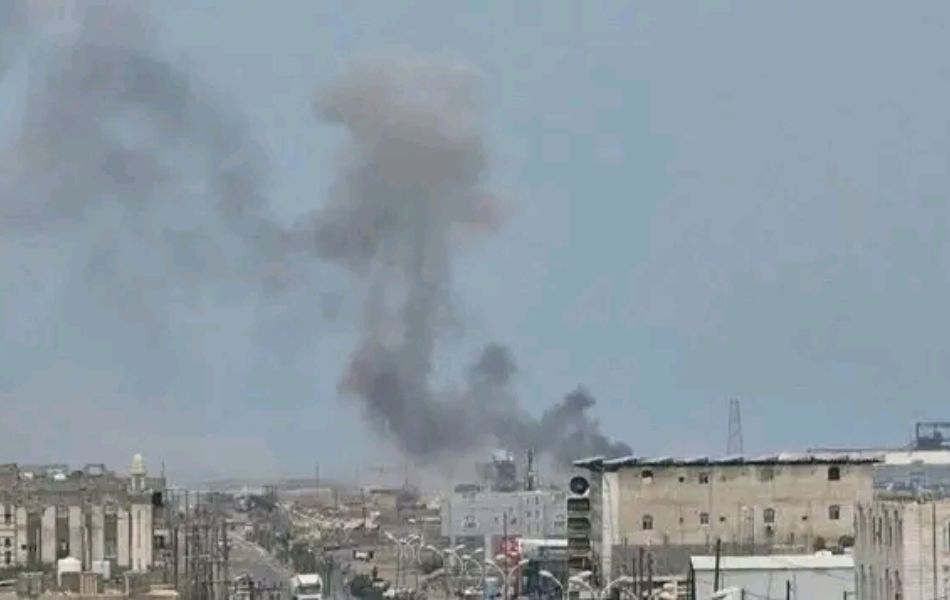
On 8 September, journalist Mohammed Taher reported that the Judicial Complex in the Jabal Jarrah area in central Taiz city had come under shelling. He later published a further update stating that the site was shelled for a second time on the same day.
The information is consistent with reports published by local media indicating that the shelling struck the Judicial Complex and surrounding residential areas, alongside shelling of populated neighborhoods in the Air Defense area northwest of the city.
At the time of preparing this briefing, no independently verified casualty toll or assessment of material damage was available. The actual use of the Judicial Complex at the time of the attack and the possible presence of military objectives at or near the site also remained unclear.
SAM stresses that judicial buildings, as objects that are civilian in nature, are protected from attack unless, under the strict criteria established by international humanitarian law, they become military objectives. Even in such circumstances, the principles of proportionality and precautions in attack remain applicable.
In a deeply concerning humanitarian development, the International Organization for Migration announced that approximately 18,500 people had been displaced in Taiz and Hodeidah governorates within 72 hours since the rapid escalation of hostilities began on 3 September.
The organization said the number of displaced people continued to rise as newly displaced families arrived in host communities and displacement sites, with significant displacement reported from affected communities in Maqbanah, Al-Ma'afer, and Jabal Habashi, including Al-Hajab, Al-Rajehi, Hayjat Gabih, and Al-Kadhah. Secondary displacement was also reported among families that had previously been living in displacement sites in Hays.
The United Nations separately confirmed that more than 18,500 people had been forced to flee during the same period, with families arriving without shelter or food and facing uncertainty over whether they would be able to return safely to their areas of origin.
The International Organization for Migration said reception areas in southern Taiz and along the western coast, including Al-Mokha, Hays, Mawza, Al-Ma'afer, and Jabal Habashi, were coming under increasing pressure as displaced families continued to arrive, while humanitarian stocks were severely depleted, particularly food assistance, shelter materials, and essential household items.
Ongoing clashes, disrupted roads, and telecommunications outages have also impeded efforts to reach, register, and assess newly displaced families. The organization warned of additional risks facing families stranded near frontlines and migrants who may be unable to leave affected areas safely.
SAM considers the rapid scale of this displacement to reflect the direct and growing impact of the hostilities on civilians and stresses that all parties must facilitate the safe departure of civilians wishing to leave, refrain from obstructing displacement routes, and ensure that humanitarian assistance reaches affected families without unlawful restrictions.
On 9 September, local media outlets circulated video footage and preliminary reports indicating that a missile attributed to the Houthi group struck a civilian home in Marib Governorate, amid reports of casualties, including women and children.
Additional video footage purportedly showing the scene of the incident was also circulated. However, at the time of preparing this briefing, SAM had not been able to independently verify the precise location of the incident, the identities or number of casualties, the type of weapon used, or whether any military objective was present in the area.
SAM is therefore treating this incident as under verification and is not adopting a final casualty toll or legal characterization of the attack pending the collection of further information from independent and field-based sources.
Recent developments demonstrate an increasing overlap between military operations and areas where civilians live and move, whether in villages close to frontlines, inside urban areas, or along displacement routes. This is illustrated by the reported killing of civilians while herding livestock in Al-Musaymir, repeated shelling inside Taiz city, and large-scale displacement from districts along the western coast.
The displacement of approximately 18,500 people in only three days is a particularly alarming indicator of the civilian impact of the escalation, especially in light of IOM reports that many affected families have already been displaced once, twice, or several times in previous rounds of conflict, while available humanitarian resources are increasingly unable to meet the needs of newly displaced families.
SAM stresses that international humanitarian law requires parties to the conflict at all times to distinguish between civilians and combatants, and between civilian objects and military objectives. It prohibits attacks directed against civilians, as well as indiscriminate and disproportionate attacks, and requires parties to take all feasible precautions to minimize civilian deaths, injuries, and damage to civilian property.
The organization also stresses the need to protect civilians fleeing areas of fighting, refrain from targeting or obstructing displacement routes, and ensure access to protection, shelter, food, water, and healthcare for displaced persons, particularly children, women, and families subjected to repeated displacement.
SAM calls for independent and effective investigations into incidents resulting in civilian casualties, including the Al-Musaymir incident, repeated shelling inside Taiz city, the earlier attack in Raghwan, and any new attacks on civilian homes in Marib, with facts and responsibility determined on the basis of credible and verifiable evidence.
SAM continues to collect information and verify the names and ages of victims, the types of weapons used, launch and impact locations, potential targets, and the extent of civilian damage, while keeping incidents involving conflicting accounts under verification and refraining from presenting them as established facts until sufficient evidence has been obtained.