

11 September 2026
SAM for Rights and Liberties monitored, on 10 and 11 September 2026, rapidly evolving humanitarian and security developments accompanying the expansion of hostilities along the western coast and in Taiz and Marib governorates, amid civilian casualties, including children and women, in displacement areas or while attempting to move to safer locations, alongside large-scale displacement and increasing disruption to humanitarian relief operations.
The developments included information published on 10 September concerning the killing of three children, including an infant, and the injury of civilians in shelling that struck a displaced family at Harib Junction in Marib the previous evening, as well as the killing of three members of one family and the serious injury of a fourth while they were fleeing Hays.
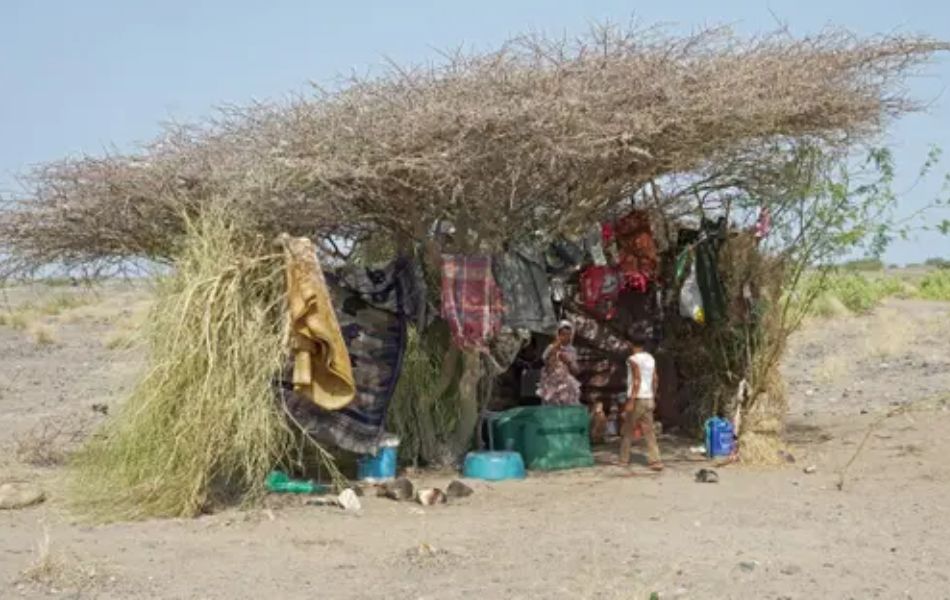
At the same time, new data from the Executive Unit for the Management of IDP Camps showed a continued rapid increase in the number of people fleeing areas of fighting. On 11 September, the United Nations announced that at least 46,000 people had been displaced since the escalation of hostilities began, warning that the figure was rising rapidly and that humanitarian access to affected populations was becoming increasingly constrained.
Information published on 10 September concerning an attack that took place on the evening of 9 September indicated that shelling struck displaced persons in the Harib Junction area of Marib Governorate. According to the Yemeni News Agency (SABA), the attack killed three children and injured six other civilians, including two children and two women. The agency attributed the attack to the Houthi group.
According to medical sources cited by the agency, those killed were Rubaa Fahd Abdu Ahmed Al-Soufi, 16; Saud Fadl Abdu Ahmed Al-Soufi, 8; and eight-month-old infant Shadi Fadl Abdu Ahmed Al-Soufi. The agency also reported that the shelling caused damage, destruction, and material losses to equipment and property.
The fact that the attack struck a house sheltering a displaced family, and that all three people killed were children, including an infant, raises serious concerns regarding respect for the principle of distinction and the obligation to take all feasible precautions to avoid harm to civilians.
On 10 September, the Hodeidah Governorate Media Office reported that a child, his sister, and their grandfather had been killed, while another sister was seriously wounded, after the family came under gunfire while fleeing Hays toward safer areas.
According to the source, the attack occurred the previous evening while the family was traveling in a minibus toward Al-Khawkhah and then Aden. The source identified those killed as 15-year-old Khaled Abdulghani Razah, his sister Marina, and their grandfather Hassan Razah, while the other sister sustained multiple gunshot wounds and was reported to be in critical condition.
Local sources said the shooting occurred as the vehicle passed through the Kanab Hays area and attributed the attack to members of the Houthi group.
New data from the Executive Unit for the Management of IDP Camps showed a continued sharp increase in displacement resulting from the military escalation along the western coast and in Taiz.
The Executive Unit for the Management of IDP Camps at the national level had announced that, as of 8 September, 6,269 families comprising 44,149 people had been recorded as displaced across five governorates: Taiz, Hodeidah, Lahj, Aden, and Abyan.
The Unit warned of a widening humanitarian response gap, including acute shortages of tents and shelter materials, safe drinking water, food and cash assistance, and basic healthcare services.
In a separate report, the Unit also documented the displacement of 4,844 families comprising 33,908 people between 1 and 7 September in Taiz, Hodeidah, Lahj, and Aden governorates.
Subsequent updates from the Executive Unit in Taiz showed that displacement continued to accelerate, with 823 families comprising 5,761 people recorded within 24 hours, bringing the total number of displaced families arriving in districts of Taiz Governorate by 10 September to 5,799 families comprising approximately 40,710 people.
Although these figures reflect different monitoring scopes and time periods, they collectively demonstrate a rapid escalation in displacement and mounting pressure on receiving areas and essential services.
On 11 September, the United Nations, citing the International Organization for Migration, reported that at least 46,000 people had been displaced in Yemen since fighting escalated during the previous week, warning that the number of displaced people was increasing “at an alarming rate by the hour.”
IOM Director General Amy Pope said that many Yemeni families were being forced to flee for the second or third time during the conflict and had very few resources left to cope with repeated displacement.
The organization reported continued displacement along the western coast and in Taiz Governorate, with reports of large numbers of residents leaving Al-Mokha with their belongings during the night, newly displaced people arriving in Lahj and Aden, and others moving north toward Ibb Governorate.
It also cited reports that entire villages had become empty in Maqbanah, Jabal Habashi, and Al-Ma'afer districts as clashes moved closer to populated areas, while the road linking Al-Mokha and Taiz—one of the region’s main supply routes—had also been disrupted.
As an indication of the seriousness of the security situation, the International Organization for Migration announced the temporary suspension of all its operational movements as of 11 September, explaining that the continued expansion of fighting was making it increasingly difficult to reach affected populations and deliver life-saving assistance.
The organization also warned that emergency stocks had been severely depleted and that the most urgent needs included shelter, food, water, household items, healthcare, and protection support.
On 10 September, the United Nations Office for the Coordination of Humanitarian Affairs (OCHA) confirmed the seizure of eight United Nations vehicles from the UN humanitarian hub in Al-Mokha.
The Office expressed deep concern over the situation, stressing that such incidents hamper humanitarian operations and the ability of partners to reach people in need of assistance.
The published UN report did not explicitly identify the party responsible for seizing the vehicles. However, the statement came in the aftermath of the Houthi group taking control of Al-Mokha in western Taiz and other districts in Hodeidah.
SAM stresses the need to respect and protect humanitarian personnel, premises, vehicles, and equipment used in relief operations, and to refrain from seizing or using them in ways that impede the delivery of assistance to civilian populations.
On 10 September, journalist Fares Al-Hemyari reported that military developments in Al-Mokha District had displaced 823 families, including 3,481 women and children.
He also reported that the total number of displaced families since the escalation began had reached 5,799 families, or more than 40,000 people, figures that broadly correspond with data issued by the Executive Unit for the Management of IDP Camps.
Al-Hemyari further reported that Al-Mokha Port and Al-Mokha Airport had been subjected to looting, involving, according to his information, electronic devices, equipment, documents, and various assets.
At the time of preparing this briefing, SAM had not been able to independently verify the scale of the alleged looting, the nature of all property seized, or the identity of those responsible. SAM therefore treats this information as allegations that require further verification and documentation.
If the unlawful appropriation of public or private property in the context of the conflict is established, it would raise serious concerns under the prohibition on pillage imposed by international humanitarian law.
The incidents recorded on 10 and 11 September demonstrate the expanding civilian impact of hostilities, whether through casualties, the accelerating pace of displacement, or the declining capacity of humanitarian organizations to reach populations in need.
The shelling of the displaced family in Harib is particularly concerning given that all three people killed were children, including an infant, while the Hays incident raises additional concerns regarding the safety of civilians attempting to leave areas of fighting and move to safer locations.
At the same time, figures issued by the Executive Unit and the International Organization for Migration show that tens of thousands of people have been displaced within a short period, placing severe pressure on host communities and displacement sites and increasing demand for food, water, shelter, healthcare, and protection services.
The seizure of United Nations vehicles and the suspension of IOM operational movements also demonstrate that the crisis is not limited to growing humanitarian needs, but extends to a shrinking capacity among humanitarian actors to reach and assist affected populations.
SAM stresses that international humanitarian law requires parties to the conflict at all times to distinguish between civilians and combatants, and between civilian objects and military objectives. It prohibits attacks directed against civilians, as well as indiscriminate and disproportionate attacks, and requires all feasible precautions to be taken to avoid or, at a minimum, reduce civilian loss of life.
The organization further stresses that displaced persons and civilians fleeing areas of fighting retain their protection as civilians, and that parties to the conflict must take the necessary precautions to protect them and must not expose their movement toward safer areas to unlawful risks.
SAM calls for independent and effective investigations into the shelling of the displaced family in Harib, the killing of members of the family fleeing Hays, the seizure of UN vehicles, and allegations concerning the looting of property and equipment in Al-Mokha, with responsibility determined on the basis of credible and verifiable evidence.
SAM continues to collect information and verify the names and ages of victims, casualty figures, the types of weapons used and their points of origin, incident locations, responsible parties, and damage to civilian and humanitarian property, while refraining from treating conflicting or unverified accounts as established facts.