

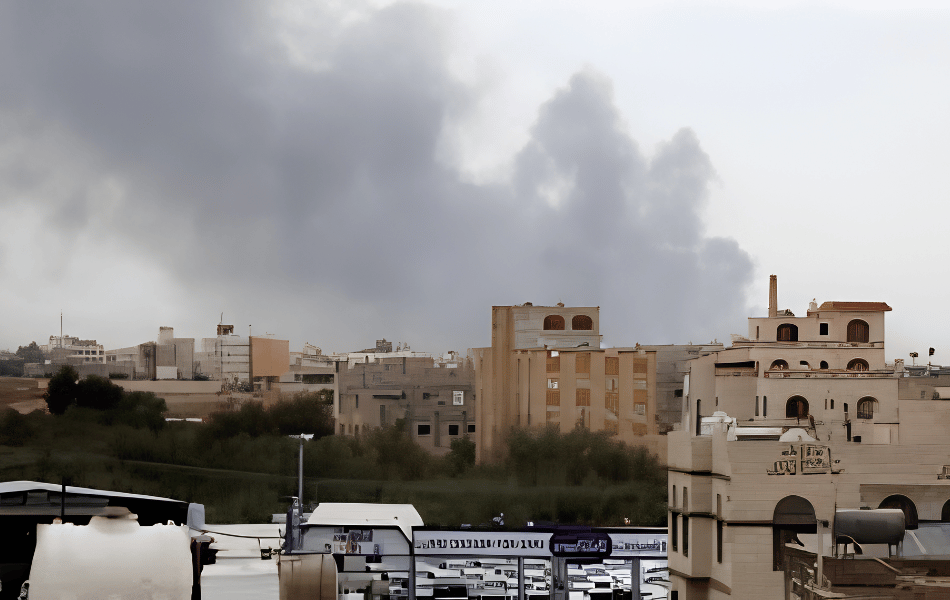
Geneva – October 26, 2026
SAM Organization for Rights and Liberties said that field information and firsthand testimonies it had obtained, together with human rights and humanitarian reports it had reviewed, reveal that the Houthi group continues to carry out attacks against civilians and residential areas in Yemen's Taiz Governorate. These attacks have been accompanied by escalating shelling and sniper fire, the destruction of homes, obstruction of medical evacuations, increasing displacement, and worsening restrictions on the movement of residents and essential supplies. SAM warned that the continuation of these violations threatens to cause further loss of life and an unprecedented deterioration in humanitarian conditions.
According to preliminary local casualty figures reviewed by the organization, five civilians, including three children aged between 13 and 17, were killed and six others injured on Monday, October 26, 2026, in shelling and shooting attacks targeting residential villages in the Sabir al-Mawadim and al-Misrakh districts of Taiz Governorate. The information included accounts of continued sniper fire directed at civilian homes and attacks against people attempting to rescue the wounded or recover the bodies of those killed, delaying emergency medical assistance and exposing residents to additional dangers.
SAM also obtained firsthand testimonies from an emergency physician, an ambulance driver, victims' relatives, and witnesses to shelling in the Jabal Sabir area in preceding days. These testimonies revealed new details concerning attacks on ambulances, the circumstances in which injured people died from bleeding and delayed access to medical care, and damage to homes and civilian property. These accounts supplement the documentation of earlier incidents and do not constitute new incidents to be added to the October 26 casualty figures.
Other developments included reports of a civilian killed and members of his family injured in a landmine explosion in al-Bayda Governorate, the arrest of five civilians in the al-Ma'afer district of Taiz Governorate, the destruction of homes and displacement of families from villages in Jabal Sabir, and allegations of the seizure of civilian property and the use of educational facilities for military purposes.
These incidents coincided with mounting international warnings about the consequences of the siege imposed on Taiz. On October 26, Human Rights Watch confirmed that the Houthi group had used explosives to destroy part of the vital Hayjat al-Abd road, increasing risks to civilian lives and obstructing the delivery of supplies. On the same day, international reports revealed that the fuel crisis had forced the Yemeni-Swedish Hospital for Maternity and Childhood to reduce the number of operational neonatal incubators from 40 to just 10. Meanwhile, the International Organization for Migration announced that the number of people displaced by the latest escalation had exceeded 268,000 as of October 23.
In preparing this briefing, SAM Organization for Rights and Liberties relied on information collected by its field monitors concerning victims and incidents, firsthand accounts obtained from witnesses, victims' relatives, and healthcare workers, as well as a review of human rights statements, official reports, United Nations and international publications, and open-source materials.
Wherever possible, the organization sought to cross-check information concerning victims' identities and ages, the dates and locations of incidents, the nature of injuries, and the parties responsible. It distinguished incidents documented through firsthand testimonies from those reported in published sources and avoided treating successive updates as separate incidents or aggregating casualty figures without completing the necessary cross-checking.
The briefing primarily covers incidents recorded between October 24 and 26, 2026, alongside testimonies and human rights and humanitarian developments published during the same period concerning incidents that occurred on earlier dates. SAM emphasizes that the figures presented reflect the information available as of the date of preparation and do not necessarily constitute a comprehensive or final accounting of all victims and violations.
On October 26, 2026, residential villages in the Sabir al-Mawadim and al-Misrakh districts of Taiz Governorate came under shelling and shooting attacks attributed to the Houthi group. According to casualty figures released by the governorate's Siege Affairs Office, the attacks killed five civilians, including three children, and injured six others.
SAM obtained field information identifying the three children killed as Jamal Jamil Ali Abdulraqib, 13, from Qunayza village in Sabir al-Mawadim district; Mohammed Abdulwahid Abdullah al-Aswad, 14, from al-Khalwa village in the same district; and Louay Hani Abdullah al-Aswad, 17, also from al-Khalwa village.
The information also identified Abdullah Hammoud Ahmed Abdulwahab, 50, from Adud village in Sabir al-Mawadim district, and Rabie Mohammed Ghaleb, 32, who was killed by sniper fire in the al-Aqroud area of al-Misrakh district.
These findings are consistent with a report published by Al-Mushahid Net on October 26, which quoted Salah Ahmed Ghaleb, director of the Siege Affairs Office in Taiz Governorate, providing the same casualty figures, including the names, ages, and places of residence of the five people killed.
A report published by Taiz Time on the same day stated that the attacks injured civilians in several villages, including Ali Fathi Ali Abdulraqib, 17, from Shaht village, and Abdulqawi Jamil Ali Abdulraqib, 13, from Qunayza village.
The published list of injured people also included Kawthar Abdulbaqi Mohammed Saif, 26, who sustained shrapnel wounds to the head; Fahmi Mohammed Ghaleb, 26, the brother of one of those killed; and Salah Saeed Abdullah Qasim, 12, who was wounded by sniper fire in al-Dimna village.
In a subsequent update published by the Siege Affairs Office on October 26, the office reported that Abdullah Saeed Hassan, 60, had sustained a gunshot wound to the thigh in al-Mihyal village in Sabir al-Mawadim district. It reiterated that the overall toll for that day stood at five people killed and six wounded.
SAM notes that the field information it received included an additional report concerning Widad Saeed Hamid Aqlan, 44, who was injured in Hamma village, along with reports of other individuals subjected to gunfire. The organization continues to reconcile these accounts with the final local casualty figures and has not automatically added them to the announced number of wounded, in order to avoid possible duplication or discrepancies in the timing of case registration.
SAM stresses that the killing of three children in a single day, during shelling and shooting incidents targeting inhabited villages, is an extremely alarming indication of children's continued exposure to death and injury in environments where they should be safe. These deaths demand independent investigations into the circumstances of each case, the types of weapons used, their points of origin, and the intended targets of the attacks.
SAM obtained field testimonies concerning an escalation of sniper fire directed at civilians in Hamma village, in the al-Aqroud area of al-Misrakh district, on October 26, including reports that people attempting to assist victims came under fire.
According to information received by the organization, Rabie Mohammed Ghaleb, 32, was killed by a sniper affiliated with the Houthi group, while his brother Fahmi, 26, was wounded in the same area.
The testimonies also included a report that Widad Saeed Hamid Aqlan, 44, had sustained an injury from a bullet fragment, amid continued gunfire directed at homes and pathways used by residents.
One field source reported five incidents of targeting within a short period of no more than two hours, warning that continued sniper fire prevented residents from reaching some injured people or moving them to safety. SAM considers this figure a preliminary field account requiring further verification of the individuals involved and the circumstances of each incident.
In a report published by journalist Fares Al-Hemiari on October 26, he cited local sources stating that Rabie Mohammed Ghaleb al-Mihrabi was killed by sniper fire in Ras al-Naqil village in the al-Aqroud area. The sniper reportedly continued firing at people attempting to recover his body, wounding his brother and another local resident.
These accounts highlight the dual dangers confronting civilians: being directly wounded by sniper fire and facing further attacks when attempting to rescue victims or recover the bodies of those killed.
SAM emphasizes that deliberately attacking civilians who are not directly participating in hostilities constitutes a serious violation of international humanitarian law and may amount to a war crime where the requisite legal elements are established. Obstructing medical assistance to the wounded or deliberately firing on protected persons attempting to rescue injured people also raises separate issues of legal responsibility requiring investigation.
The organization calls for the identification and documentation of sniper positions, the collection of independent testimonies from survivors and residents, the examination of medical reports concerning injuries, and guarantees that ambulance crews can safely reach affected areas.
As part of its continuing documentation of attacks on villages in Jabal Sabir on October 20, SAM conducted a direct interview with Dr. Issa al-Salahi, an emergency physician at al-Arous Rural Hospital, concerning the circumstances surrounding the death of Tayba Abdulraqib Abdu Abdullah, who was wounded during an attack attributed to the Houthi group in al-Shaqab village.
The physician explained that Tayba arrived at the hospital in a deep coma after sustaining a gunshot wound to the collarbone and chest area that damaged the subclavian artery, one of the major arteries supplying blood to the upper limb.
He stated that the injury caused severe internal bleeding into the chest cavity and that the difficult terrain and lack of rapid ambulance transportation contributed to delays in reaching the hospital. He added that the medical team attempted to save her life and began administering a blood transfusion, but she died as a result of the bleeding.
Al-Salahi confirmed that the victim had also sustained shrapnel injuries, but clarified that, in his medical assessment, the primary cause of death was severe hemorrhage resulting from damage to the subclavian artery, rather than the shrapnel wounds.
This testimony provides a direct medical explanation of the cause of death and highlights the role that delays in evacuation to healthcare facilities can play in worsening patients' conditions, particularly in cases of acute hemorrhage requiring urgent medical intervention.
During the same interview, the physician described an attack on a hospital ambulance that killed its driver and wounded a healthcare worker accompanying him. He stated that continued gunfire directed at the vehicle prevented the recovery of the driver's body for several hours before it was eventually retrieved.
Al-Salahi emphasized that healthcare workers carry out a humanitarian mission to save lives without discrimination based on individuals' affiliations or positions in the conflict, stressing the need to respect the legal protections afforded to ambulances and medical personnel.
SAM notes that certain details concerning the sequence of the ambulance attack, the number of people inside the vehicle, and their subsequent fates differed across the available testimonies. Further cross-checking of witness accounts, medical records, and the vehicle's movements is therefore necessary before a definitive, consolidated account can be established.
The organization stresses that this testimony constitutes an important addition to the documentation of earlier attacks on medical transport in Taiz. It does not indicate that a new incident occurred on the date of the interview, nor should the deaths mentioned be counted again in previous casualty totals.
In another direct interview conducted by SAM, the father of Tayba Abdulraqib Abdu Abdullah described the circumstances surrounding his daughter's injury on the morning of October 20 in al-Shaqab village.
He stated that his daughter went outside at approximately 7:00 a.m. before coming under sniper fire from the direction of Sanamat, which he attributed to the Houthi group. According to his testimony, a mortar shell subsequently landed near the family's home.
He explained that the family attempted to transport her to al-Arous Rural Hospital, but she died after arriving there. Her body was subsequently transferred to al-Thawra General Hospital in Taiz city, and she was buried the following day.
He also stated that the ambulance involved in the evacuation returned toward the al-Shaqab area to evacuate another victim before coming under attack during its journey.
The father's testimony is consistent with the physician's account regarding the initial injury, the victim's condition upon arrival at the hospital, and her death from severe bleeding. It also underscores the importance of further examining the timeline of the ambulance's journeys and the injured people transported during them.
SAM emphasizes that the two testimonies provide essential elements for investigating the incident, including the time and location of the injury, the direction of gunfire, the duration of the evacuation, the nature of the injury that caused the death, and the circumstances in which the ambulance was attacked.
The organization calls for an independent investigation into the circumstances of the victim's killing and the attack on the ambulance, the preservation of witness testimonies and medical and technical records, and accountability for those responsible for any violations established by the evidence.
SAM conducted a direct interview with Jamil Abdullah Ismail, an ambulance driver at al-Arous Rural Hospital, who described two incidents in which he was exposed to danger while performing his humanitarian medical duties.
In the first incident, he stated that he transported an injured woman from the al-Shaqab area to al-Thawra Hospital. On his return to the area, his ambulance came under shelling near a gathering of civilians, including women and children.
He explained that the vehicle displayed visible medical markings, including the Red Crescent emblem, and that a shell landed in nearby soil without causing injuries inside the ambulance. The vehicle was subjected to further shelling as he attempted to leave the location.
In the second incident, he said he received an emergency call to evacuate injured people from an area near active front-line positions. However, shots were fired directly in front of the ambulance, forcing him to retreat to a safer location while others carried the wounded on their shoulders along relatively sheltered routes.
Asked about the source of the gunfire, he said it came from the direction of areas controlled by the Houthi group and that, according to the information available to him, the area contained a sniper position operated by the group.
This testimony highlights the continuing dangers facing ambulance drivers and healthcare workers. It demonstrates that such attacks are not limited to direct shelling of medical facilities but also include gunfire against vehicles traveling to rescue the wounded, resulting in delays to medical evacuations.
SAM emphasizes that protected medical transport enjoys special protection under international humanitarian law and that deliberately attacking such vehicles while they are carrying out legitimate medical duties may constitute a war crime if the relevant legal elements are established.
The organization calls for the identification of the attack sites described by the driver, preservation of information concerning the vehicles and their medical markings, documentation of testimonies from accompanying personnel, and immediate measures to ensure the safety of ambulance crews, patients, and wounded persons.
As part of its investigation into the shelling of al-Adan village in al-Misrakh district on October 19, SAM obtained firsthand testimony from a resident related by marriage to Mohammed Qasim Ali al-Sabri, who was killed alongside his daughter Mushira when a shell struck the family's home.
The witness explained that the village came under sudden shelling at approximately 4:30 p.m. He estimated that between eight and ten shells struck the area, confirming that most hit inhabited residential locations.
According to his testimony, the shells came from the direction of Houthi-controlled positions in the al-Sarari area. He stated that government forces were stationed on elevated terrain far from civilian homes and that there were no military positions within the residential area that came under fire.
The witness described a shell striking his own house, partially destroying it, shattering doors and windows, and damaging property. Additional shells then struck neighboring homes, including the residence of Mohammed Qasim Ali al-Sabri.
He confirmed that the shell that struck al-Sabri's home killed him and his daughter, destroyed household furniture, and damaged the walls and roof.
He also reported that Hayat Abdulraqib Mohsen Ali sustained a shrapnel wound to her leg while standing between two adjacent houses, and that a water tank and other property were damaged in the shelling.
This testimony is consistent with information previously documented by SAM concerning the deaths of Mohammed Qasim Ali al-Sabri and his daughter Mushira and the injury of Hayat Abdulraqib. These are not additional cases to be included in the previously reported casualty figures.
The testimony provides further details concerning the number and direction of the shells and the damage inflicted on homes and civilian property. These elements warrant technical verification through examination of impact sites and munition remnants, determination of firing directions, and comparison with other residents' testimonies.
SAM emphasizes that attacks affecting civilian homes and resulting in residents being killed or injured require independent investigations to determine whether the rules of distinction, proportionality, and precautions in attack were respected.
On October 26, SAM documented information and visual materials showing that civilian homes in villages across Jabal Sabir and al-Aqroud had been subjected to repeated shelling attributed to the Houthi group. The attacks caused extensive material damage and heightened fears that prompted some families to leave their homes.
In a video published by journalist Fares Al-Hemiari on October 26, damage was visible at the home of Hilal Mohammed Abdullatif al-Kahlani in the Kahlan area of Sabir al-Mawadim district. Al-Kahlani had been preparing to get married and move into the house.
The Taiz Human Rights Center also published a separate video documenting the damage to the house, attributing it to mortar shells fired by the Houthi group on the morning of October 26.
In another incident, Marwa al-Nadhari published a video on October 26 describing how a mortar shell landed inside a room in a house where she was staying with family members, including women and children, at approximately 9:00 a.m. She said the shell did not explode and that no one was physically injured, but the incident caused fear and panic among family members.
SAM stresses that the presence of an unexploded projectile inside an inhabited home poses an ongoing danger to residents even after the attack has ended, given the possibility of detonation if it is handled or moved unsafely. Such incidents require intervention by specialized explosive ordnance disposal teams.
In an update published by the Siege Affairs Office on October 25, the office reported that families from al-Najada and al-Rahn villages in Jabal Sabir had fled their homes en masse as a result of continued shelling of residential communities.
Journalist Ahmed al-Shalafi also published a video featuring accounts from residents of Akamat al-Rahn village, who described how women, children, and older people had fled their homes following intensified shelling and sniper fire.
SAM notes that displacement caused by repeated attacks goes beyond the loss of shelter. It also results in the loss of livelihoods and property, disruption of education, and difficulties accessing food, water, and healthcare, particularly for families dependent on agriculture and livestock.
The organization calls for an end to attacks on residential villages, the protection of homes and civilian property, safe access for explosive ordnance disposal teams to affected areas, and the provision of shelter and humanitarian assistance to families forced to flee.
On October 25, SAM monitored reports of a landmine explosion involving a civilian vehicle in the Nati district of al-Bayda Governorate as travelers were passing along a secondary road in the area.
The Yemeni Landmine Observatory reported that Ali Jabr was killed and several members of his family, including women and children, were injured when a landmine allegedly planted by the Houthi group exploded as they traveled in a vehicle through Wadi Nati.
In a separate report published by Al-Masdar Online on October 25, the outlet quoted local sources reporting that two civilians were killed and others injured when a landmine exploded beneath a Toyota Hilux vehicle carrying travelers from Sanaa toward al-Abr in Hadramawt Governorate as it passed through the al-Saqiya area of Nati district.
SAM notes the discrepancy between the reported death tolls in the two accounts and the lack of sufficient information to identify all the victims or establish whether the reports represent successive updates concerning the same incident. The organization therefore does not combine the figures. It notes that the Yemeni Landmine Observatory specifically identified Ali Jabr among those killed, while the overall casualty toll requires further verification.
The incident highlights the continuing threat posed by landmines in civilian areas and along roads used for travel, particularly as residents are forced to rely on difficult secondary routes because main roads have been closed or rendered unusable by the conflict.
SAM emphasizes that the use of anti-personnel landmines is prohibited under the Anti-Personnel Mine Ban Convention, to which Yemen is a party. Planting or leaving explosive devices on roads used by civilians also raises serious concerns regarding compliance with international humanitarian law.
The organization calls for a technical investigation into the type of mine, when it was laid, and the party responsible; the survey and clearance of affected roads; and the provision of medical care, rehabilitation, compensation, and reparations to victims and their families.
On October 26, SAM reviewed a statement issued by the Taiz Human Rights Center, which reported receiving information that five civilians had been arrested in the al-Kalaiba area of al-Ma'afer district, southern Taiz Governorate, on Sunday, October 25.
The center stated that members of the Houthi group had taken Khaled Taha al-Qadhi, Bandar Saeed bin Saeed, Munir Ali Hazza, Suleiman al-Kahlani, and Abdulhafidh al-Jabarti from their homes and businesses to undisclosed detention locations.
The published information did not provide details of any judicial arrest warrants or charges brought against the detainees. Nor had the detaining party disclosed their whereabouts or legal status.
In a related development, journalist Maha al-Baratti reported local testimonies concerning pressure exerted on residents to provide approximately 30 individuals to join armed formations. Residents were reportedly told that their duties would be limited to guarding villages and surrounding highlands.
The accounts included allegations that one resident had been lured out of his home after being informed of a general amnesty, only to be detained. They also described raids, armed movements near homes, and intimidation of residents.
SAM treats these accounts as reports requiring independent verification of the detainees' identities, the circumstances of their arrests, their places of detention, and the nature of the reported recruitment pressure.
The organization emphasizes that arbitrary detention, enforced disappearance, degrading treatment, and threats of force to compel civilians to join armed groups constitute serious violations of fundamental rights and require investigation and accountability.
SAM demands that the Houthi group immediately disclose the whereabouts of the five detained civilians, guarantee their safety, allow their families to contact them, and release them unless there are legitimate legal grounds for their detention, with all necessary judicial safeguards. It also calls for an end to all forms of intimidation and coercive pressure against residents.
On October 26, the Siege Affairs Office in Taiz Governorate reported that the Houthi group had converted 21 schools into military barracks and centers for mobilization, command, and control since the beginning of October 2026.
The office warned that these practices threaten the safety of students and teachers, expose educational facilities to the risk of damage from military operations, and disrupt education in affected areas.
The published statement did not include a detailed list of the schools, their locations, or the dates on which they were seized. SAM therefore emphasizes the importance of independently verifying each facility and establishing the nature and duration of its military use and the consequences for students and education.
In a related report published by Al-Masdar Online on October 25, the outlet cited educational and local sources describing pressure placed on tribal sheikhs, community leaders, and school principals to provide fighters, financial incentives offered to recruit young people, and allegations that minors and school students had been recruited without their families' knowledge.
The report included accounts of families in Ibb Governorate losing contact with their sons after they were recruited, as well as another family that received news of a boy's death weeks after his disappearance.
A local account published on October 25 also alleged that buses belonging to private schools and colleges in al-Shamayatayn district had been seized and used to transport military reinforcements in an attempt to conceal the nature of the movements.
SAM notes that these allegations require further verification of vehicle ownership, the nature of their use, and the party that seized them. They must not be treated as established facts without additional evidence.
The organization stresses that converting schools into military positions threatens children's right to education and may expose the facilities and those using them to grave danger. It also emphasizes that the recruitment or use of children in hostilities by non-state armed groups is prohibited under relevant international standards.
SAM calls for an immediate end to all forms of child recruitment and the involvement of children in military activities, the removal of armed personnel and military equipment from schools and educational facilities, investigations into any seizure of educational property, and guarantees that education can resume in a safe environment.
In a report released on October 26, 2026, Human Rights Watch confirmed that the Houthi group used explosives on October 18 to severely damage the Hayjat al-Abd road, one of the most important supply routes to the besieged city of Taiz, increasing risks to civilian lives and obstructing the delivery of food, water, fuel, and medicine.
Human Rights Watch explained that it had interviewed eight knowledgeable sources about two attacks on the road and their consequences, analyzed satellite imagery, and verified photographs and video footage documenting damage to road culverts.
According to the investigation, the explosion occurred at approximately 4:00 a.m. on October 18 on a section of the road near the city of al-Turbah, severely damaging a drainage culvert at one of the mountainous bends.
The organization stated that the damage visible in the verified photographs and footage was consistent with explosives being detonated beneath the road surface. It also noted that the Houthi group had controlled the area since October 4 and that there were no indications of ground clashes or attempts by other forces to enter the area at the time of the explosion.
The report also examined an earlier attack on another section of the Hayjat al-Abd road during the night of September 30 and the morning of October 1, which destroyed a drainage culvert near al-Wahti market before the perpetrators withdrew. Human Rights Watch stated that it had been unable to conclusively establish the Houthi group's responsibility for the first attack.
The organization stressed that destroying objects indispensable to the survival of civilians, when carried out with the intent of depriving the population of essential means of subsistence, violates the laws of war and may amount to a war crime.
SAM emphasizes that this investigation provides additional technical and human rights evidence concerning previous attacks on the Hayjat al-Abd road and does not constitute a new incident on the date of publication. It further reinforces concerns about the disruption of a vital lifeline on which civilians depend for access to food, medicine, fuel, and essential services.
The organization stresses that all parties to the conflict are responsible for protecting supply routes and facilitating the passage of humanitarian assistance. The destruction of infrastructure essential to civilian survival requires an independent investigation into the purpose of the attack and its foreseeable consequences for civilians.
In a statement issued on October 26, 2026, Médecins Sans Frontières (MSF/Doctors Without Borders) reported that the coastal area of al-Mokha had been struck three times that morning, with one strike landing approximately 150 meters from al-Mokha General Hospital, where MSF teams operate in the maternity and pediatric departments.
MSF confirmed that no patients or members of its staff were injured in the attack. However, it explained that the strike had damaged the hospital building in ways that could affect its long-term structural integrity, particularly as the facility had already been affected by repeated explosions during the years of conflict.
The organization also noted that the attack caused panic among patients, medical personnel, and residents, increasing fears about seeking treatment at the hospital.
MSF explained that these dangers coincided with other incidents affecting humanitarian operations, including a missile landing near Aden Airport while one of its aircraft was preparing to depart on a routine flight transporting humanitarian personnel. The incident forced the aircraft to remain on the ground and personnel to evacuate to safe locations within the airport.
SAM notes that the statement does not independently identify the party responsible for the three strikes near al-Mokha General Hospital. The incident therefore requires a technical investigation to determine the types of weapons used, their launch locations, and the perpetrators.
The organization stresses the need to respect the special protections afforded to medical facilities, healthcare workers, patients, and humanitarian transport, and to take all feasible precautions to avoid exposing them to danger.
In a report published by Reuters on October 26, healthcare workers warned that severe shortages of fuel, oxygen, and medicines were threatening the continued provision of life-saving medical services in hospitals across Taiz city.
The report revealed that the Yemeni-Swedish Hospital for Maternity and Childhood had been forced to reduce the number of incubators it could operate from 40 to just 10 because of fuel shortages affecting the operation of medical equipment and the provision of heating and oxygen for newborn and premature babies.
Reuters quoted Nada Ahmed, a nurse working in the neonatal unit, who warned of the difficulties in securing the oxygen and electricity needed to operate incubators and maintain babies' body temperatures.
Nawal Najeeb, the neonatal unit supervisor, also warned that continued fuel shortages could force services to shut down, exposing newborns to the risk of death and permanent disability.
The report indicated that 42 healthcare facilities in Taiz were experiencing severe shortages of fuel, oxygen, medicines, and medical supplies, at a time when the number of people wounded by fighting and shelling was increasing and the costs of accessing essential services were rising.
In a report published by Al-Araby Al-Jadeed on October 25, Dr. Abdulrahman Saleh al-Sabri, head of al-Thawra General Hospital Authority, stated that the hospital had admitted more than 1,156 wounded patients between September 2 and October 21 and performed hundreds of surgical procedures, while its stocks of diesel, medicines, and medical supplies were dwindling.
Al-Sabri explained that the hospital had been forced to evacuate non-surgical departments and expand its capacity to accommodate the wounded, including operating 14 surgical tables. He warned that continued fuel shortages could disrupt operating theaters, intensive care units, neonatal incubators, and oxygen production facilities.
SAM emphasizes that the number of wounded patients admitted to al-Thawra Hospital represents the facility's treatment caseload during the specified period and must not be treated as a casualty figure exclusively covering civilians. Such a classification would require reviewing medical records and establishing the status of each patient.
The organization stresses that continued restrictions on the entry of fuel and medical supplies into Taiz exacerbate the risks faced by wounded and sick people and may lead to preventable deaths, particularly among newborn babies, patients with kidney failure, and those requiring urgent surgical intervention.
SAM calls for the establishment of safe and permanent humanitarian corridors for the delivery of fuel, oxygen, medicines, and medical supplies, and for measures to ensure that hospitals and healthcare facilities remain operational, prioritizing neonatal units, intensive care, emergency services, and dialysis facilities.
In an update published on October 25, based on data available through October 23, the International Organization for Migration (IOM) announced that the number of people internally displaced in Yemen by the latest military escalation had exceeded 268,000, comprising 44,736 families. The overwhelming majority had been displaced since the beginning of September 2026.
The organization explained that displacement had affected ten governorates and 62 districts. The number of displaced people arriving in Aden had risen to more than 42,000, while Lahj Governorate was hosting approximately 67,000 displaced persons.
IOM also reported that 3,836 Yemenis had fled to Djibouti by sea as of October 17, nearly half of them children, including 282 children under the age of five. Most of those who reached Djibouti reported fleeing because of deteriorating security conditions.
The organization warned that displaced families were facing acute shortages of clean water, healthcare, and essential services, with some living in overcrowded buildings or sleeping outdoors without adequate sanitation facilities.
In a field report published on October 21, IOM documented the testimony of a woman named Zuhour, who fled with her four children from al-Wazi'iyah district in Taiz Governorate after fighting approached her village.
Zuhour said she was forced to leave her home at night with her children after hearing gunfire drawing closer. The family could not afford the high cost of transportation and had to rely on passing vehicles and travel on foot until reaching the Bir Ahmed area of Aden.
She added that the family had left behind its home, livestock, and source of livelihood and was forced to share a single room with other displaced families without access to water or electricity.
Her testimony illustrates the human and social losses suffered by displaced families, which extend far beyond geographical relocation to include the loss of stability, shelter, livelihoods, and children's sense of psychological security.
SAM emphasizes that forced displacement resulting from attacks, security threats, and restrictions on movement further increases the vulnerability of the population and requires urgent protection for displaced families, along with guaranteed access to shelter, food, water, healthcare, and education.
In a report published on October 24, the Associated Press documented the worsening drinking water crisis in Taiz city as a result of the continuing siege, fuel shortages, and disruptions to water deliveries by tanker trucks.
The agency quoted Hadeel al-Shaheed, a mother of two, who said her family previously consumed approximately ten liters of bottled water daily for drinking and cooking but was now forced to make the same quantity last four days because of rising prices and difficulties obtaining water.
She added that the family had stopped consuming certain beverages to conserve water. The report also noted that bottled water prices had risen by as much as 75 percent for some families compared with previous weeks, forcing residents to purchase water on credit.
The report also examined the impact of fuel shortages on water pumps and desalination plants, disruptions to waste collection services, and rising food and cooking gas prices, all of which increase health risks associated with contaminated water, accumulating garbage, and the spread of disease.
In another testimony, a displaced resident described how his family had been forced to live in a damaged building after leaving their home and had become dependent on assistance and donations to obtain food.
SAM emphasizes that these accounts reflect the direct consequences of the siege on residents' daily lives. Restrictions on access to water, food, fuel, and essential services are not merely an economic crisis; they may directly threaten the rights to life and health, particularly when people are unable to obtain the basic necessities required for survival.
On October 25, SAM monitored local accounts concerning practices attributed to Houthi members in parts of Taiz, including forcing travelers to remain near military positions while aircraft were overhead and seizing communications equipment and civilian property.
In an account published by Taha Saleh on October 25, allegations were made that members of the group had forcibly stopped buses and civilian vehicles and kept their passengers, including women and children, near military checkpoints while aircraft were flying overhead.
This account raises serious concerns about the exposure of civilians to danger and the use of their presence to reduce the likelihood of military positions being targeted. Such conduct may constitute the use of human shields if the requisite intent and legal elements are established.
In another account published by the same source, allegations were made that Houthi members had seized Starlink satellite communications devices belonging to civilians, network operators, and money exchange businesses in areas along the western coast of Taiz.
The organization did not have sufficient independent information to establish the number or value of the devices or the nature of the procedures used to seize them. It therefore considers the report an allegation requiring investigation and verification through witness testimonies and property-related documentation.
SAM emphasizes that forcing civilians to remain near military objectives in order to shield them from attack is prohibited under international humanitarian law. Pillage and unlawful seizure of civilian property also constitute violations of the rules protecting residents' possessions and assets.
The incidents and testimonies presented in this briefing reveal the continuation of serious patterns of harm and violations affecting civilians in Yemen, particularly in Taiz Governorate. These include shelling of villages and homes, sniper attacks, the killing and injury of children, obstruction of medical evacuation, destruction of civilian property, landmine contamination, arbitrary arrests, use of educational facilities for military purposes, and restrictions on the movement of residents and essential supplies.
SAM emphasizes that international humanitarian law requires all parties to the conflict to distinguish between civilians and combatants and between civilian objects and military objectives. It prohibits direct attacks against civilians, as well as indiscriminate and disproportionate attacks, and requires parties to take all feasible precautions to avoid or minimize civilian harm.
Regarding the attacks that killed three children in Taiz on October 26, the victims' ages, the locations of the incidents, and the nature of the areas targeted raise serious concerns about compliance with the rules protecting civilians. These incidents require independent investigations into the circumstances of each case, the means of attack employed, and the party responsible.
Firing at civilians outside their homes or while they are attempting to evacuate wounded people and recover the bodies of those killed raises the possibility of direct attacks against protected persons. Such acts may constitute war crimes if they are proven to have been committed intentionally and the requisite legal elements are established.
The organization stresses the special protections afforded to the wounded, the sick, medical personnel, and medical transport. It emphasizes that these protections encompass the provision of healthcare without discrimination based on political or military affiliation, subject to the legal conditions governing medical protection during armed conflicts.
The destruction of roads, bridges, and infrastructure on which civilians depend for access to food, water, fuel, and medicines also raises serious concerns regarding the prohibition against attacking objects indispensable to the survival of the civilian population. Assessing the lawfulness of each attack requires examining its purpose, the extent to which the infrastructure contributes to military operations, the anticipated military advantage, and the expected incidental harm to civilians.
Regarding the destruction of the Hayjat al-Abd road, the findings of the Human Rights Watch investigation published on October 26 provide technical evidence and relevant testimonies concerning the attack. They highlight the need to investigate the intent behind disabling the road and the consequences for the survival of the civilian population.
SAM emphasizes that shortages of fuel, medicines, and oxygen, disruptions to neonatal incubators and healthcare facilities, and rising food and water prices constitute interconnected humanitarian threats. These must be assessed in light of the obligations to facilitate humanitarian relief and the prohibition against using starvation of civilians as a method of warfare.
The organization also stresses that arbitrary detention, enforced disappearance, pillage, and the use of civilians to shield military positions, where the facts and relevant legal elements are established, require accountability and must not be met with impunity.
SAM underscores the importance of distinguishing incidents documented through firsthand testimonies from those based on published reports or local allegations, and of avoiding confusion between individual cases and overall casualty figures, in order to safeguard the integrity of evidence and the accuracy of legal conclusions.
SAM Organization for Rights and Liberties condemns the continuing attacks affecting civilians and residential areas in Taiz and demands that the Houthi group immediately cease all unlawful attacks, refrain from directing shelling or gunfire at civilians, homes, and residential communities, and comply with the rules of international humanitarian law concerning distinction, proportionality, and precautions in attack.
The organization calls for independent and effective investigations into the incidents of October 26 that killed five civilians, including three children, and injured six others. These investigations must identify the sources of shelling and gunfire, preserve medical and technical evidence, document testimonies from witnesses and survivors, and hold those responsible for violations accountable.
SAM also calls for an urgent investigation into the sniper attacks in the al-Aqroud area, particularly the killing of Rabie Mohammed Ghaleb and the injuries sustained by his brother and others. It urges verification of reports that gunfire continued to target people attempting to recover bodies or provide medical assistance to the wounded.
The organization stresses the need to guarantee special protection for ambulances, medical personnel, patients, and wounded persons, and to investigate attacks on medical transport in Jabal Sabir, drawing on the firsthand testimonies obtained by SAM from Dr. Issa al-Salahi, ambulance driver Jamil Abdullah Ismail, and victims' relatives.
SAM calls for an end to shelling of civilian homes and residential villages, safe access for mine clearance and explosive ordnance disposal teams to affected areas, independent investigations into landmine incidents, and appropriate medical care, rehabilitation, and compensation for victims and their families.
The organization further demands that the Houthi group disclose the fate and whereabouts of civilians detained in al-Ma'afer district, guarantee their safety, allow their families to contact them, and release them unless legitimate legal grounds for detention exist, with all necessary judicial safeguards. It also demands an end to arrest campaigns, intimidation, and pressure on residents to join armed formations.
SAM emphasizes the need to end the use of schools and educational facilities for military purposes, prevent the recruitment of children or their involvement in combat-related activities, protect students and teachers, and ensure the continuation of education in a safe environment.
Regarding the siege of Taiz, the organization demands that the Houthi de facto authorities urgently and permanently open roads and humanitarian corridors, lift unlawful restrictions on the movement of civilians and commercial and humanitarian supplies, and facilitate the delivery of food, water, fuel, medicines, and medical equipment.
The organization also calls for urgent measures to maintain hospital operations, particularly neonatal departments, incubator units, intensive care units, surgical facilities, and dialysis services, and for the provision of the fuel, oxygen, and medicines necessary to prevent avoidable deaths.
SAM calls on the United Nations, humanitarian organizations, and donor countries to expand emergency assistance to displaced families, including shelter, cash and food assistance, clean water, healthcare, and protection services, prioritizing children, women, older people, and persons with disabilities.
The organization stresses the need to ensure the safety of medical facilities and humanitarian personnel, investigate attacks in the vicinity of al-Mokha General Hospital and Aden Airport, and take effective measures to prevent further incidents that obstruct access to humanitarian assistance and medical care.
SAM also calls for stronger mechanisms for monitoring, documentation, and independent investigation; protection for witnesses and victims; preservation of medical records and digital and physical evidence; and guarantees that affected individuals and their families can obtain truth, justice, and reparations, with perpetrators held accountable in accordance with international standards.
SAM Organization for Rights and Liberties emphasizes that the continued killing of children and civilians through shelling and sniper fire, attacks on ambulances, the destruction of homes and supply routes, and restrictions on access to food, water, fuel, and medical supplies, amid widespread displacement and the diminishing capacity of hospitals to provide life-saving care, are exposing the population to escalating dangers that demand urgent international action to protect civilians and prevent further loss of life.