

Geneva – 1 November 2026
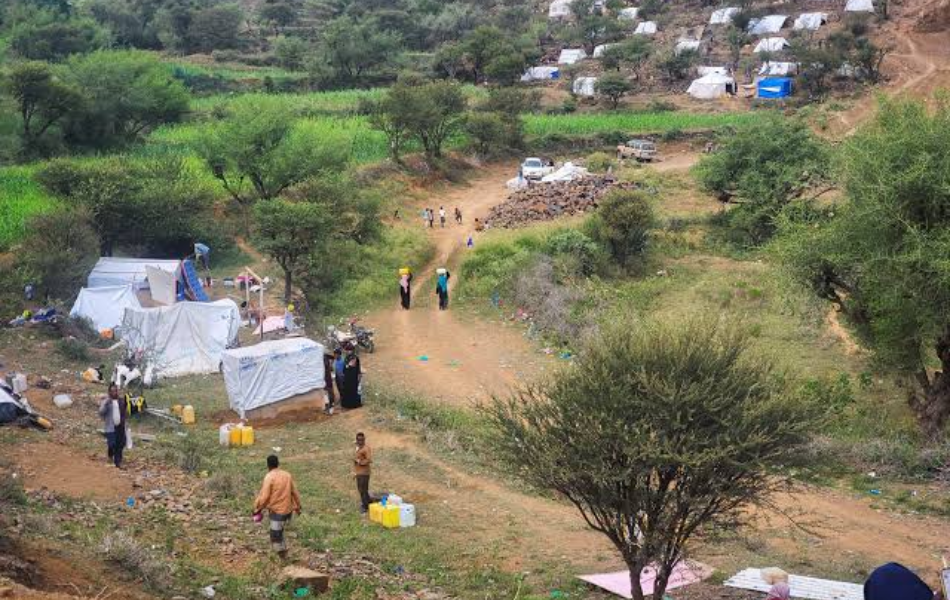
SAM for Rights and Liberties said that continued attacks on residential areas in Taiz governorate, combined with a tightening siege and restrictions on the movement of civilians and humanitarian and commercial supplies, have caused further civilian casualties, including women and children, and aggravated the governorate's humanitarian and health crisis. Meanwhile, the International Organization for Migration (IOM) has announced that more than 300,000 people have been displaced by the military escalation in western Yemen.
The organization said it had obtained field testimonies and medical information concerning shelling incidents in Taiz governorate in recent days. These included the killing of eight-year-old Layan Shaif Ali Abduh and Hayat Qaid Ali Mohammed, 35, and the injury of Hanan Shaif Ali Abduh, 24, in an attack by a drone belonging to the Houthi armed group that struck the Old Airport area of Taiz city on the morning of Sunday, 1 November. Three other civilians were injured in Al-Dhabab and Al-Difa'a in shelling that struck residential neighbourhoods on the same day.
SAM also received information concerning an airstrike by a warplane on Al-Ashaab village in Jabal Habashi district in late October. The strike killed Tahani Hamoud Abdulqader Muqbil and injured Fatima Mohammed Abdulqader Muqbil and Asma Ghalib Abdulqader Muqbil, the latter suffering shrapnel wounds and burns. The initial account did not identify the party responsible for carrying out the airstrike.
The organization stressed that repeated attacks on populated areas, involving the use of explosive weapons and causing casualties inside homes and residential neighbourhoods, raise serious concerns about compliance with international humanitarian law, particularly the principles of distinction, proportionality and precautions in attack. Such incidents require independent and effective investigations to identify those responsible for violations and ensure accountability.
In the humanitarian context, SAM noted that the International Organization for Migration announced in an official statement on 1 November 2026 that more than 300,000 people had been forced to flee their homes because of escalating fighting in western Yemen, almost all within the previous two months. Meanwhile, prices of essential commodities in Taiz city had increased three- to fivefold because of access restrictions and disrupted supply routes.
SAM emphasized that the combination of military attacks, widespread displacement and disruptions to healthcare, water and sanitation services threatens civilians' fundamental rights and compounds the risks facing women, children, patients, older people and families that have lost their homes and sources of income.
Based on field testimonies and information concerning the admission of casualties to the emergency department of Al-Thawra General Hospital, SAM for Rights and Liberties documented details of a drone attack carried out by the Houthi armed group against Al-Tabaddud neighbourhood in the Old Airport area of Taiz city on the morning of Sunday, 1 November 2026. The attack killed two female civilians, including a child, injured another woman and damaged privately owned civilian property.
According to information obtained by the organization, those killed were Layan Shaif Ali Abduh, aged eight, and Hayat Qaid Ali Mohammed, aged 35, while Hanan Shaif Ali Abduh, aged 24, was injured.
A medical account received by SAM showed that Layan arrived at the emergency department of Al-Thawra General Hospital at 8:53 a.m., having already died from multiple shrapnel wounds sustained in the shelling of the residential area.
As for Hayat Qaid Ali Mohammed, the medical account of her admission to the emergency department at 8:41 a.m. indicated that she had sustained severe injuries from multiple shrapnel wounds, including the amputation of her right leg. The Taiz Siege Affairs Office subsequently included her among those killed in the attack, alongside Layan.
In its video documentation of the incident, the office stated that the three victims belonged to the same family and that the attack had been carried out by a drone targeting the Old Airport neighbourhood.
SAM considers this incident a particularly harrowing example of the harm inflicted by attacks on populated areas. A child lost her life, while two women suffered severe injuries before the death of one of them was subsequently reported. The attack struck a residential area whose inhabitants are entitled to protection from the dangers of military operations.
In other incidents on the same day, the organization obtained medical information concerning three civilian casualties admitted to the emergency department of Al-Thawra General Hospital following shelling attributed in the accounts to the Houthi group.
At 4:41 p.m., the hospital admitted Abdullah Abdulraqib Ahmed Mohammed, aged 17, from the Al-Difa'a area, with a shrapnel wound to the palm of his left hand after a shell struck the area.
At 5:45 p.m., an account was received concerning the injury of Tahani Abdulraqib Jassar Mahyoub, aged 26, from the Al-Dhabab–Milat area, who sustained shrapnel wounds to her left shoulder and hand as a result of shelling targeting the area.
Another hospital admission record showed that Najat Mohammed Ali Al-Sanani, aged 40, arrived at the emergency department at 6:05 p.m., suffering multiple shrapnel wounds throughout her body after a shell struck the Al-Dhabab area.
The names of these injured civilians correspond to those listed in a field report published by the Taiz Siege Affairs Office on 1 November, which reported that three civilians, including two women, had been injured by artillery shelling of residential neighbourhoods in the governorate.
Accordingly, the incidents documented on 1 November resulted in two civilian deaths, including a girl, and injuries to four other civilians in separate attacks on the Old Airport, Al-Dhabab and Al-Difa'a areas. The medical accounts also highlight the severity of the injuries sustained, including multiple shrapnel wounds and limb amputations.
SAM stressed that continued civilian casualties in residential neighbourhoods require the immediate cessation of unlawful attacks, investigations into the types of weapons used and the targets selected, the identification of those responsible, and guarantees that injured civilians and victims' families receive appropriate medical care, justice and compensation.
In a separate incident, SAM for Rights and Liberties obtained field information concerning an airstrike carried out by a warplane against Al-Ashaab village in Jabal Habashi district, Taiz governorate, during the final days of October 2026. The strike caused civilian casualties among members of the same family.
According to the information received by the organization, the attack killed Tahani Hamoud Abdulqader Muqbil and injured Fatima Mohammed Abdulqader Muqbil, while Asma Ghalib Abdulqader Muqbil sustained shrapnel wounds and burns.
SAM emphasizes that the incident requires an independent investigation to establish the identity of the aircraft and the party responsible for carrying out the strike, the nature of the target, and whether the attack complied with international humanitarian law governing the protection of civilians and civilian objects.
The organization also stresses the importance of documenting the medical consequences of the injuries, particularly burns and shrapnel wounds, and preserving evidence and testimonies concerning the location and circumstances of the attack. Such measures are essential to establishing legal responsibility and ensuring victims' and their families' right to justice and effective remedies.
SAM further notes that the use of air power in populated areas requires all feasible precautions to avoid civilian casualties, and that the obligation to protect civilians applies to every party to the conflict without exception.
SAM expressed grave concern over continued intensive rocket and artillery shelling of residential villages and neighbourhoods to the south and east of Taiz city, warning that the escalating attacks pose direct threats to residents and obstruct access to medical and humanitarian services.
According to a report published by the Taiz Human Rights Center on 31 October, Dabbah village in the Al-Aqroud area of Al-Misrakh district was struck by more than 100 rocket and artillery shells in just four hours, between noon and 4:00 p.m., averaging approximately one shell every two and a half minutes.
In a field update published by journalist Fares Al-Hemiari on 1 November, he reported an ongoing Houthi attack on Kahlan village in Sabir district and the Al-Aqroud area of Al-Misrakh district, accompanied by heavy shelling of Waynan, Al-Shaqab and Al-Najada villages in the eastern countryside of Taiz governorate.
SAM noted that these attacks followed its urgent appeal issued on 27 October, in which it reported that the Houthi group had fired more than 200 rocket and artillery shells at villages in Kahlan over a 20-hour period, causing casualties, most of them women and children.
The organization emphasized that repeated, intensive shelling of populated areas endangers civilian lives and safety and raises serious concerns about indiscriminate or disproportionate attacks. It called for the immediate cessation of violations, investigations to establish responsibility, and safe corridors for evacuating the wounded and delivering medical and humanitarian assistance.
SAM said that the International Organization for Migration announced in an official statement issued on 1 November 2026 that more than 300,000 people had been forced to flee their homes because of escalating fighting in western Yemen, almost all within the previous two months, amid growing humanitarian needs and difficulties faced by relief teams in reaching affected communities.
The statement cited Abdusattor Esoev, IOM Yemen Chief of Mission, who warned that Yemeni families were being displaced yet again after years of conflict, often leaving their homes with little more than the clothes they were wearing, while urgently needing shelter, food, clean water and healthcare.
IOM reported that prices of essential commodities in Taiz city had increased three- to fivefold because fighting had cut off access between the city and surrounding areas, making food and other daily necessities increasingly unaffordable for residents and displaced families.
The organization added that more than 43,000 people had fled Al Madaribah Wa Al Aarah district in Lahj governorate since the beginning of October, the highest displacement figure recorded for any single district in Yemen during this wave. Meanwhile, Aden governorate was hosting more than 56,000 displaced people.
IOM explained that five Mobile Medical Teams were operating in Marib, Lahj, Aden and Taiz, including two teams in Taiz. These teams provide primary healthcare, reproductive health services, malnutrition screening, vaccination support, medical referrals, mental health and protection services, and emergency medical care. Together, they provided approximately 1,000 medical consultations during the week preceding the statement.
Despite contributions received to support the response, IOM warned that humanitarian needs continued to expand. It said it required US$45 million over the following six months to provide life-saving assistance, including shelter, emergency cash, essential household items, healthcare, water, sanitation and protection.
SAM considers that the growing number of displaced people, combined with soaring prices and restrictions on the movement of supplies, is deepening civilian deprivation of basic necessities and forcing families that have lost their homes and livelihoods into increasingly desperate circumstances.
SAM noted that the consequences of movement and road restrictions extend beyond food and medicine to the disruption of municipal and environmental services, including waste collection and safe disposal, threatening residents' health, particularly that of children, older people and patients.
In a field report published by Al-Mushahid on 31 October, journalist Enas Al-Hemiari documented the accumulation of household and medical waste in the streets and residential neighbourhoods of Taiz city for nearly a month. Waste transportation to a temporary disposal site west of the city, near the Al-Hangar checkpoint, had been suspended because of security risks and ongoing clashes in the area.
The report quoted Badri Mohammed Ahmed Hassan, Director-General of the Environmental Protection Authority in Taiz governorate, as saying that the siege and military operations had made the waste disposal site inaccessible. Previous attempts by sanitation workers to reach the site had encountered gunfire and sniper attacks, resulting in injuries to some workers.
The environmental official warned that the continued accumulation of waste, including medical waste, threatened residential areas with contamination, the proliferation of insects and rodents, and harmful odours. Meanwhile, burning waste and plastics releases smoke and pollutants that affect the respiratory system and increase health risks for vulnerable groups.
The report included the testimony of a woman identified as Umm Mohammed, from Al-Dhaboua neighbourhood in Al-Qahirah district, who described rubbish accumulating outside her home and forcing her family to keep their windows closed because of the smell. She said one of her children had developed a viral fever and believed that the increase in insects and mosquitoes near their home had contributed to worsening health conditions.
Iman Abdulwadud, a resident of the Lower Al-Tahrir area, also described how a rainwater drainage channel had become a dumping ground for waste. The resulting odours and smoke from burning rubbish had made some rooms unsuitable for normal use and prevented her family from ventilating their home properly.
The report also quoted ear, nose and throat specialist Dr. Abdulmaghni Al-Musni, who said he had observed an increasing number of consultations involving children and older people suffering from breathing difficulties, recurrent coughing, worsening asthma symptoms and other respiratory problems. He warned of the effects of prolonged exposure to smoke from burning waste.
Health Office officials in Taiz also reported that accumulated waste and unsafe disposal practices create conditions favourable to the spread of disease-carrying insects, increasing the risks of acute watery diarrhoea, cholera and respiratory illnesses.
SAM stressed that the right to health extends beyond the provision of hospitals and medicines to encompass the environmental and sanitary conditions necessary for healthy living, particularly waste management, sanitation and safe water.
The organization emphasized the responsibility of the relevant authorities to provide urgent and safe alternatives for collecting, transporting and disposing of waste, while protecting residents and sanitation workers from health and security risks.
The United Nations Children's Fund (UNICEF) warned on 1 November that disruptions to clean water supplies in Taiz city make it increasingly difficult for children and families to meet their daily needs.
UNICEF said that recent military developments and disruptions to some supply pipelines had affected the continuity of water services, threatening residents' access to the water needed for drinking, cooking and personal hygiene.
The agency noted that it had worked with the local water and sanitation corporation and other partners to address challenges affecting the network and help maintain water supplies to residents, thereby reducing the risks of waterborne diseases, particularly among children.
SAM said that ensuring the continuity of water services requires protecting supply facilities, pipelines and the personnel operating them, as well as securing access to operational and maintenance supplies, fuel and equipment for essential facilities, without subjecting civilians' access to water to unlawful restrictions.
The organization stressed that simultaneous disruptions to water, sanitation and healthcare services compound public health risks, particularly in densely populated neighbourhoods and displacement sites, making an integrated response to these crises an urgent humanitarian necessity.
SAM also noted a complaint published on 1 November concerning measures imposed on certain cargo trucks at the Jabal Habashi junction, reportedly requiring drivers to transfer their loads to other vehicles before being permitted to enter Taiz city.
According to the account published by Salah Al-Rahhal, the procedure delays truck movements, increases transportation costs and places additional burdens on drivers and traders.
The organization called on the competent authorities to clarify the nature and legal basis of these measures, assess their impact on supply movements, and ensure that security arrangements and inspection procedures do not become unjustified obstacles to the entry of food, medicines, fuel and other essential commodities into the city.
SAM emphasized that maintaining road security and protecting residents must go hand in hand with respect for freedom of movement and lawful trade, while avoiding arbitrary measures that increase the burden on civilians or raise the cost of obtaining basic necessities.
SAM for Rights and Liberties considers that continued attacks on residential neighbourhoods and villages in Taiz, combined with expanding displacement and restrictions on the movement of civilians and supplies, reveal serious threats to the rights to life, personal security, health, food, water and shelter.
The organization stresses that international humanitarian law requires all parties to the conflict to distinguish between civilians and combatants and between civilian objects and military objectives. It prohibits attacks directed against civilians, as well as indiscriminate and disproportionate attacks, and requires all feasible precautions to avoid or minimize civilian harm.
SAM emphasizes that the use of explosive weapons in populated areas requires a rigorous assessment of the expected effects of attacks, including the risks arising from a weapon's area of effect, population density, and the presence of children and women in homes and civilian buildings.
The organization also stresses that international humanitarian law prohibits the use of starvation of civilians as a method of warfare and protects objects and supplies indispensable to their survival, including drinking-water installations, supply infrastructure and services essential to life.
SAM considers that the humanitarian consequences of closing or damaging roads cannot be separated from legal obligations concerning civilian protection and the facilitation of humanitarian relief. Movement restrictions may disrupt access to medical treatment, food supplies, water, healthcare and environmental services, even when those restrictions do not directly cause deaths or injuries.
The organization underscores the need for independent and effective investigations into attacks that have killed and injured civilians, the preservation of medical and forensic evidence and testimonies from survivors and witnesses, and accountability for those responsible for violations of international humanitarian law.
SAM for Rights and Liberties condemns the continuing attacks that cause civilian casualties in Taiz governorate and calls on the Houthi group to immediately cease unlawful attacks on residential villages and neighbourhoods and respect international humanitarian law governing the protection of civilians and civilian objects.
The organization calls for an urgent, independent investigation into the attack that killed eight-year-old Layan Shaif Ali Abduh and Hayat Qaid Ali Mohammed and injured Hanan Shaif Ali Abduh in the Old Airport area, as well as the other attacks that injured civilians on 1 November, with those responsible identified and held accountable.
SAM also calls for an independent investigation into the airstrike on Al-Ashaab village in Jabal Habashi district, which killed Tahani Hamoud Abdulqader Muqbil and injured Fatima Mohammed Abdulqader Muqbil and Asma Ghalib Abdulqader Muqbil. The investigation must identify the party responsible for carrying out the strike, establish the nature of the target, and determine whether international humanitarian law was respected.
The organization demands an end to the intensive shelling of Kahlan, Al-Aqroud, Waynan, Al-Shaqab, Al-Najada and surrounding areas, unrestricted access for ambulances and medical assistance to reach victims, and protection for residents who are not participating in hostilities.
SAM further calls on the Houthi group to lift unlawful restrictions on the movement of civilians and supplies into Taiz, reopen the roads and corridors needed to deliver food, fuel, medicines, water and humanitarian assistance, and guarantee that civilians wishing to leave dangerous areas can do so freely and safely.
The organization calls on local authorities and relevant agencies to take urgent measures to address the accumulation of waste in Taiz city, establish safe facilities and procedures for its collection, transportation and disposal, protect sanitation workers, and prevent the burning of waste in residential neighbourhoods, particularly medical and plastic waste.
It also calls for the continuity of water and sanitation services, adequate support for the operation and maintenance of supply facilities, and priority measures to protect children, women and patients from diseases associated with contaminated water, accumulated waste and inadequate sanitation.
SAM urges the United Nations, donors and humanitarian partners to respond to IOM's appeal for funding to meet the needs of displaced people and expand shelter, food, water, healthcare, cash assistance and protection programmes, particularly in Taiz, Lahj, Aden and other areas hosting newly displaced populations.
The organization calls on all parties and relevant authorities to remove unlawful obstacles to the movement of humanitarian assistance and essential commodities and ensure that security measures or administrative restrictions do not increase civilian suffering or obstruct access to supplies indispensable to survival.
SAM for Rights and Liberties warns that continued military attacks, the siege, expanding displacement and deteriorating health and environmental services threaten further preventable loss of life and humanitarian harm. It calls for urgent international action to protect civilians, end unlawful attacks, ensure access to humanitarian assistance and essential services, conduct independent investigations, and hold those responsible for serious violations accountable.