

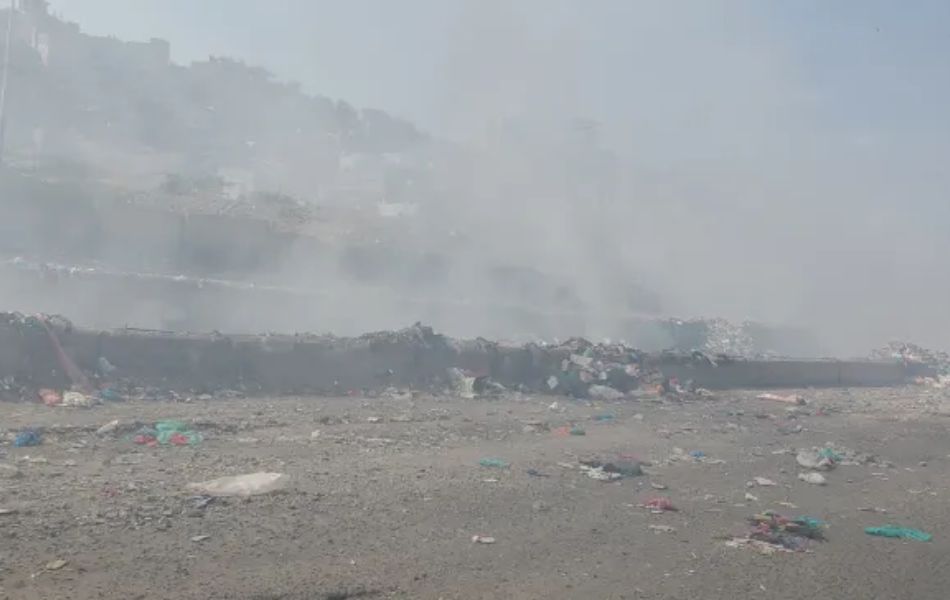
On the occasion of the International Day for Preventing the Exploitation of the Environment in War and Armed Conflict, observed annually on November 6, SAM Organization for Rights and Development warns of the grave consequences stemming from barring the Cleaning and Improvement Fund’s vehicles from reaching waste landfills outside the city of Taiz.
According to a report issued by the governorate's Medical and Environmental Committee, municipal vehicles were prevented from accessing disposal sites and forced to turn back loaded with refuse. This has triggered an accumulation of waste across streets, residential neighborhoods, and flood drainage channels, drastically elevating health and environmental risks for local residents.
The city of Taiz generates between 500 and 600 metric tons of solid waste daily. The report cautions that the persistent accumulation of refuse may compel residents to resort to open burning, releasing hazardous smoke, toxic fumes, and particulate matter that jeopardize public health—particularly among children, the elderly, and individuals with respiratory conditions. Furthermore, leaving waste exposed fosters breeding grounds for insects and rodents, escalating the risk of water and food contamination, as well as disease transmission.
These environmental hazards coincide with an alarming deterioration in the public health sector. According to data from the Public Health and Population Office through November 1, 2026, the weekly average of medical consultations dropped by 27% (from 24,009 to 17,491) amid acute shortages of fuel, medical supplies, and ongoing restrictions imposed on the governorate. Additionally, more than 80% of the 27 assessed healthcare facilities have been rendered non-operational due to severe deficits in fuel, personnel, and medical provisions.
The data further demonstrates a 26% surge in suspected dengue fever cases, with Taiz city accounting for 71% of all cases documented across the governorate; 96% of the city’s cases are concentrated within four urban districts. Concurrently, the incidence rate of watery diarrhea climbed by 22%, and the city's share of suspected cholera cases rose from 57% to 77%, despite an overall provincial decrease. Suspected mumps cases jumped by 94%—rising from 88 to 171—while data from the governorate’s Emergency Committee recorded a 66.7% increase in under-five child mortality.
Conversely, home-visit response missions declined by 19%, and laboratory diagnostic sample submissions fell by 22%, severely crippling the capacity to track cases, detect outbreaks, and mount early responses. SAM Organization emphasizes that the convergence of soaring disease rates, crippled monitoring and response capabilities, and mounting refuse heaps compounds the imminent danger facing civilians, warranting immediate intervention by health and humanitarian actors.
SAM Organization calls upon the Houthi movement to immediately lift all restrictions on the Cleaning and Improvement Fund's vehicles, ensure unimpeded access to landfills situated outside the city, and cease obstructing critical civil municipal services. It also urges local health authorities to ramp up field and epidemiological surveillance, track morbidity and mortality, monitor water and food supplies, and publish updated health data to enable both the public and relevant agencies to accurately evaluate risks and formulate timely responses.
Finally, the organization appeals to the United Nations, the UN Security Council, the World Health Organization (WHO), the International Committee of the Red Cross (ICRC), and international humanitarian entities to intervene swiftly and exert pressure to end the restrictions imposed on the governorate, secure emergency consignments of fuel, medicines, and medical equipment, and support health facilities in restoring operational capacity to curb looming epidemiological and environmental catastrophes.
SAM Organization for Rights and Liberties
November 6, 2026