

Geneva – 11 November 2026
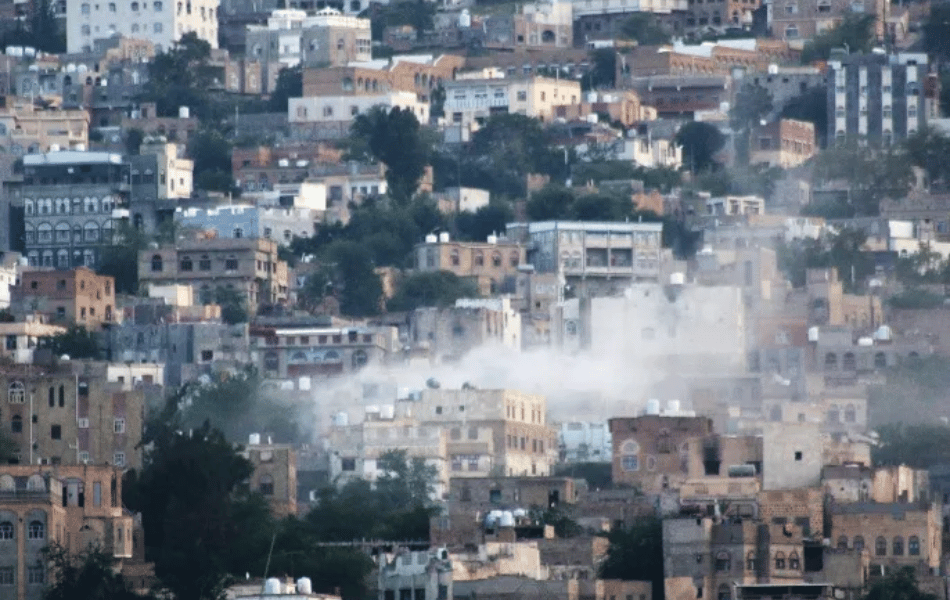
SAM for Rights and Liberties said that incidents documented by the organisation in recent days in Taiz Governorate reveal continuing attacks and violations attributed to the Houthi group against civilians. These include deaths and injuries resulting from shelling and sniper fire, children injured in residential neighbourhoods and villages, the detention of civilians and farmers while carrying out their daily activities, and the obstruction of medical evacuations. Serious reports have also emerged concerning the mutilation of the bodies of three people killed on the Sanamat front.
The organisation explained that information gathered by its researchers revealed that three members of a family were killed and at least two others injured in shelling that struck Qafan village in the Al-Za'azi' area of Ash-Shamayatayn District on 3 November. Local reports also recorded 12 additional civilian injuries between 9 and 11 November, including injuries among children, women and older people. This brings the number of identified injuries in the newly documented incidents to at least 14, excluding a child whose name appeared in the field reports without confirmation of his condition.
SAM also condemned the death of Ghaza Ali Abdulmaghni Al-Shaqab, who could not be transported to hospital for necessary medical care, according to local accounts linking her death to the Houthi siege of villages in Sabir Al-Mawadim District and the risk of gunfire against vehicles attempting to transport patients and wounded people. The organisation emphasised that her death is reported separately from the three people killed in the shelling, given the different circumstances and immediate causes involved.
The organisation expressed grave concern over the detention of three civilians in Al-Misrakh District on 11 November, including a grocery shop owner, a motorcycle driver and a village sheikh. These arrests followed reports two days earlier that Houthi forces had raided villages in the Al-Maqarimah area of Ash-Shamayatayn District and detained farmers while they were harvesting their crops.
In another development, SAM received information alleging the mutilation of the bodies of three people killed on the Sanamat front, including Raheeb Abdulhamid and Hilmi Majli. The organisation obtained direct testimony from Raheeb's mother, Asia Mar'i, who described seeing injuries and signs of mutilation on her son's body and the difficulties the family encountered while attempting to recover it.
These incidents coincide with a continuing deterioration in humanitarian conditions. On 10 November, the United Nations Office for the Coordination of Humanitarian Affairs (OCHA) announced that the UN Human Rights Office had verified 70 civilian deaths and 214 injuries since the beginning of August. Meanwhile, the latest data from the UN High Commissioner for Refugees (UNHCR) showed that approximately 321,000 people had been displaced in recent months, with tens of thousands of families still in need of shelter and essential services.
SAM stressed that the combination of attacks, the siege, road closures and disruptions to medical and humanitarian services exposes civilians to cumulative risks extending beyond direct physical injuries to the loss of access to medical treatment, food, water and livelihoods, as well as repeated displacement under conditions lacking even the most basic guarantees of safety.
This briefing is based on information collected by SAM researchers, testimonies, and medical and local reports concerning incidents recorded on 3 and 9–11 November 2026, including exclusive testimony from the mother of one of the deceased, alongside UN and WHO updates and three accompanying reports on displacement and humanitarian telecommunications. Overlapping casualty figures and deaths arising from different circumstances have been recorded separately, while incomplete information and allegations requiring further evidence remain attributed to their respective sources.
Field information collected by SAM for Rights and Liberties researchers indicates that a family in Qafan village, in the Al-Za'azi' area of Ash-Shamayatayn District, Taiz Governorate, was subjected to shelling on 3 November 2026. According to the organisation's preliminary information, the attack killed three family members and injured two others.
Those reported killed were Zaydan Ahmed Abdulkabir Mohammed, aged seven, Masrour Ahmed Abdulkabir Mohammed, and Salwa Ahmed Abdulkabir Mohammed. The preliminary account did not specify the ages of Masrour and Salwa, requiring further verification of their personal details.
The two injured children were Hiba Ahmed Abdulkabir Mohammed, aged 14, and Abdu Ahmed Abdulkabir Mohammed, aged ten.
The information also identified Hilal Ahmed Abdulkabir Mohammed, aged seven, but did not specify whether he had been injured, killed or survived the shelling. SAM therefore does not include him in the casualty figures pending confirmation of his condition.
The names provided in the field report indicate that members of the same family suffered devastating human losses, including young children. Such an incident compounds the social and psychological harm experienced by the family, alongside the physical injuries and their potentially long-term consequences.
The organisation is working to complete the information concerning the timing of the shelling, the type of weapon used, the impact location and the surrounding circumstances, as well as to cross-check victims' names against medical records and relatives' testimonies.
SAM emphasised that the death of a seven-year-old child and the injuries sustained by children aged ten and 14 illustrate the dangers facing children in residential areas affected by shelling, and the urgent need to ensure their protection and provide medical and psychological care to survivors and victims' families.
On 9 November, the Taiz Siege Affairs Office reported that five civilians, including two minors, had been injured by sniper fire and shell fragments in attacks carried out by the Houthi group in different parts of the governorate.
The injured included Omar Khaled Abdullah Ali, aged 24, from the Al-Thalatheen area of Al-Mudhaffar District, who sustained an injury to his left leg; and Abdulqawi Ali Abdullah Ahmed, aged 40, from Sabir Al-Mawadim District, who was injured in his left leg in the Al-Ashqab area.
Bassam Sadiq Farhan, aged 13, sustained shrapnel injuries to his right leg in Asifarah, while Asma Abdu Ali Qaid Ahmed, aged 16, was struck by shrapnel on the right side of her chest in the Al-Arbaeen area.
The list also included Wijdan Saeed Ahmed Abu Bakr, aged 36, from the Amd area, who was struck by a ricochet bullet on the left side of her face, with reports indicating that a fragment had lodged in her throat. The incident occurred while she was in the Al-Arbaeen area.
The nature of the injuries indicates that civilians were exposed to different hazards arising from gunfire and shelling, including wounds to the chest, face, throat and limbs. Such injuries may require surgical intervention, continuing medical care and long-term rehabilitation.
SAM noted that the Siege Affairs Office report identified five named casualties on that date. Accordingly, the organisation has adopted that figure without adding unspecified or duplicated cases.
On 10 November, the Taiz Siege Affairs Office reported the death of Ghaza Ali Abdulmaghni Al-Shaqab in the Al-Shaqab area, south of Taiz, after she was unable to reach hospital for treatment because of the siege and restrictions imposed on roads.
According to the report, a vehicle attempting to transport the girl to a hospital in Taiz city came under fire from Houthi forces, preventing her from receiving the necessary medical care.
In a video published by journalist Ahmed Al-Bakari, he reported that the girl was critically ill and required care in a medical incubator. However, the lack of suitable healthcare facilities in the area, combined with the siege and the threat posed by sniper fire along evacuation routes, prevented her from being transported for treatment.
The video reported that the girl died in her mother's arms before her family could reach a medical facility capable of providing the necessary care.
The available information indicates that the girl did not die from a direct gunshot wound but while access to emergency medical care was obstructed. SAM therefore distinguishes her death from fatalities caused directly by shelling or gunfire, while stressing the need to investigate the circumstances that prevented her medical evacuation.
The organisation considers this incident one of the most painful manifestations of the indirect consequences of the siege, where access to hospital becomes a challenge that may determine a patient's chances of survival, particularly for children and patients requiring urgent intervention.
SAM calls for the girl's medical records to be obtained, her family's attempts to transport her and the obstacles they encountered to be documented, and the reported shooting at the vehicle and the route it followed to be investigated, in order to establish responsibility for the obstruction of her access to treatment.
On the same day, the Taiz Siege Affairs Office announced that Abdu Qasim Mohammed Ghalib, aged 58, had been shot in his right thigh by Houthi forces in the Al-Dabab Al-Sayahi area, west of Taiz city.
In another incident on the evening of Tuesday, 10 November, the Office reported in an update published in the early hours of 11 November that Mohammed Saif Ibrahim Saad, aged 60, had sustained shrapnel injuries to his head as a result of Houthi shelling of the Al-Aqroud area in Al-Misrakh District.
SAM emphasised that both injuries occurred on 10 November, although one of the reports was published the following day. They are therefore recorded under Tuesday's casualty figures rather than assigning one of them to Wednesday.
The two incidents demonstrate that civilians, including older people, remain exposed to danger across different areas of the governorate, while medical transportation, emergency evacuation and access to healthcare facilities are becoming increasingly difficult.
Information obtained by SAM researchers, corroborated by the latest update issued by the Taiz Siege Affairs Office on Wednesday, 11 November, revealed that five civilians were injured in incidents involving shelling, sniper fire, gunfire and a collision involving a Houthi military vehicle in different parts of Taiz Governorate.
SAM documented the injury of Raghad Mohammed Abdulwahid Ali Mohammed, aged 26, a resident of Al-Aqroud in Al-Misrakh District, who sustained a gunshot wound to her leg.
According to field information, the incident occurred in Al-Aqroud, while the Taiz Siege Affairs Office reported that the shot had been fired by a Houthi sniper.
The organisation noted that the injury occurred in an area where civilians continue to be exposed to gunfire, increasing the risks associated with movement and everyday life in residential villages and neighbourhoods.
In the Aqaqah area, Wasim Mutie Ahmed Bajash, aged nine, suffered facial injuries from stones thrown into the air when a projectile struck the ground while he was nearby.
According to the testimony obtained by SAM, the injury was not necessarily caused by a fragment of the projectile itself, but by stones displaced by the impact and explosion.
The Taiz Siege Affairs Office also confirmed the child's injury and attributed the projectile to the Houthi group.
This incident highlights the dangers posed by explosive projectiles even when they do not strike civilians directly, as their impact on the ground or buildings can propel stones and other hard objects that injure people nearby.
In the Al-Zanqal neighbourhood of Taiz city, Raghad Mohammed Abdu Ali, aged four, was injured after falling as a shell exploded in the area.
The available information confirms that her injury resulted from the fall during the explosion, but does not provide sufficient details to establish the nature or severity of the injury.
The Taiz Siege Affairs Office included her among the injured, confirming that the incident occurred on Wednesday, 11 November.
SAM considers the exposure of a four-year-old child to danger from a shell explosion in a residential neighbourhood an illustration of the direct impact of hostilities on children, including cases where injuries result from falls or panic rather than shrapnel or bullets.
In one of the most serious injuries reported on 11 November, SAM documented the case of Walid Mohammed Ahmed Saeed, aged 35, a resident of Al-Shaqab in Sabir Al-Mawadim District, who sustained a gunshot wound to the head.
Field information indicated that the incident occurred in Al-Shaqab, while the Taiz Siege Affairs Office reported that the bullet had struck the brain.
The nature of the injury raises serious concerns about his condition and his need for urgent medical intervention and specialised care, particularly given the difficulties involved in transporting patients and wounded people from villages affected by the siege.
The testimony did not provide definitive information about his medical condition or the outcome of the injury. Accordingly, the organisation retains him on the list of injured persons and does not assume either his death or recovery without medical confirmation.
In Al-Wazi'iyah District, the latest update from the Taiz Siege Affairs Office reported that Hassan Salem Abdan had been injured after being struck by a military vehicle belonging to the Houthi group.
According to the statement, the incident caused fractures to both legs and an additional head injury.
The report did not specify the victim's age or the detailed circumstances of the collision, including whether the act was deliberate or resulted from the vehicle's movement. Further testimonies and evidence are therefore required.
SAM noted that this incident is recorded separately from injuries caused by shelling and sniper fire in terms of the means involved, but is included in the five injuries reported by the Office on 11 November.
Accordingly, the number of civilians reported injured between 9 and 11 November rose to 12, comprising five on 9 November, two on 10 November and five on 11 November. Including the two children whose injuries in the shelling of Qafan village on 3 November were documented by SAM, the total number of identified injuries in the newly documented incidents reaches at least 14, excluding unconfirmed or duplicated cases.
In a development coinciding with the continuing attacks, the Taiz Siege Affairs Office announced that members of the Houthi group had detained three civilians in Al-Misrakh District, south of Taiz, on Wednesday, 11 November.
Those detained were Mohammed Abdullah Ali Al-Sabri, a grocery shop owner taken from Najd Qasim Market; Yaqoub Ali Ghalib, a motorcycle driver detained at the same market; and Sheikh Abdulmuin Ahmed Mohammed, the sheikh of Sanamat village, who was detained in his village.
The published information did not specify the reasons for their detention, where they were taken, their health conditions or the circumstances in which they were being held.
According to the published updates, the arrests occurred amid continuing shelling and sniper attacks in Al-Misrakh and Al-Aqroud, heightening residents' fears about expanding restrictions on movement and economic and social activities.
SAM stressed that the detention of a grocery shop owner, a motorcycle driver and a village sheikh demonstrates the range of people affected by the group's actions, including those working in commerce and transportation and members of local community leadership.
Detaining people in markets and villages without informing their families of the reasons for their detention or their whereabouts also heightens concerns for their safety and requires urgent measures to establish their fate and safeguard their fundamental rights.
The organisation calls for the immediate disclosure of the three men's places of detention, access to communication with their families, clarification of the legal basis for their detention, and their release if there are no legitimate legal grounds for continuing to deprive them of their liberty.
On 9 November, the Taiz Siege Affairs Office reported that Houthi forces had entered the villages of Shaab Al-Hayy, Al-Sumaydah and Al-Banayn in the Al-Maqarimah area of Ash-Shamayatayn District and detained a number of residents and farmers while they were harvesting their crops.
According to the report, the forces raided homes, assaulted some residents in front of their families and frightened women and children. They also opened fire on residents, prevented farmers from completing their harvests and verbally abused women working in agricultural fields.
The report did not specify the number or names of the detainees or where they had been taken.
SAM noted that this incident is distinct from the detention of the three civilians in Al-Misrakh District on 11 November. The Al-Maqarimah detainees cannot be added to the confirmed figure for Al-Misrakh because their number is unknown and no connection between the incidents has been established.
The organisation stressed that attacks during the harvest season compound the economic harm suffered by farming families. Obstructing the collection of crops may result in their spoilage and the loss of food and income, particularly in areas affected by rising transportation costs and difficulties accessing markets.
House raids and gunfire in villages also threaten residents' sense of security and increase the likelihood of displacement and the loss of livelihoods.
SAM calls for the whereabouts of detained farmers to be disclosed, their safety guaranteed, those arbitrarily detained released, and attacks on residents carrying out agricultural activities brought to an end. It also calls for farmers to be able to access their land and crops safely.
SAM for Rights and Liberties received deeply disturbing information alleging that the bodies of three individuals killed on the Sanamat front had been mutilated. The allegations require an independent investigation involving the examination of the bodies, medical evidence, photographs and video material, and testimonies from people who saw the victims.
On 10 November, journalist Taha Saleh published information alleging that members of the Houthi group had mutilated the bodies of three deceased individuals, including Raheeb Abdulhamid and Hilmi Majli.
The allegations included the severing of Raheeb Abdulhamid's limbs, the disfigurement of his face, ears and eyes, and the use of a corrosive substance on his body. They also included allegations that Hilmi Majli had been decapitated and that an organ had been removed from the body of a third person whose name was not provided.
SAM emphasised that these are serious allegations requiring further medical and forensic verification. A single published account is insufficient, on its own, to establish all the reported forms of mutilation.
As part of its documentation efforts, a SAM field monitor obtained direct testimony from Asia Mar'i, the mother of Raheeb Abdulhamid, who described the circumstances in which she reached her son's body and the injuries and signs of mutilation she observed.
During the interview, the mother expressed her profound grief over her son's death and stated that she had seen his body bearing severe injuries and signs of mutilation to some of his limbs. She also described gunfire originating from Houthi positions during attempts to reach the body.
She explained that the family encountered difficulties recovering the body because of continuing gunfire, and that interventions and communications were undertaken to facilitate access to it and its transfer.
She also referred to Al-Thawra Hospital and the importance of obtaining a medical report documenting the body's condition and the injuries sustained.
Her testimony reflects the suffering of a family that lost one of its members and then endured extremely difficult circumstances while attempting to reach and recover his body. It also provides preliminary information that can guide documentation and investigative procedures.
However, some passages of the interview transcript are not sufficiently clear to establish all the details of the alleged mutilation, particularly the nature of the severed limbs or the reported use of corrosive substances. Clarifying these matters requires reviewing the original recording, obtaining photographs and medical reports, and collecting statements from people who saw the body before and after its transfer.
SAM calls for an independent forensic examination of all three bodies, documentation of injuries and signs of mutilation, verification of the circumstances of death and the treatment of the bodies afterward, and identification of the third deceased person. Witnesses and victims' families must also be protected against threats or intimidation.
The organisation stressed that respect for the dignity of the dead is an obligation that does not cease because of a person's affiliation or participation in the conflict. Establishing the facts concerning allegations of body mutilation is essential to preserving the truth and preventing such acts from recurring.
On 10 November, the United Nations Office for the Coordination of Humanitarian Affairs (OCHA) reported that the UN Human Rights Office had verified 284 civilian casualties since the beginning of August 2026, comprising 70 deaths and 214 injuries.
The update stated that children accounted for more than one-third of all civilian casualties and approximately half of those killed, illustrating the scale of harm suffered by children as a result of hostilities.
SAM emphasised that these figures represent civilian casualties verified by the UN Human Rights Office under its own methodology and do not necessarily encompass every casualty recorded during the same period.
The UN figures must not be automatically added to the newly documented individual incidents, since some of those cases may already be included in the UN records.
In the same update, OCHA warned that conditions in Taiz city continued to deteriorate, with vital roads closed to humanitarian aid and commercial supplies and essential services under increasing pressure.
OCHA noted that routes into the city from areas under the control of the Yemeni Government remained blocked or closed because of the fighting, obstructing the delivery of life-saving supplies and commercial goods.
SAM stressed the importance of continuing detailed casualty monitoring, distinguishing aggregate figures from individual incidents, and documenting victims' names, attack locations, weapons used and the parties responsible.
The World Health Organization's eleventh situation report on the escalation in Yemen, issued on 10 November, showed that the broader casualty toll recorded by the Health Emergency Operations Centre had reached 11,755 deaths and injuries as of 8 November, comprising 2,098 deaths and 9,657 injuries.
SAM noted that these figures do not distinguish all civilians from combatants. Accordingly, the total number of deaths must not be described as a civilian death toll or added to the figures verified by the UN Human Rights Office.
The report also documented incidents affecting healthcare, including the destruction of Al-Saqiyah Health Centre in Lahj Governorate on 1 November, according to Health Emergency Operations Centre data, with three health workers killed and four injured.
It further reported that an ambulance carrying wounded people came under fire in Sabir Al-Mawadim District, Taiz Governorate, on 8 November, as well as reports of damage to two health facilities in Taiz on 5 November, with WHO verification ongoing.
As part of its response, WHO announced the dispatch of approximately 14 metric tonnes of medicines and medical supplies to Al-Jumhouri and Al-Thawra hospitals in Taiz, with additional supplies prepared for three other hospitals.
WHO also reported that two humanitarian charter flights on 5 and 10 November transported approximately 20 metric tonnes of medicines, diagnostic materials and nutritional supplies from Dubai, while a further 16.3 metric tonnes of laboratory supplies reached five central public health laboratories.
Despite these deliveries, the organisation warned that critical fuel shortages in Taiz were affecting health facilities' ability to provide emergency services.
The report also highlighted gaps in trauma referral pathways, limited funding for trauma stabilisation services, and weaknesses in rehabilitation and mental health and psychosocial support.
SAM emphasised that continued civilian exposure to sniper fire and shelling, including injuries to the head, chest and face, increases the need for emergency care, surgery and rehabilitation at a time when medical facilities face shortages of resources, fuel and operational capacity.
WHO reported that measles and rubella vaccination campaigns began on 7 November in areas under the control of the Yemeni Government, alongside the provision of vitamin A supplements to eligible children.
According to the report, the campaign targets 957,196 children aged between six and 59 months across 100 districts in 11 southern governorates, with 2,291 vaccination teams participating.
WHO indicated that more than 600,000 children had been vaccinated by the time of the update, with support for the campaign's implementation in five displacement camps in Aden and Lahj governorates.
However, the Taiz Public Health and Population Office warned on 7 November that vaccination campaigns had been disrupted in areas affected by the siege, depriving approximately 347,000 children of measles and rubella vaccines and placing 72,500 children under one year of age at risk of missing routine immunisations.
Taiz health communications officer Taysir Al-Samiei also reported 26 deaths and 2,738 measles cases between the beginning of 2026 and the end of October.
SAM emphasised that the launch of the national campaign does not necessarily mean that vaccination services have been restored in every affected area of Taiz. Detailed information is therefore required on the districts covered and the children who remain beyond the campaign's reach.
Regarding cholera, the WHO report indicated a decline in suspected cases across the five most affected governorates, from 639 cases in epidemiological week 40 to 412 in week 44, followed by 229 in week 45, although data for the latter week remained incomplete.
WHO also reported a new cluster of 50 suspected cases and one death in Tarim, Hadramout Governorate, which remains under investigation.
SAM considers that continuing disruptions to healthcare, water and sanitation services, combined with displacement, the siege and fuel shortages, reinforce the need for stronger disease surveillance, prevention and treatment, particularly among children and displaced families.
UNHCR's seventh emergency update, dated 10 November, showed a continued increase in displacement resulting from the escalation in Yemen, with approximately 321,000 people newly displaced between 1 August and 7 November 2026.
According to the International Organization for Migration's detailed figures, 320,849 people, representing 53,468 households, were displaced during this period. This comes against the backdrop of a wider displacement crisis affecting approximately 5.2 million internally displaced people across Yemen.
The report indicated that Taiz accounted for approximately 67 per cent of newly displaced people by governorate of origin, followed by Lahj with 20 per cent and Al-Hudaydah with 12 per cent.
By receiving governorate, Taiz hosted approximately 44 per cent of newly displaced people, followed by Lahj with 25 per cent and Aden with 19 per cent.
The displacement overview published on 11 November showed that Taiz was hosting approximately 138,000 newly displaced people, followed by Lahj with 81,000 and Aden with 64,000.
UNHCR also reported that approximately 75 per cent of newly displaced people were living in displacement sites, amid growing needs for shelter, food, water, healthcare and protection.
SAM emphasised that distinguishing between governorates of origin and receiving governorates is essential to understanding displacement patterns and the distribution of humanitarian burdens, particularly in Taiz, where some families are fleeing areas of fighting while others seek shelter in locations facing comparatively lower levels of danger.
In testimony included in the UNHCR report, Wathiqa Ali Muqbel Al-Abdl, a widow and mother of five, described fleeing her home in the Al-Kadha area on foot with her children after fighting intensified.
Wathiqa left behind her house and livestock, on which she had relied to support her family, before taking shelter in a tent in Al-Manij camp in Al-Ma'afir District, without adequate mattresses, blankets or other basic necessities.
She explained that she had previously lived a stable life, relying on her property and livestock, but was forced to abandon everything out of fear for her children's safety.
Her testimony illustrates the harm extending beyond the loss of shelter to the loss of income, privacy and a sense of security, and the additional burdens this places on female-headed households.
The UNHCR report identified a substantial gap between displaced people's needs and the humanitarian response available, particularly in shelter, household items and protection services.
Response partners provided shelter assistance to 5,586 households and essential household items to 5,650 households, while 5,162 households received emergency cash assistance.
At least one protection service was provided to 30,689 people, including child protection, legal assistance, case management and services addressing gender-based violence.
An assessment covering 15,818 households found that approximately half had factors increasing their vulnerability, while 2,815 households lacked shelter.
UNHCR reported that more than 40,800 households still required shelter assistance, while approximately 35,600 households needed essential household items.
The agency estimated that approximately US$36 million was needed to address outstanding shelter, non-food item and site management requirements.
At the same time, only 19 per cent of UNHCR's US$193.6 million requirements for Yemen in 2026 had been funded, while the Yemen Humanitarian Needs and Response Plan had received 23 per cent of the required US$2.16 billion.
UNHCR further reported that its regional emergency response and preparedness requirements for Yemen, Djibouti and Somalia between October 2026 and March 2027 amounted to US$32.4 million, covering a different scope from the funding needed to address shelter gaps inside Yemen.
SAM warned that continued funding shortages threaten to leave more families without adequate assistance, particularly those who have lost their homes and possessions or have been displaced repeatedly.
The Logistics and Telecommunications Cluster's Situation Report No. 118, covering October 2026, revealed that deteriorating security conditions had led to the suspension of on-site humanitarian telecommunications and technical support services in Al-Turbah, Taiz Governorate, from 4 October, while operations in Al-Makha had remained suspended since 9 September.
The report explained that the Cluster had withdrawn some of its equipment from Al-Turbah and Adham to mitigate security risks, while continuing to provide remote technical support wherever possible.
The Cluster also activated an emergency contingency plan for Taiz covering coordination, information management, logistics and telecommunications, with an initial funding requirement of US$281,075.
During October, the Cluster provided security communications services to 755 humanitarian responders through three Security Operations Centres in Aden, Al-Mukalla and Ma'rib, while on-site services in Al-Turbah and Al-Makha remained suspended.
It also provided internet connectivity to 93 humanitarian personnel in Al-Mukalla, compared with more than 300 at the beginning of the year.
SAM clarified that these figures concern the suspension of technical and security telecommunications services dedicated to humanitarian organisations. They do not indicate a general shutdown of public telephone or internet networks affecting all residents.
Nevertheless, the suspension of on-site services reduces humanitarian organisations' capacity for security and logistical coordination, information exchange and emergency response, particularly in areas experiencing large-scale displacement and access difficulties.
UNHCR's displacement overview, updated as of 7 November, recorded 4,201 people arriving from Yemen in Djibouti and Somalia, including 3,836 in Djibouti and 365 in Somalia.
The dashboard indicated that women and children accounted for approximately 76 per cent of the new arrivals covered by its data.
In Djibouti, initial profiling had been completed for 3,798 people from 1,081 households, while individual registration had been completed for 1,702 people, leaving 2,096 awaiting registration.
Assessments also revealed overcrowding in reception sites, with a substantial proportion of tents shared by between two and six households amid shortages of adequate shelter and services.
In Somalia, UNHCR reported that 18 Yemeni adults had arrived in Mogadishu seeking international protection after fleeing fighting and insecurity in Al-Makha, travelling from Al-Makha to Aden and then Djibouti before continuing their journey.
SAM stressed that cross-border arrivals constitute a separate category from internal displacement and must not be added to the internal displacement figures.
The organisation also called for access to registration procedures, protection, shelter, healthcare and education, and respect for the different legal statuses of those fleeing the conflict.
In its update issued on 10 November, OCHA warned that humanitarian conditions in Taiz city continued to deteriorate, with major roads closed and the delivery of humanitarian assistance and commercial supplies disrupted.
OCHA reported that Médecins Sans Frontières (MSF) had expanded emergency water trucking operations in the city, providing approximately 113,000 litres of drinking water daily over the preceding three weeks and reaching more than 7,000 families.
MSF also delivered medical supplies to Al-Thawra Hospital to support the treatment of injured patients.
Meanwhile, OCHA reported that waste collection services remained severely disrupted because of shortages of fuel and resources, limiting the ability to transport waste to the main landfill.
It noted that a fire broke out in the Al-Saelah area of Taiz city on 9 November, sending thick smoke across residential neighbourhoods and raising health and environmental concerns.
SAM emphasised that these developments demonstrate how the effects of the siege and fighting extend to water, sanitation and public health services, while fuel shortages and disruptions to municipal services increase risks for residents of densely populated neighbourhoods and displacement sites.
SAM for Rights and Liberties considers that the latest incidents in Taiz Governorate reveal interconnected patterns of violations affecting the rights to life, personal security, liberty, health, food and freedom of movement, while increasing the risks faced by civilians in residential villages and neighbourhoods. Continued shelling, sniper fire and shooting, resulting in deaths and injuries among children, women and older people, raise serious questions about compliance with the principle of distinction between civilians and combatants, the prohibition of direct attacks against civilians and indiscriminate or disproportionate attacks, and the obligation to take all feasible precautions to minimise civilian harm.
The shelling that struck members of a family in Qafan village, Ash-Shamayatayn District, is particularly serious in light of the three reported deaths, including that of a seven-year-old child, and injuries to two other children. The incident highlights the harm inflicted on individual families and the exposure of children to the loss of protection and care. The organisation emphasised the need to investigate the nature of the target, the means of attack, the surrounding circumstances and the party responsible for firing the projectile, while preserving physical and medical evidence and survivors' testimonies.
The death of Ghaza Ali Abdulmaghni Al-Shaqab also raises grave concerns regarding the protection of patients and their access to medical treatment. International humanitarian law provides protection for the wounded and sick, medical personnel and medical transports, requiring that they be respected and protected under the applicable rules. If it is established that gunfire or unlawful road restrictions prevented the girl's evacuation and deprived her of care that could have saved her life, the responsibility for obstructing her evacuation and the resulting consequences must be investigated.
With regard to detentions, SAM considers that the seizure of civilians from markets and villages, and the detention of farmers during the harvest, raise concerns about personal liberty and protection against arbitrary detention, particularly when the reasons for detention or detainees' whereabouts are not disclosed or communication with their families is prevented. Preventing farmers from accessing their land or harvesting their crops may also undermine their food supplies and livelihoods, compounding the economic and humanitarian harm suffered by rural families.
The allegations concerning the mutilation of bodies on the Sanamat front raise serious questions regarding respect for the dignity of the dead and the prohibition of mutilation and degrading treatment of human remains. International humanitarian law requires the dead to be respected and all feasible measures to be taken to prevent the desecration of their remains, regardless of their civilian or military status or affiliation with any party to the conflict. If deliberate mutilation or desecration is established, it may give rise to criminal responsibility for acts prohibited under international law, depending on the circumstances and applicable legal elements of each incident.
The organisation further considers that the continuing Houthi siege and restrictions imposed on the movement of civilians and essential supplies raise serious legal responsibilities, particularly when those restrictions deprive the population of food, water, fuel, medicines, vaccines and healthcare. International humanitarian law prohibits the use of starvation of civilians as a method of warfare and protects objects and supplies indispensable to their survival. It also establishes obligations concerning the passage and facilitation of humanitarian relief under the applicable rules.
The continuing increase in displacement also reflects the widening humanitarian consequences of the conflict and the corresponding obligations to protect civilians against unlawful forced displacement, ensure non-discriminatory access to humanitarian assistance, and provide shelter conditions that preserve safety, privacy and human dignity, with particular attention to children, women, persons with disabilities, older people and patients.
SAM emphasised that responsibility for serious violations may extend to commanders who ordered or supervised their commission, or who knew about such acts but failed to take the necessary measures to prevent or punish them, where the legal requirements for individual and command responsibility are met. The organisation also stressed the importance of independent and effective investigations, the preservation of medical, physical and digital evidence, the protection of witnesses, victims and their families, and the right to truth, justice and reparations.
SAM for Rights and Liberties strongly condemns the continuing Houthi attacks against civilians in Taiz, including shelling, sniper fire and shooting directed at villages, residential neighbourhoods and public roads, as well as the detention and assault of civilians and farmers while carrying out peaceful activities.
The organisation calls for an independent and urgent investigation into the shelling of a family in Qafan village, Ash-Shamayatayn District, on 3 November, which killed three people and injured two children. It also calls for the completion of victims' personal records, verification of the condition of Hilal Ahmed Abdulkabir Mohammed, preservation of evidence relating to the attack, and identification of those responsible.
SAM further calls for investigations into the incidents of shelling, sniper fire, shooting and vehicle-related injury that left 12 civilians injured between 9 and 11 November, accountability for those responsible, and access to medical treatment, specialised care and rehabilitation for the injured.
The organisation demands an investigation into the circumstances surrounding the death of Ghaza Ali Abdulmaghni Al-Shaqab, including documentation of the attempts to evacuate her, the obstacles that prevented her from reaching hospital and the reported shooting at the vehicle carrying her, together with measures to prevent patients from being denied treatment because of security or military restrictions.
SAM also calls for the immediate disclosure of the places of detention of Mohammed Abdullah Ali Al-Sabri, Yaqoub Ali Ghalib and Sheikh Abdulmuin Ahmed Mohammed, access to communication with their families, clarification of the legal basis for their detention, and their release if they are being held arbitrarily.
The organisation further demands that the fate and whereabouts of farmers detained in Al-Maqarimah be established, their safety guaranteed, house raids and attacks on residents during harvest activities halted, and farmers enabled to access their land and livelihoods safely.
Regarding reports of body mutilation, SAM calls for an independent forensic investigation into the alleged incidents on the Sanamat front, including examination of the three bodies, documentation of injuries and signs of mutilation, review of original recordings and photographs, interviews with victims' families and witnesses, and identification of those responsible for any violations found to have occurred.
The organisation also demands that the Houthi group lift the siege and unlawful restrictions imposed on Taiz, reopen vital roads to civilians, patients, ambulances, humanitarian assistance, and commercial and medical supplies, and ensure the unobstructed passage of fuel, food, water, medicines and vaccines.
SAM urges the United Nations and international donors to strengthen urgent support for the health sector, particularly emergency services, medical evacuation, surgery, rehabilitation and mental health and psychosocial care, and to provide sufficient funding to keep hospitals operating and meet the needs of patients and wounded people.
It also calls for the expansion of shelter, food, water, sanitation and protection programmes for displaced people, and for funding gaps that leave tens of thousands of families without adequate assistance to be addressed, prioritising female-headed households, children, older people and persons with disabilities.
Finally, the organisation stresses the need to protect humanitarian personnel and medical transports, facilitate the restoration of field-based services and humanitarian telecommunications wherever security conditions permit, and strengthen monitoring, investigation and accountability mechanisms to end impunity.
SAM for Rights and Liberties emphasises that the killing of three people and injury of two children in shelling that struck a family in Ash-Shamayatayn District, the injury of another 12 civilians between 9 and 11 November, and the death of a girl who could not reach hospital reveal the continuing direct and indirect dangers threatening the lives, safety and fundamental rights of civilians in Taiz.
These incidents are compounded by the continuing detention of civilians and farmers, expanding restrictions on agricultural activities and livelihoods, and serious reports of the mutilation of bodies, demonstrating the interconnected nature of attacks against