

Geneva – 28 November 2026
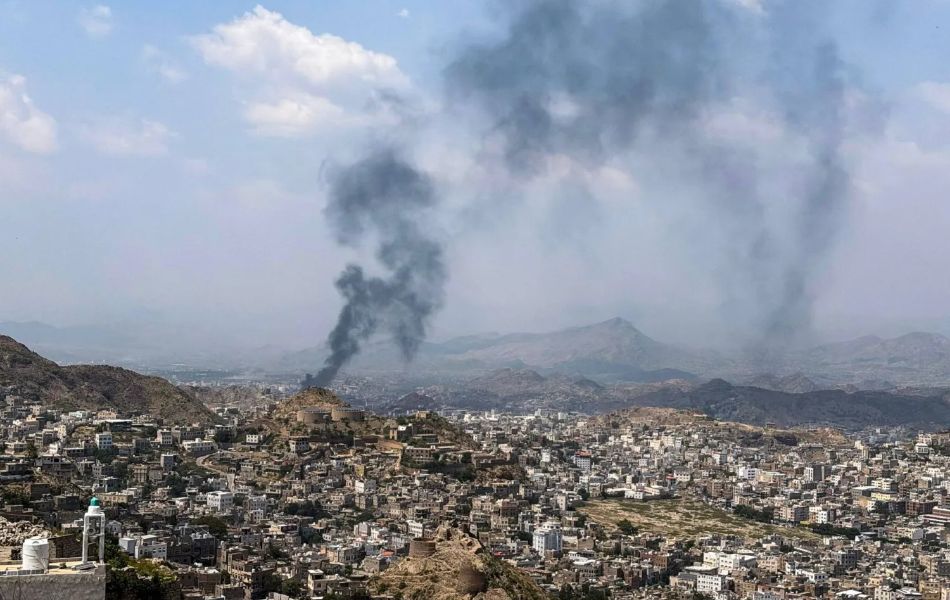
SAM Organization for Rights and Liberties said that escalating attacks by the Houthi group against residential areas in Taiz Governorate, the continuing siege of the city, and restrictions on civilian movement and the delivery of commercial and humanitarian supplies are driving the population towards unprecedented levels of suffering, amid mounting civilian casualties, deteriorating healthcare services, and worsening hunger and displacement.
The organization stressed that continuing attacks against civilians, combined with the declining availability of medicines, food, water and fuel, threaten the lives of hundreds of thousands of people, particularly children, women, patients and older persons. Meanwhile, displaced families face extremely difficult conditions after losing their homes and livelihoods and being deprived of access to essential services.
These developments come as the Famine Early Warning Systems Network (FEWS NET) warns of a credible risk of famine in Taiz city between February and May 2027 if the siege persists and restrictions on food supplies intensify.
This briefing presents the principal human rights violations and humanitarian developments documented in reports and testimonies published in recent days, including attacks against civilians, the consequences of the siege for healthcare and food security, the dangers posed by landmines, the suffering of displaced families, and the declining capacity of the humanitarian response.
The Taiz Siege Affairs Office announced that 27 civilian casualties, including 11 people killed and 16 injured, had been recorded as a result of attacks carried out by the Houthi group against several neighbourhoods, villages and residential areas in the governorate on 26 and 27 November 2026.
The casualty toll includes victims of drone attacks, shelling and sniper fire, among them children and women, including a woman in her eighth month of pregnancy.
On Thursday, 26 November, the Taiz Siege Affairs Office reported that nine civilians, including four children and a woman in her eighth month of pregnancy, had been injured by Houthi shelling and sniper fire targeting residential neighbourhoods and areas in Taiz city and rural parts of the governorate.
The targeted areas included Tabbat Al-Wakeel, Jabal Jarrah, Al-Qasr, Habil Salman and the Amd neighbourhood in Taiz city, as well as villages in Sabir Al-Mawadim District and Hammah village in Al-Aqrud subdistrict, Al-Misrakh District.
On 27 November, the Siege Affairs Office reported that three civilians, including a child, had been killed and a fourth civilian critically injured in a Houthi drone attack targeting civilians in the 30th Street neighbourhood of Taiz city.
Those killed in the attack were:
Abdulraqeeb Jassar Mahyoub Ahmed (67).
Obay Mohammed Mohammed Ali Abdulwahab (10).
Mohammed Mohammed Ali Abdulwahab (38), Obay's father.
Abdulhafiz Abduljalil Saad Saeed (20) also sustained injuries described by the office as critical.
On Friday, 27 November, Al-Turbah, the second-largest city in Taiz Governorate, witnessed an attack on a building locally known as the Cinema Hangar. The attack resulted in civilian deaths and injuries, including among children who were selling ice cream near the building.
The Siege Affairs Office reported that eight civilians had been killed and four others injured in the attack, which it attributed to the Houthi group.
However, the local authority in Taiz Governorate announced in a statement published by the Information Office on 27 November that, according to preliminary information, the attack had killed 11 civilians and injured several others.
Based on information from the operations room, the local authority confirmed that no aerial operations had been conducted in the Al-Turbah area that day and held the Houthi group responsible for the attack.
In a video report published by journalist Fares Al-Humairi on 27 November, medical sources were cited as saying that seven children were among those killed in the attack.
Local residents reported that the explosion struck a building used by livestock traders opposite the government complex in Al-Turbah, while the children who were killed had been selling ice cream in the vicinity of the building.
The casualty figures announced by the Siege Affairs Office differ from those reported by the local authority and medical sources regarding the number of fatalities in Al-Turbah. Accordingly, the overall casualty figures used in the headline of this briefing are based on the daily figures published by the Siege Affairs Office, without ruling out a possible increase once victims' names and medical records have been reconciled.
Also on 27 November, the Siege Affairs Office documented the injury of Basma Bassam Abdulwahab Abdulhaq, aged one and a half years, who sustained a laceration to her mouth after a projectile fired by the Houthi group struck residential neighbourhoods in Watir subdistrict, Sabir Al-Misrakh District.
In the Al-Shaqab area, Nayliyah Abdu Abdu Farea Al-Sabri (45) sustained bruises and abrasions to her head and body after falling while attempting to escape gunfire directed at her by a Houthi sniper as she collected water from a well in her village.
The incident illustrates the dangers women face while attempting to obtain water in areas exposed to sniper fire and shelling, where daily activities essential to their families' survival have become a direct threat to their safety.
In a video published by journalist Fares Al-Humairi on 26 November, footage showed the aftermath of a missile fired by the Houthi group that landed in a populated area in Sarbeit subdistrict, rural Taiz Governorate.
Al-Humairi reported that the missile landed shortly after being launched from Sami' District.
The published information did not provide casualty figures or details of any resulting material damage.
In an infographic published on 28 November, the Taiz Governorate Information Office reported that 57 women and girls had been killed and 146 others injured by Houthi shelling over three months.
These figures indicate that women and girls continue to be killed and injured in residential areas, amid increasing risks associated with displacement, the siege, and difficulties accessing water, food and healthcare.
The published statistics contain an arithmetic discrepancy between the stated overall total of 193 victims and the combined number of those killed and injured, which amounts to 203 victims. SAM therefore presents the individual figures as reported by the source without adopting the inconsistent overall total pending its correction.
Health Situation Report No. 13, issued by the World Health Organization and the Health Cluster on 24 November and published on 27 November, showed that the cumulative casualty toll recorded by the Health Emergency Operations Centre since the beginning of the escalation had risen to 13,343 deaths and injuries as of 23 November 2026, comprising 2,361 deaths and 10,982 injuries.
The centre recorded an increase of 564 deaths and injuries over seven days, while the average daily number of new casualties declined from approximately 128 to 81.
Marib Governorate accounted for 335 of the 429 casualties for which a geographical breakdown by governorate was available. It also accounted for 60 of the 73 deaths included in that breakdown.
The overall casualty figures presented in the report do not distinguish between civilians and combatants. Accordingly, they must not be treated as a civilian-only casualty toll or combined with the figures for civilian casualties in Taiz Governorate.
In a statement published by the Taiz Governorate Information Office on 27 November, Dr. Mohammed Al-Soufi, Director of the Taiz branch of the Supreme Authority for Medicines and Medical Supplies, warned of the imminent collapse of the pharmaceutical and healthcare systems as a result of the continuing siege imposed by the Houthi group on the city.
Al-Soufi revealed that medicine stocks had declined by 85% compared with normal levels, while needs and demand had increased by more than 200% because of the growing number of injuries caused by shelling and sniper fire, the influx of displaced people, and the spread of diseases and epidemics.
He explained that the closure of major access routes had increased the cost of transporting medicines and medical supplies and heightened the risks facing suppliers, at a time when the treatment needs of wounded people and patients were increasing.
Drawing on data from the Taiz Governorate Health Office, the director of the Supreme Authority for Medicines branch outlined the risks posed by depleted medicine stocks and the inability to deliver medical supplies. These include:
More than 10,000 patients with diabetes at risk of losing access to free insulin doses.
16,500 cancer patients receiving treatment at the oncology centre who face the risk of interrupted care and medication.
More than 700 patients with kidney failure at risk of interruptions to regular dialysis sessions.
11,500 patients with mental health conditions at risk of losing access to their long-term medications.
500,000 women of reproductive age at risk of being deprived of reproductive healthcare services.
347,000 children deprived of measles vaccination, while another 79,000 children are at risk of missing routine vaccinations.
Al-Soufi also warned of the impending suspension of surgical procedures in operating theatres, difficulties obtaining essential treatment for organ transplant recipients, and shortages of life-saving antivenoms and sera needed to treat snakebites and dog bites.
These figures demonstrate that the health consequences of the siege extend beyond shortages of medicines in pharmacies and directly threaten the continuity of treatments essential to the survival of thousands of patients.
Al-Soufi stated that the crisis had been exacerbated by the imposition of double customs levies on pharmaceutical shipments and the confiscation of stocks and assets belonging to national pharmaceutical companies, including Al-Alamiyah Pharmaceutical Factory and Modern Pharmaceutical Company.
He explained that these measures had forced suppliers to restrict their transactions to limited cash sales and refrain from maintaining strategic reserves within the governorate.
According to the authority, these practices have resulted in the bankruptcy of dozens of private pharmacies and pharmaceutical establishments, threatened the livelihoods of thousands of households, and created conditions conducive to monopolistic practices and smuggling through entities associated with the Houthi group.
The director of the Supreme Authority for Medicines branch also revealed that waste collection trucks had been prevented from accessing the landfill known as Hadaeq Al-Saleh in the Al-Dhabab area, resulting in the accumulation of waste inside Taiz city.
He linked the deteriorating environmental conditions to the increasing prevalence of febrile illnesses, watery diarrhoea and respiratory diseases, amid the declining capacity of the healthcare sector to provide medicines and necessary treatment.
The World Health Organization and Health Cluster Situation Report issued on 24 November reported that the number of health facilities reported damaged or otherwise affected by the military escalation had increased from 28 to 39 health facilities, in addition to eight ambulances and 15 healthcare workers included in reports of damage or casualties affecting the health sector.
WHO explained that these figures had been provided by the Health Emergency Operations Centre, that details of the newly reported incidents had not yet been received, and that the figures had not been independently verified by the organization.
The report confirmed that WHO medical supplies intended for several health facilities in Taiz had not reached their destinations by the date of publication.
It explained that shipments intended for Khalifa Hospital, Al-Nashmah Hospital and the diarrhoea treatment centre in Al-Mudhaffar were ready for dispatch but were still awaiting confirmation of inter-agency transport arrangements, despite having been reported as delivered in an earlier situation report.
A WHO truck that departed Aden on 11 November carrying supplies intended for Al-Jumhouri Hospital and Al-Thawra Hospital in Taiz city also remained at a staging point pending clearances and access authorization.
The report confirmed continuing shortages of fuel, anaesthetic medicines and medicines required by intensive care units in the city's hospitals.
In other areas, WHO completed 19 dispatches of medical supplies to 18 destinations across five southern governorates. It also dispatched 172 trauma and emergency surgery kits to eight hospitals in seven northern governorates.
WHO warned that a project implemented by the Adventist Development and Relief Agency (ADRA), supporting eight health facilities and two mobile medical teams in Lahj Governorate, was scheduled to end on 30 November, with no replacement partner identified to maintain these services at the time of reporting.
In the Al-Abr area of Hadramout Governorate, only one mobile medical team was available to serve more than 4,000 displaced households.
WHO also warned that funding for all 32 trauma response teams and structures supported by the organization was secured only until January 2027.
The report showed that suspected cholera cases in the five most affected governorates declined from 638 cases in epidemiological week 40 to 343 cases in week 46.
However, the overall number of suspected cases in areas controlled by the Yemeni government increased from 442 to 482 during epidemiological week 46, marking the first increase in six weeks.
The increase was driven by an outbreak of acute diarrhoea in Tarim, Wadi Hadramout, where 216 cases had been reported since epidemiological week 43.
At Al-Firdaws displacement camp in Aden Governorate, WHO reported the commencement of the distribution of 4,000 long-lasting insecticidal mosquito nets, an influenza awareness campaign reaching approximately 8,000 displaced households, and training for community health workers in epidemiological surveillance.
At a press conference held on Saturday, 28 November, the Domestic Gas Union in Taiz Governorate accused the Houthi group of detaining more than 25 trucks carrying household cooking gas for two days at checkpoints in Al-Quraishah area, Ash-Shamayatayn District, and preventing them from continuing towards Taiz city.
According to a report published by Yemen Future on 28 November, the union stated that, since 3 October, the Houthi group had prevented shipments of gas intended for sale at the official price of YER 11,000 per cylinder from entering the city, while allowing shipments sold on the black market to pass.
The union explained that cooking gas cylinders were being sold on the black market for between YER 25,000 and YER 40,000, equivalent to approximately 2.3 to 3.6 times the official price. Some cylinders were also being sold below their prescribed weight.
It confirmed that approximately 200,000 gas cylinders allocated to Taiz residents remained at Al-Farshah station in Lahj Governorate, awaiting authorization to be transported to the city.
The union noted that some households had been forced to return to using firewood for cooking because they could no longer afford gas.
In a video recording of the press conference, the union called on the international community and Arab states to exert pressure to lift the siege, secure the release of the detained trucks, and end abuses against drivers at checkpoints.
It also stated that the detention of gas shipments and the obstruction of their delivery to Taiz contradicted statements made by Houthi leader Abdulmalik Al-Houthi and other group leaders regarding the opening of roads leading into the city.
The Famine Early Warning Systems Network (FEWS NET), in its Food Security Outlook for October 2026 to May 2027, issued on 25 November, warned of a credible risk of famine in besieged Taiz city between February and May 2027 in the event of prolonged and tightened siege conditions.
FEWS NET projected that Emergency levels of acute food insecurity, classified as Integrated Food Security Phase Classification Phase 4 (IPC Phase 4), would persist in Taiz, Lahj, Al-Hudaydah and Hajjah governorates through May 2027, while Crisis outcomes (IPC Phase 3) would prevail in other parts of Yemen.
The country-specific assessment for Yemen indicated that available evidence suggested some of the households most severely affected by displacement and poverty in frontline areas were already experiencing Catastrophe levels of acute food insecurity (IPC Phase 5).
The report explained that estimates derived from malnutrition treatment admission data indicated that the prevalence of global acute malnutrition (GAM) among children under five in Taiz city had already reached critical levels, ranging between 15% and 29.9%.
FEWS NET projected that restrictions on food supplies entering the besieged city would increase the number of poor households experiencing Catastrophe levels of acute food insecurity.
According to FEWS NET, the most likely scenario assumes that limited quantities of food and other essential supplies will continue entering the city through informal channels, potentially sustaining Emergency outcomes while some households continue experiencing Catastrophe outcomes.
However, if fighting continues longer than anticipated and the siege is tightened, further reducing supplies and increasing prices, conditions could deteriorate to levels consistent with Famine classification, including extreme food deprivation, increasing acute malnutrition and rising hunger-related mortality.
This warning constitutes an assessment of a potential risk of famine if the conditions specified in the report materialize. It does not constitute a declaration that famine is already occurring across Taiz city as a whole.
FEWS NET estimated that the number of people requiring humanitarian food assistance in Yemen was approaching its peak, ranging between 16 million and 16.99 million people.
It also projected that more than 40% of the population would continue requiring food assistance through May 2027, despite anticipated seasonal improvements in food availability in areas less affected by the conflict.
The network noted that food assistance remained suspended in areas controlled by the Sana'a-based authorities, while funding gaps and access restrictions continued to limit assistance to conflict-affected areas controlled by the Yemeni government.
FEWS NET projected that continued fighting, disruptions to trade routes, declining employment opportunities and rising prices would result in localized food shortages in areas near the front lines, increasing the risks of food deprivation, malnutrition and hunger-related deaths.
In a statement issued on 25 November, the HALO Trust warned of a sharp increase in civilian casualties caused by landmines, improvised explosive devices and explosive hazards in Yemen, amid renewed military operations and increasing displacement.
The organization reported 98 people killed or injured during October 2026, more than five times the monthly average recorded during the year, noting that the actual toll was likely to be higher than the available figures.
It reported that two particularly serious incidents resulted in 34 civilian casualties when civilian transport vehicles encountered explosive hazards on roads.
The increase in casualties was recorded in Al-Jawf, Taiz, Shabwah, Al-Hudaydah, Al-Bayda, Al-Dhale'e and Hajjah governorates.
Phillipa Coates, HALO Yemen's Programme Manager, warned that families fleeing conflict areas were being forced to move through unfamiliar territory potentially contaminated with landmines and explosive ordnance, exposing them to the risks of death, injury and permanent disability.
The organization stated that approximately 30 of its employees were among hundreds of thousands of civilians trapped in Taiz city after Houthi fighters severed major supply and transport routes.
HALO staff reported increasing shortages of food, diesel and fresh water, with the prices of some essential commodities reaching as much as five times the regional average.
The organization also highlighted family separation, disrupted livelihoods and continued uncertainty regarding residents' ability to leave the city and return to their families.
The HALO Trust has operated in Yemen since 2019 and began its activities in Taiz in late 2022. It employs approximately 70 staff members across Aden, Taiz and Al-Dhale'e, working in partnership with the Yemen Executive Mine Action Centre (YEMAC).
According to the organization's figures, since commencing operations in Yemen, it has made more than two million square metres of land safe, destroyed more than 114 tonnes of explosives, and provided explosive ordnance risk education to more than 58,000 people.
World Health Organization and Health Cluster Situation Report No. 13 reported that data from the International Organization for Migration's Displacement Tracking Matrix showed that the number of people displaced since 1 August had risen to 364,264 individuals by the reporting period.
The organization recorded 15,732 people displaced during the latest week, representing a 27% decrease compared with the preceding week. People displaced from Lahj Governorate accounted for approximately two-thirds of newly displaced individuals, while Aden Governorate received approximately 15% of them.
The data also indicated that shelter had become the most urgent need among displaced households, overtaking food, with 44% identifying shelter as a priority need.
In a report on the regional response to the Yemen situation, issued on 26 November, the United Nations High Commissioner for Refugees (UNHCR) revealed that the consequences of the military escalation were increasingly affecting countries across the Gulf of Aden and the Red Sea.
UNHCR explained that it had declared a Level 1 emergency in Yemen, Djibouti and Somalia for an initial period of three months to strengthen preparedness and response to the worsening crisis.
During the first 30 days following the emergency declaration, more than 250,000 people were displaced within Yemen, while thousands of others were forced to undertake dangerous sea journeys across the Bab Al-Mandab Strait to reach Djibouti, and hundreds arrived in Somalia.
UNHCR stated that its interventions inside Yemen focused on protection, emergency cash assistance, shelter, essential relief items, water and sanitation.
In Djibouti, efforts focused on supporting the government's response, registering new arrivals and expanding refugee reception and accommodation sites. In Somalia, UNHCR was working with local authorities in Somaliland and Puntland to strengthen reception and protection capacities and prepare for additional arrivals from Yemen.
The consequences of displacement extend far beyond leaving one's home. They include the loss of livelihoods, interruptions to education and medical treatment, family separation, deprivation of privacy, water and adequate shelter, and continuing uncertainty about the future, even after reaching relatively safer areas.
In a report entitled What We Carried, What We Left Behind: Five Stories of Displacement in Yemen, published on 19 November 2026, the Danish Refugee Council (DRC) documented the experiences of five families who fled Al-Mokha and Al-Khokha for Lahj Governorate following the escalation of military operations along Yemen's western coast.
The testimonies describe how families were forced to make urgent decisions about what they could carry while fleeing, leaving behind their homes, belongings, livelihoods and, in some cases, members of their families, without knowing when or whether they would be able to return.
The Danish Refugee Council changed the names of all participants in the report for protection purposes.
Before being displaced from Al-Mokha, Huda worked alongside her husband to provide for their children. Although her husband's work did not generate a stable income, the family managed to meet its living expenses.
As fighting intensified, the family was forced to leave Al-Mokha with neighbours and other families in search of safety.
The first things Huda made sure to take were identity cards and important documents, including medical records, fearing that losing them could prevent the family from travelling or accessing essential services.
Most of the family's belongings remained at home, and they were forced to leave with little more than the clothes they were wearing.
Their journey lasted between two and three days before they reached Al-Khadra displacement site in Lahj Governorate.
Although the family received a tent and assistance from the Danish Refugee Council, it continues to lack clothes, bedding, blankets and cooking gas. Available assistance is sufficient to meet only some of their needs for a limited number of days.
Huda is responsible for caring for her sick father while also providing for her children. She fears being unable to protect them from the cold as temperatures fall.
She hopes to obtain a sewing machine that would enable her to work again and earn an income to purchase clothes and food and meet her family's needs, rather than continuing to depend on intermittent humanitarian assistance.
Before being displaced from Al-Khokha, Khaled struggled to provide medicines for his wife, who requires regular treatment, amid limited employment opportunities and an income that was sometimes insufficient to cover both food and medical expenses.
As fighting intensified and the family was forced to flee, his pregnant wife's health became an additional source of concern, particularly given the uncertainty surrounding the length of the journey and whether her medicines would be available at their destination.
Khaled left behind his home, furniture, household appliances and bedding, making sure to take his wife's medicines, medical documents and some clothes.
The family left Al-Khokha in the evening and was forced to walk approximately eight kilometres before finding transportation, placing further physical and health-related burdens on his pregnant wife.
After reaching Lahj Governorate, Khaled managed to secure temporary accommodation for the women, while he and other men were forced to sleep in the street.
Finding a pharmacy to obtain his wife's medicine was one of his first priorities upon arrival. Ensuring that she continues to receive her medication remains a challenge for the family after losing its livelihood and leaving its home behind.
This testimony illustrates the risks facing patients and pregnant women during displacement, particularly those whose survival or medical stability depends on uninterrupted treatment.
Nasser and his family continued hoping that the fighting in Al-Mokha would subside. However, deteriorating conditions eventually forced them to leave at night.
The family had insufficient time to gather its belongings and no means of transport that would allow them to carry essential items. They therefore left with the clothes they were wearing and a single blanket for the children.
Nasser left behind his home, furniture, money and livestock. He was also forced to leave the area without his parents, whose safety remains a source of constant anxiety following his displacement.
The family reached Lahj Governorate the following morning without shelter or anyone they knew who could provide assistance.
Finding somewhere for his children to sleep became his first priority, while he struggled to find employment that would provide sufficient income to meet the family's needs.
A tent and cash assistance provided by the Danish Refugee Council helped alleviate some of their immediate hardships, enabling Nasser to purchase clothes, food, vegetables and other necessities for his children.
However, the family continues to need bedding, blankets and cooking gas and is forced to rely on others for help preparing meals.
Nasser hopes to return to his home and livelihood in Al-Mokha, but continued insecurity prevents him from doing so.
When fighting intensified near the home of Salma's family in Al-Khokha, her father, Hassan, was forced to prepare to leave hurriedly with the rest of the family.
When her parents asked her to take essential belongings, Salma turned to her schoolbag, filling it with her books and notebooks in the hope of resuming her education wherever the family eventually settled.
She left behind clothes and some of her toys, prioritizing the items that would enable her to continue learning.
With no means of transportation available, the family was forced to walk for three days before reaching safety in Lahj Governorate.
Salma recalls the exhaustion, crying and lack of sleep that marked the journey. She repeatedly asked her mother when they would arrive, while her parents struggled with their own fear and uncertainty.
Upon arrival, Salma found herself in an unfamiliar environment where she knew no one, while her family lacked shelter, bedding and blankets.
Despite having kept her schoolbag, she was unable to return to school. She now spends some of her time reading her books and writing in her notebooks, preserving a part of the life she had before displacement.
Her father says that Salma asks about school every day. His principal hope is that she and her sisters can resume their education so that displacement does not deprive them of their future.
Her testimony reflects the suffering of displaced children who lose not only their homes but also their schools, friends and familiar social environments, facing the risk of prolonged interruption to their education.
Sami's family had previously lost several relatives during the years of conflict in Yemen. Following the latest escalation, they decided to leave Al-Khokha out of fear of losing more family members.
In the middle of the night, Sami woke his children and left with his wife on his motorcycle, unable to take their belongings or basic necessities apart from the clothes they were wearing.
When the family reached Lahj Governorate, they knew no one and had nowhere to stay until someone allowed them to shelter inside his bus during their first day and night.
The family later received cash assistance and shelter from the Danish Refugee Council. However, it continued to lack lighting, clean water, cooking utensils and adequate sanitation facilities.
Because of the limited number of toilets available, the family sometimes has to ask members of the host community for permission to use sanitation facilities in their homes.
Sami's youngest child was less than one month old when his testimony was documented. One of his greatest concerns was his inability to provide sufficient blankets to protect his newborn from the cold.
Sami continues to keep the keys to the home he was forced to leave in Al-Khokha, hoping that he will one day be able to return.
The Danish Refugee Council explained that the five testimonies reflect some of the needs of newly displaced families, alongside those of households that have experienced prolonged displacement for years and host communities sharing their limited resources with new arrivals.
DRC assessments identified gaps in the provision of safe shelter, water, sanitation, essential household items, cash assistance and protection services, including support for people who fled without civil documentation to obtain replacement documents.
The report stated that, as of 3 November, the council had provided assistance to more than 9,000 people in Lahj Governorate, including shelter, water, sanitation and hygiene services, and multipurpose cash assistance.
However, sustaining and expanding the response requires additional funding. Diverting resources allocated to previously displaced households towards newly emerging needs could deprive other families of the assistance on which they depend.
The report highlights the need to expand humanitarian assistance to include families staying with relatives, living in rented accommodation or residing outside recognized displacement sites, rather than restricting assistance to camp residents.
In a statement issued on 26 November, the Norwegian Refugee Council (NRC) warned of mounting civilian suffering in Yemen amid intensifying military operations and declining international and donor attention to the humanitarian crisis.
During a visit to Yemen, Jan Egeland, Secretary General of the Norwegian Refugee Council, said that continued fighting had forced entire communities into renewed displacement, while disruptions to supply routes had increased food and fuel prices, pushing households already struggling to survive into even greater levels of hunger.
Egeland reported meeting newly displaced families forced to shelter beneath banana leaves supported by sticks because adequate shelter was unavailable.
He also described families searching for food and water, children out of school, and parents living with constant anxiety over their ability to protect their children and provide for their basic needs.
He confirmed that he had met numerous families who had received no assistance, at a time when humanitarian organizations were struggling to expand emergency operations while maintaining minimum levels of support for people who had already experienced years of displacement.
According to the Norwegian Refugee Council, Yemen's 2026 Humanitarian Response Plan had received only 23% of its required funding, equivalent to USD 500.8 million out of USD 2.16 billion.
The council explained that Yemen had received approximately USD 1.77 billion in 2023, representing 41% of the funding required at the time. By November 2026, available funding had declined by approximately 72% compared with 2023, despite increasing humanitarian needs.
The data presented by NRC also revealed severe disparities between humanitarian sector requirements and available funding. Funding coverage did not exceed:
12% of shelter sector requirements.
16% of food security sector requirements.
22% of water, sanitation and hygiene sector requirements.
The council noted that, even before the latest escalation, the 2026 Humanitarian Needs and Response Plan targeted only approximately 12 million people, despite 22 million people requiring humanitarian assistance.
According to data from the United Nations Office for the Coordination of Humanitarian Affairs (OCHA), cited by the Norwegian Refugee Council, 23.1 million people in Yemen require life-saving humanitarian assistance, representing more than 65% of the population.
Approximately 18.3 million people face food insecurity, according to World Food Programme data.
NRC reported that 4,998 newly displaced households had arrived at sites supported by the organization since the escalation began in August, including 1,350 households in Taiz, 3,130 in Abyan and 518 in Lahj.
The council supports 25 displacement sites in governorates hosting people fleeing the fighting in Taiz Governorate and along the western coast.
It warned that funding cuts, sanctions and humanitarian access restrictions, together with the continuing suspension of UN operations in northern Yemen following the detention of humanitarian personnel, had undermined the humanitarian response's capacity to reach millions of people in need.
NRC also noted that Yemen ranked fourth in its annual list of the world's most neglected displacement crises in 2026.
The HALO Trust, citing United Nations data available in November 2026, reported that 18.3 million people were experiencing acute food insecurity, including 5.1 million people facing Emergency levels of food insecurity.
Approximately 2.2 million children under five suffer from acute malnutrition, including around 500,000 children suffering from severe acute malnutrition.
The figures cited by HALO indicate that 22.3 million people require humanitarian assistance, while the Norwegian Refugee Council cited a more recent or differently scoped estimate of 23.1 million people, according to the United Nations data on which it relied.
SAM condemns the continuing Houthi shelling and sniper attacks targeting villages and residential neighbourhoods in Taiz Governorate. It stresses that attacks resulting in the deaths of children, women and other civilians, including the attacks on Al-Turbah and the 30th Street neighbourhood, require independent and effective investigations to establish legal responsibility.
International humanitarian law prohibits intentionally directing attacks against civilians and civilian objects, as well as indiscriminate and disproportionate attacks. It also requires parties to armed conflict to take all feasible precautions to avoid civilian harm.
Such acts may constitute war crimes where the applicable legal elements are established.
SAM considers that restrictions imposed by the Houthi group on the entry of food, water, cooking gas, fuel and medicines into Taiz city, and the resulting price increases, disruption of medical services and worsening hunger, raise serious concerns regarding the use of deprivation of essential necessities as a means of exerting pressure on the population.
Article 14 of Additional Protocol II to the Geneva Conventions prohibits starvation of civilians as a method of warfare. International humanitarian law also protects objects and materials indispensable to civilian survival.
The organization stresses that warnings of a potential famine in Taiz require immediate action. Measures to ensure the delivery of food and humanitarian supplies must not be delayed until the worst-case scenario materializes and hunger-related mortality increases.
SAM emphasizes that the 85% decline in medicine stocks, the failure of UN medical supplies to reach Taiz hospitals, and the risk of thousands of patients losing their treatment constitute indicators of severe deterioration affecting the right to life and the right to the highest attainable standard of health.
International humanitarian law requires parties to armed conflict to respect and protect the wounded and sick, healthcare personnel, medical facilities and medical transport, and to refrain from unlawfully obstructing access to medical care and humanitarian relief.
The organization stresses that unlawful deprivation of essential medicines and treatment, particularly for patients whose survival depends on uninterrupted care, requires investigations into responsibility for the restrictions imposed and their resulting consequences.
SAM stresses that women and children are bearing increasing burdens as a result of continuing attacks, displacement, the siege, and disruptions to healthcare and education.
Children are entitled to special protection during armed conflict, while the needs of women, particularly pregnant and breastfeeding women, require measures ensuring access to medical care, food, water and adequate shelter.
The deprivation of hundreds of thousands of children of vaccines, the inability of women to access reproductive healthcare services, and continuing casualties in residential areas require urgent intervention to protect these groups against the direct and indirect consequences of the conflict.
The organization emphasizes that reaching relatively safer areas does not end the suffering of displaced people. Protecting displaced families requires ensuring access to adequate shelter, food, water, healthcare, education and protection services without discrimination.
Article 17 of Additional Protocol II to the Geneva Conventions prohibits ordering the displacement of civilians for reasons related to the conflict unless the security of the civilians involved or imperative military reasons so demand.
The testimonies documented by the Danish Refugee Council demonstrate that humanitarian response efforts must extend beyond the provision of tents and emergency relief to include continuity of medical treatment and education, restoration of livelihoods, and living conditions that safeguard the dignity of displaced people.
SAM condemns the continued exposure of civilians to the dangers posed by landmines, improvised explosive devices and unexploded ordnance, particularly along roads and in areas used by families fleeing military operations.
The organization stresses the need to investigate landmine incidents, identify those responsible for laying and using mines, clear areas contaminated with explosive hazards, and provide victims with treatment, rehabilitation and psychosocial support.
SAM stresses that the detention of humanitarian personnel, obstruction of aid deliveries and restrictions imposed on the movement of humanitarian organizations are major factors exacerbating Yemen's humanitarian crisis.
The organization also considers that the sharp decline in international funding, despite increasing displacement, hunger and deterioration of healthcare services, compounds the risks facing civilians and limits the capacity of local and international organizations to provide an adequate response.
SAM emphasizes that humanitarian assistance must be allocated on the basis of need, without discrimination or political conditions, while ensuring the protection of humanitarian personnel and the independence of their work.
SAM Organization for Rights and Liberties condemns in the strongest terms the Houthi group's continued attacks against civilians in Taiz Governorate and the tightening of the siege and restrictions on civilian movement and essential supplies, despite repeated warnings regarding worsening health and food security conditions and increasing displacement.
The organization calls for the following:
An immediate halt to attacks against civilians: Require the Houthi group to immediately cease shelling, sniper fire and other unlawful attacks against residential neighbourhoods, villages and civilian objects.
Investigations into the attacks of 26 and 27 November: Launch urgent and independent investigations into attacks targeting Al-Turbah, the 30th Street neighbourhood and other residential areas of Taiz Governorate, identify and hold those responsible accountable, and guarantee victims and their families access to justice and reparations.
Lifting the siege on Taiz city: Open roads and access routes safely and permanently to civilians, commercial supplies, humanitarian assistance and medical supplies, and end unlawful restrictions on civilian movement.
Preventing famine: Call on the United Nations, the Security Council and states with influence to take urgent measures to prevent the famine scenario identified by FEWS NET from materializing and ensure the unhindered delivery of food to the besieged city.
Restoring medicine stocks: Provide urgent and sustainable medical supplies to hospitals, health centres and pharmacies in Taiz, and guarantee uninterrupted treatment for patients with diabetes, cancer, kidney failure and mental health conditions.
Facilitating the delivery of UN medical shipments: Remove obstacles preventing WHO medical supplies from reaching their intended health facilities and ensure the continued operation of operating theatres, intensive care units and emergency services.
Releasing detained gas trucks: Demand that the Houthi group allow the passage of trucks carrying household cooking gas and supplies allocated to Taiz residents, and end levies and practices contributing to price increases and monopolization of essential commodities.
Protecting women and children: Guarantee access to reproductive healthcare, maternal and neonatal care, resume immunization programmes, and provide protection and psychosocial support services for affected children.
Responding urgently to the needs of displaced people: Provide adequate shelter, blankets, clothing, food, water and sanitation facilities to displaced people, particularly families with infants, children, patients and older persons, while preparing for falling temperatures.
Ensuring continuity of education and medical treatment: Provide educational programmes for displaced children, assist families in recovering civil documentation and restoring livelihoods, and guarantee continued treatment for patients and people with chronic illnesses.
Expanding mine clearance operations: Prioritize the clearance of roads, residential areas and displacement routes, strengthen explosive ordnance risk education programmes, and support treatment and rehabilitation services for victims.
Protecting humanitarian operations: Demand that the Houthi group immediately and unconditionally release United Nations personnel and other humanitarian workers arbitrarily detained and cease practices obstructing humanitarian relief operations.
Increasing international funding: Call on donor states to provide urgent, additional and flexible funding for the humanitarian response in Yemen, particularly in the shelter, health, food security, water, sanitation and child protection sectors, while ensuring continued support for people experiencing prolonged displacement and host communities.
Accountability and ending impunity: Call on relevant international and national mechanisms to document violations, preserve evidence, conduct independent investigations, and establish individual and command responsibility for crimes and serious violations in accordance with international law.
SAM Organization for Rights and Liberties emphasizes that escalating Houthi attacks against civilians in Taiz, together with the continuing siege and restrictions on essential supplies, threaten to transform the humanitarian crisis into an even greater catastrophe, amid mounting casualties and the gradual collapse of the capacity to provide essential services.
The casualty toll from attacks on 26 and 27 November, which according to the Siege Affairs Office reached 11 people killed and 16 injured, demonstrates that civilians continue to be exposed to death and injury. Other local figures concerning the Al-Turbah attack indicate that this toll may increase.
At the same time, the 85% decline in medicine stocks, the risk of thousands of patients losing their treatment, the detention of more than 25 gas trucks, and the obstruction of the delivery of approximately 200,000 gas cylinders intended for Taiz residents are mounting indicators of the harm caused by the siege.
SAM warns against disregarding the assessment issued by the Famine Early Warning Systems Network concerning the potential occurrence of famine in Taiz city between February and May 2027 if the siege persists and restrictions on food supplies intensify, particularly given that acute malnutrition indicators among children have already reached critical levels.
The testimonies of displaced families also reveal that fleeing conflict areas does not bring their suffering to an end. The girl who carried her schoolbag remains deprived of education; the husband who carried his pregnant wife's medicine continues searching for treatment; the father who left his home with a single blanket remains unable to meet his children's needs; and the family that slept inside a bus continues to lack the most basic necessities of a dignified life.
SAM holds the Houthi group responsible for violations committed by its forces against civilians and for unlawful restrictions imposed on civilian movement and essential supplies. It calls on the international community to fulfil its responsibilities to protect civilians, prevent famine, ensure the delivery of humanitarian assistance, and hold those responsible for violations accountable.
The continuation of the siege and attacks, despite explicit warnings of famine and the collapse of the healthcare sector, makes urgent international action a necessity to protect lives, rather than a humanitarian response that can be postponed.