

Written by:
Mr. Sulaiman Al-Humaidi
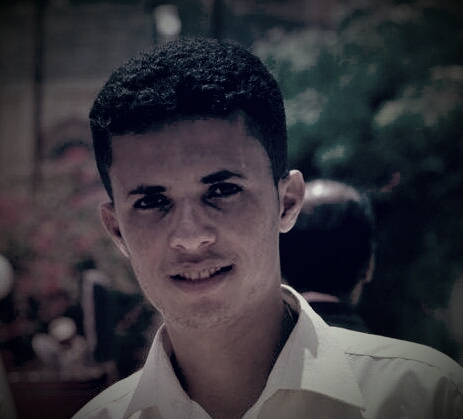
“We are the family of the martyr Mohammed Ali Mahdi… He was killed five years ago… and he was following up on the case of his homes.”
With this statement, Mohammed Mahdi’s sister spoke on social media platforms last October, confirming that the family still stands at the threshold of their house, demanding—above all—justice for their brother, who was killed while seeking to reclaim the family’s two homes located near the front lines. The case is complex and situated in an ambiguous context; the war was a direct cause of its emergence, and its continuation has further complicated and prolonged it.
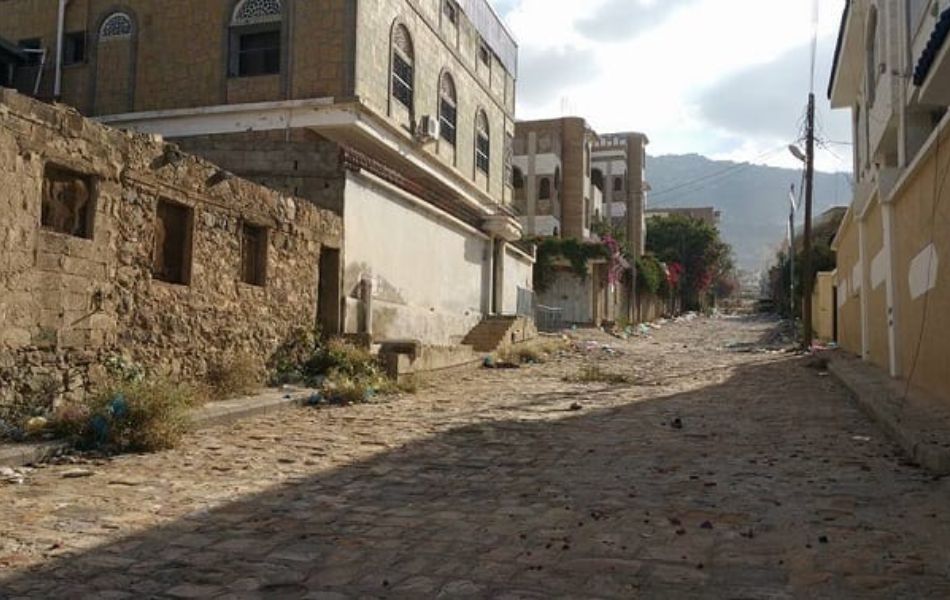
Since 2015, the city of Taiz has entered one of its harshest phases, when Houthi militia fighters and their allies from among supporters of the former president and his military formations stormed it. The city’s features changed rapidly: thousands of civilians were displaced, leaving behind their homes and apartments; private institutions closed their doors; and state institutions appeared shaken amid chaos, raids, and direct targeting.
As the war extended, Taiz—Yemen’s most densely populated governorate—became an open arena of operations. The destruction was not limited to shells falling on houses; the impact of war later extended to the very core of the right to housing and property. After nearly a decade, complex problems have emerged affecting hundreds of residential and public buildings, threatening social peace in a city that has yet to catch its breath.
The war has produced an extremely difficult reality. Buildings were used for various purposes: alternative military headquarters, housing for displaced persons and families of martyrs, residences for military families, sites subject to what is termed “military necessity,” or buildings that fell under the control of armed groups outside the framework of the state; some were destroyed. With continued security threats—particularly in areas near the front lines—military authorities refrained from evacuation under the pretext of protecting lives or meeting combat operation requirements. At the same time, weak enforcement of the law and complicated procedures—especially the requirement of formal complaints and the absence of decisive administrative decisions—have prolonged the crisis of buildings far from the front lines, such as those disputed among heirs or those benefiting influential figures.
A Faltering Government Response
In August 2018, Republican Decree No. (121) was issued forming a committee headed by Brigadier General Abdo Farhan Salem, advisor to the commander of the Taiz Military Axis, with the aim of normalizing life and handing over public and private facilities and buildings to their owners. The decision came amid a wave of assassinations in residential neighborhoods that had been under the control of armed groups operating outside the law and affiliated with the Abu al-Abbas brigades.
During the first eight months of 2017, 108 assassinations were recorded, according to the 2018 report “The Hidden Killer and the Declared Killer” issued by the Human Rights Rehabilitation Center (AHL), which concluded that the assassinations were systematic and targeted a single group united by its opposition to the Houthis and Saleh.
According to a presidential committee report reviewed by SAM Organization, 79 of the buildings that were handed over had been under the control of what were described as “outlaws,” including 28 government facilities and 51 private buildings used for sniping, meetings, and housing. Security statements indicated that these buildings had been subjected to extensive looting affecting furniture and infrastructure. Officers noted that reclaiming them came at a human cost but was considered necessary to restore state institutions, particularly in the Al-Ardi area adjacent to Al-Jahmaliyah in eastern Taiz.
A Community Initiative to Fill the Gap
The presidential committee did not resolve the building-related issues, amid limited resources and the ongoing war. As a result, problems continued to accumulate. In response, at the beginning of 2025 SAM Organization, in partnership with the Abductees Mothers Association, formed the Community Accord and Reconciliation Committee under the SPARK Peace Support Project, funded by the DT Institute, as a community-based framework seeking a different approach.
The committee included youth and women, social dignitaries, representatives of affected persons, civil society organizations, as well as legal and judicial experts, security personnel, and members of the military institution, allowing cases to be addressed from multiple angles. SAM adopted an investigative methodology that included field teams, digital verification, collection of ownership documents, interviews with owners, residents, and officers, and the creation of databases to catalogue cases.
The committee intervened in dozens of files through mediation and negotiation, especially in areas far from the contact lines, successfully resolving 30 cases while work continues on 33 others. It coordinated with local authorities, security and military bodies, and the presidential committee, contributing to the return of several homes to their owners. SAM also organized consultative hearings and workshops that gave victims space to present their suffering directly, creating moral and institutional pressure toward solutions.
The Displaced and the Influential
The difficulty in returning private buildings to their owners stems from a complex overlap between humanitarian considerations and legal rights. Evicting many homes would mean displacing families with no alternatives in a city suffering from severe overcrowding and a near-total absence of shelter centers.
In one session organized by SAM, Ali Qaed, representative of the Executive Unit for IDPs, said: “The city is overcrowded and densely populated, and there are no large areas of land to establish reception centers for the displaced… Within the city, it is difficult to obtain suitable places to create such centers.”
Despite the scale of the problem, neither the presidential committee nor the local authority provided fundamental housing solutions for dozens of displaced families, families of martyrs, and families of military personnel residing in government and private buildings. SAM documented the departure of 21 displaced families from several government buildings, as well as 24 families from a private building occupied by members of the military institution—reflecting partial evacuations without sustainable solutions.
On the Front Lines
Buildings near the contact lines remain the most dangerous, where security intersects with the right to life. SAM documented destroyed houses used for shelter, others vacant due to suspected affiliations of their owners, and buildings whose residents remained despite repeated targeting.
In the Bazra’a neighborhood, residents reported that a civil organization renovated some houses, while displaced families inhabited cracked buildings, creating tensions with military leaders. The neighborhood chief stated that permission to reside was granted with social guarantees despite the area’s danger, before disputes later erupted between owners and occupants. Colonel Waheeb Al-Houri recounted an incident in which a family was allowed to live in a house, only for their children to find an unexploded shell from war remnants that detonated, killing one of them.
Security concerns and the concept of “military necessity” continue to complicate the situation. Questions are raised about vacant homes whose owners are suspected of affiliation with the Houthis, and the absence of a clear mechanism creates a legal and security vacuum. In one case, a man who claimed to be a teacher was allowed to return to his home near the front lines, only for it later to be discovered that he had been an officer in the Republican Guard who joined the militia and had installed a surveillance camera overlooking the street, raising serious concerns.
The two villas of Mohammed Mahdi in Al-Noor City neighborhood are cited as falling within the scope of military necessity, near an air defense site. After returning from Saudi Arabia in 2020, Mohammed demanded their evacuation without success. On August 27, 2020, he was shot during a nighttime altercation with soldiers newly deployed to reinforce the front. Though he was transported to the hospital, he later died. The air defense front remains one of the most dangerous in Taiz, having witnessed a major attack in May 2021 that killed nine members of the national army.
Toward a Comprehensive Solution
SAM Organization for Rights and Freedoms concluded that violations related to buildings in Taiz stem primarily from the ongoing war, the absence of institutional frameworks regulating housing and military deployment in a city still resembling an open battlefield, and severe economic deterioration. These factors have undermined the right to housing and property and exposed civilians to grave risks, particularly near contact lines. The lack of clear definitions for “military necessity” and “security depth” has further weakened victims’ access to legal remedy.
Accordingly, the organization called on the relevant authorities to adopt urgent measures, including establishing a civil-military coordination mechanism to regulate housing arrangements with clear legal contracts, providing cash assistance and economic programs for affected families—especially displaced persons and families of martyrs—documenting property ownership, forming a neutral committee to verify complaints, providing safe housing alternatives for homes located along contact lines, and activating reconciliation and reparations mechanisms.
According to the conclusions of the consultative sessions organized by SAM, justice for victims begins with administrative decisions issued by state institutions that balance public interest with private rights. The results of the initiative implemented by SAM in partnership with the Abductees Mothers Association under the SPARK Peace Support Project, funded by the DT Institute, confirmed that engaging neutral civil society mediators facilitates practical solutions, reduces tensions, and gives victims a voice—making support for such roles essential to any sustainable resolution of building-related issues in Taiz.