

Geneva – 13 November 2026
SAM for Rights and Liberties said that continued attacks carried out by the Houthi group against civilians in Taiz Governorate, resulting in deaths and injuries on 12 and 13 November 2026, reveal a serious deterioration in civilian protection. These incidents coincide with reports of an attack on Kharaz Camp for African refugees in Lahj Governorate and new human rights reports documenting attacks on healthcare facilities and ambulances, as well as the mutilation of the bodies of the dead, against a backdrop of growing displacement and disruptions to humanitarian supply routes.
The organisation explained that, according to the latest field reports, Houthi sniper attacks and shelling killed three civilians and injured six others, including children and women, on Thursday and Friday, 12–13 November, in different areas of Al-Misrakh and Sabir Al-Mawadim districts in Taiz Governorate.
The incidents included the killing of Omar Ammar Mohammed Abdulghani, aged 12, by a sniper while he was herding sheep in Al-Jabali village, Sabir Al-Mawadim District, on 13 November, and Lamis Abdu Qaid, aged 26, who died after sustaining a head injury in Al-Aqroud. Four civilians were also injured that day, including women and a 17-year-old boy.
The previous day, Mansour Ghalib Al-Jaradi, aged 55, was killed and two other civilians were injured in Al-Misrakh District, including a 13-year-old boy struck by a sniper bullet that entered the right side of his chest and exited through his back.
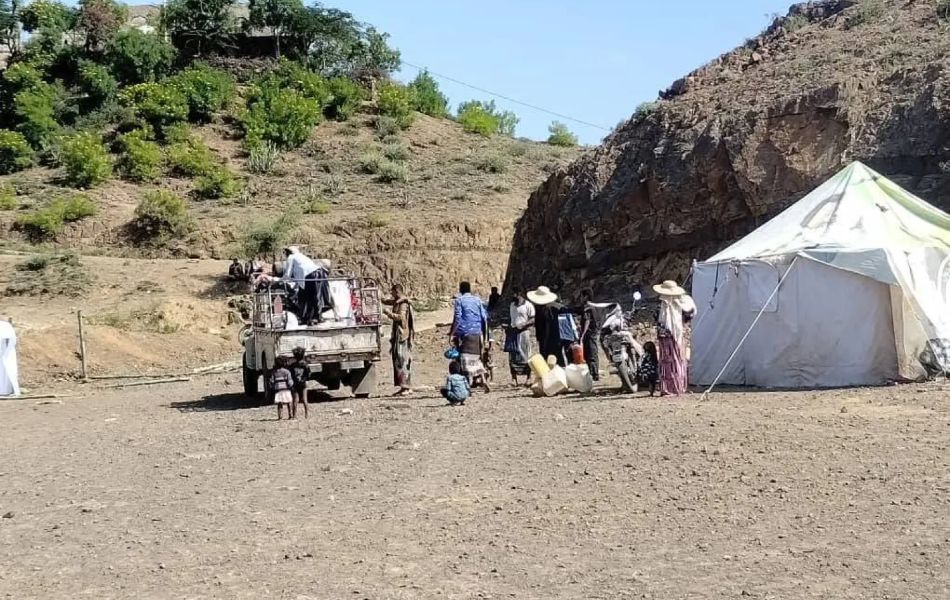
In another development raising grave concern, the organisation received preliminary information about the killing of a Somali woman and the injury of several migrants and refugees in shelling attributed to the Houthi group that struck Kharaz Camp for African refugees in Al-Mudharabah wa Al-Arah District, Lahj Governorate. The incident calls for an urgent investigation into the circumstances of the attack and measures to protect the camp’s residents.
The organisation warned of the rapidly deteriorating humanitarian situation following the International Organization for Migration’s announcement on 13 November that the number of people displaced by recent hostilities in Yemen had exceeded 340,000. The United Nations also confirmed the continued closure of vital routes into Taiz, damage to healthcare facilities, and disruptions to commercial and humanitarian supplies.
SAM stressed that continued attacks against civilians and medical facilities, alongside reports of attacks on refugees and the mutilation of bodies, amid growing displacement and declining access to food, medicine and shelter, require urgent action to protect civilians, conduct independent investigations, hold those responsible for violations accountable, and ensure unhindered humanitarian access.
This briefing draws on reports issued by the Taiz Siege Affairs Office on 12 and 13 November 2026, including its latest casualty update, published information concerning Kharaz Camp, two reports issued by the Human Rights Information and Training Center (HRITC), and updates from the United Nations, the International Organization for Migration, the World Health Organization and other humanitarian organisations included in the materials reviewed. The latest casualty figures have been distinguished from earlier reports to avoid double counting, while information that has not been fully verified remains attributed to its respective sources.
On Thursday, 12 November, civilians in Al-Misrakh District, southern Taiz Governorate, were targeted in sniper attacks in areas exposed to gunfire from Houthi positions. According to figures announced by the Taiz Siege Affairs Office, the incidents resulted in one death and two injuries.
In a statement published on Thursday evening, the Taiz Siege Affairs Office reported that Mansour Ghalib Al-Jaradi, aged 55, had been killed by Houthi sniper fire in the district.
The list of injured civilians also included Abdulazim Qasim Al-Jaradi, aged 50, who sustained an injury from sniper fire. The statement did not specify the location or severity of his injury.
In the same incident, or during other sniper attacks in the district that day, Mohammed Nabil Abdullah Ibrahim Ali, aged 13, was struck by a sniper bullet that entered the right side of his chest and exited through his back.
The nature of Mohammed’s injury raises concerns about his medical condition, given the severity of penetrating chest wounds and the possibility of damage to internal organs. Further information is needed to establish his condition and the medical care he has received.
On Friday, 13 November, Houthi sniper attacks and shelling continued against residential areas in Al-Misrakh and Sabir Al-Mawadim districts in Taiz Governorate, killing two civilians, including a child, and injuring four others, including three females and a 17-year-old boy.
According to the latest casualty update published by the Taiz Siege Affairs Office on Friday, 13 November, Houthi forces targeted civilians in Al-Damnah and Al-Dhanib villages in the Al-Aqroud area of Al-Misrakh District, as well as Al-Jabali village in Sabir Al-Mawadim District.
The first victim was Omar Ammar Mohammed Abdulghani, aged 12, from Al-Jabali village in Sabir Al-Mawadim District, who was shot dead by a sniper while herding sheep.
The second victim was Lamis Abdu Qaid, aged 26, from the Al-Aqroud area, who died after sustaining a head injury.
The latest update increased the death toll for 13 November from one to two, following the addition of Lamis to the list of fatalities.
The updated list of injured civilians included four people:
Haneen Taha Saeed Hizam, aged 17, from Al-Damnah village in Al-Misrakh District, was injured during the attacks. The published report did not specify the location or severity of her injuries.
Amina Abdulhakim Al-Saghir, aged 35, also from Al-Damnah village in Al-Misrakh District, was injured during the attacks. No further medical details were provided.
Amna Abdulhakim Qasim Mohammed, aged 38, from Al-Aqroud, sustained a gunshot wound to her left shoulder.
Badr Mohammed Hazaa Al-Hajj, aged 17, from Al-Aqroud, sustained a shrapnel injury to his head.
The latest update therefore increased the number of injured civilians recorded on 13 November from two to four, following the addition of Amna Abdulhakim Qasim Mohammed and Badr Mohammed Hazaa Al-Hajj.
The earlier reports concerning Haneen and Amina are included in this updated total and are not counted again.
Together with the one person killed and two injured on 12 November, the latest figures bring the documented toll in Taiz over the two days to three civilians killed and six injured.
In a serious development in which the dangers of hostilities extended to sites sheltering refugees and migrants, reports emerged that Kharaz Camp for African refugees, located in the Kharaz area of Al-Mudharabah wa Al-Arah District, Lahj Governorate, had been struck by shelling attributed to the Houthi group on Thursday, 12 November.
According to information published by journalist Fares Al-Hemiari on Thursday evening, the shelling killed a Somali woman and injured several people residing in the camp.
The reported death and injuries at Kharaz Camp are separate from the casualty figures recorded in Taiz Governorate. The number of injured people at the camp has not yet been specified in the available information.
On 12 November, the Human Rights Information and Training Center (HRITC) issued a human rights report documenting the alleged mutilation and desecration of at least 11 bodies belonging to members of government forces and the resistance in Taiz Governorate. According to the Center, the acts included the severing of limbs, chemical burns and the disfigurement of facial features.
The Center explained that eight bodies had been handed over to military and medical authorities through the International Committee of the Red Cross in October. Medical examinations revealed signs of abuse, including the use of corrosive chemicals, the breaking of limbs and the disfigurement of facial features, according to the Center’s account based on a report from the Military Hospital in Taiz.
In another human rights report, published by the Human Rights Information and Training Center on 10 November under the title “The Healthcare Sector in Taiz Under Houthi Attack,” the Center documented a series of attacks against healthcare facilities, ambulances and medical personnel between 3 September and 9 November 2026.
The report stated that the violations affected at least five hospitals and healthcare centres, including Al-Thawra General Hospital Authority, Al-Safwa Hospital, the health centre in Al-Arous on Jabal Sabir, a health centre in Al-Wazi’iyah, and another in Al-Mawasit.
It also reported that 15 ambulances had been looted or seized, along with medical equipment and supplies, reducing the capacity to transport patients and wounded people, particularly in besieged rural and mountainous areas where access to healthcare facilities is difficult.
In an update published by the United Nations on 12 November, the Office for the Coordination of Humanitarian Affairs (OCHA) warned of the continuing impact of hostilities on healthcare facilities in Yemen and the resulting disruption of life-saving medical services.
According to information provided by the World Health Organization and cited by the United Nations, Al-Saqiyah Health Centre in Lahj Governorate was destroyed by a ballistic missile on 1 November, resulting in deaths and injuries among healthcare workers.
UN health partners also reported that two healthcare facilities in Taiz city were damaged on 5 November, putting essential services for approximately 12,000 people at risk.
The United Nations stated that WHO had received reports indicating that 28 healthcare facilities and seven ambulances had been damaged or destroyed since the escalation began, while 13 healthcare workers had been killed or injured.
On 13 November, the International Organization for Migration (IOM) announced that the number of people forced to flee their homes because of ongoing hostilities and insecurity in Yemen had exceeded 340,000. The organisation warned that restrictions on vital transport routes threatened to further disrupt the delivery of life-saving assistance.
IOM explained that most displaced people originated from three governorates: Taiz, with approximately 224,819 people, accounting for 66 per cent of the total; Lahj, with approximately 72,018 people, or 21 per cent; and Al-Hudaydah, with approximately 40,782 people, or 12 per cent.
The eighteenth update of IOM’s Displacement Tracking Matrix, issued on 11 November, had recorded 333,125 newly displaced people, representing 55,514 households, between 1 August and 10 November.
The update showed that Taiz Governorate was hosting 141,096 displaced people, representing approximately 42 per cent of the total at that time, followed by Lahj with approximately 84,714 people, and Aden with approximately 66,792 people.
In a UN briefing on 12 November, OCHA confirmed that more than 333,000 people had been displaced since the beginning of August, including more than 24,000 during the preceding week alone, and that Taiz continued to host the largest number of displaced people.
The United Nations also warned of continued restrictions on the movement of goods and supplies into Taiz, noting that local authorities had reported that only a limited shipment of wheat flour, comprising approximately 400 bags, had been allowed through the previous day.
UN Deputy Spokesperson Farhan Haq reported that local authorities had described disruptions to commercial transport, shortages of goods and increasing market instability. There were also reports that local banks had imposed restrictions on cash withdrawals by individuals.
In its statement issued on 13 November, IOM warned that continued displacement and restrictions on humanitarian access were widening the gap between the needs of affected families and humanitarian organisations’ capacity to provide assistance.
Abdusattor Esoev, IOM Chief of Mission in Yemen, said that hundreds of thousands of families had been forced to leave everything behind, without knowing where they would sleep or how they would find food and water for their children. He warned that delays in assistance were further worsening the conditions of the most vulnerable households.
IOM reported that, in cooperation with local authorities, UN partners and local organisations, it had provided emergency assistance to 21,384 families since the beginning of August, including emergency shelter, essential household items, water, sanitation and hygiene services, and cash assistance.
The organisation had also provided protection services to 8,242 vulnerable people and delivered 70,535 primary healthcare consultations, amid increasing pressure on healthcare facilities.
The continued expansion of humanitarian needs highlights the importance of sustained funding and safe access, particularly as displacement increases and roads and essential services remain disrupted.
Regarding the impact of the escalation on people travelling through Yemen, IOM’s Flow Monitoring Registry dashboard for October 2026 recorded 12,177 incoming and outgoing migrant movements during the month, a decrease of approximately seven per cent compared with the 13,161 movements recorded in September.
IOM explained that the decline was partly linked to escalating hostilities along the West Coast, which disrupted boat movements and made it difficult for monitoring teams to collect information safely.
The organisation reported that most incoming migrants had departed from Djibouti and Somalia, and that 93 per cent of arrivals identified Saudi Arabia as their intended final destination.
It also recorded approximately 500 migrants leaving Yemen during October, of whom 55 per cent departed by boat towards Djibouti, while the remaining 45 per cent crossed the land border into Oman.
SAM for Rights and Liberties considers that the attacks reported in Taiz and Lahj governorates on 12 and 13 November raise serious concerns regarding compliance with international humanitarian law and obligations to protect civilians and persons not taking part in hostilities.
The killing of Omar Ammar Mohammed Abdulghani, aged 12, while herding sheep is particularly serious given the civilian nature of the activity he was carrying out when he was shot. The killing of Lamis Abdu Qaid, aged 26, following a head injury, and the killing of Mansour Ghalib Al-Jaradi, aged 55, further underscore the consequences of the continuing attacks on civilians.
The injury of a 13-year-old boy by a bullet that penetrated his chest, the injury of a 17-year-old boy by shrapnel to the head, and the injuries sustained by women and girls from gunfire and other attacks raise questions concerning the prohibition of direct attacks against civilians, the obligation to distinguish between civilians and combatants, and the requirement to take feasible precautions to avoid civilian harm.
The reported shelling of Kharaz refugee camp in Lahj Governorate requires an independent investigation to establish the origin of the projectile, the nature of the target and the circumstances surrounding the attack. SAM emphasises that civilian refugees and migrants are protected from attacks under the applicable rules, and that their presence in camps or humanitarian reception facilities does not diminish that protection. If deliberate attacks against civilians, or indiscriminate or disproportionate attacks, are established, criminal responsibility for serious violations of international humanitarian law may arise.
Regarding reports documenting the mutilation of bodies, the organisation emphasises that international humanitarian law requires respect for the dead and the preservation of the dignity of their remains, and prohibits acts involving the mutilation or desecration of bodies. This protection does not depend on the deceased person’s status or affiliation with any party to the conflict. Deliberate acts violating the dignity of the dead may constitute war crimes where the relevant legal elements are established, requiring independent forensic examinations and the determination of the circumstances and responsibility associated with each incident.
The reported attacks on hospitals, ambulances and healthcare personnel also raise serious concerns regarding the special protection afforded to medical facilities, medical transports and healthcare workers under international humanitarian law. The deliberate targeting of protected medical personnel or facilities may constitute a serious violation, depending on the circumstances and applicable legal requirements.
Restrictions imposed on roads and humanitarian supplies raise further legal and humanitarian concerns, particularly when they deprive civilians of food, fuel, medicines, water and essential services. International humanitarian law prohibits the use of starvation of civilians as a method of warfare, protects objects indispensable to their survival, and establishes obligations concerning the passage and facilitation of humanitarian relief under the applicable rules.
The increase in displacement to more than 340,000 people underscores the need to strengthen protection for populations fleeing hostilities, safeguard them against unlawful forced displacement, and ensure access to shelter, food, water, healthcare and protection services without discrimination, taking into account the particular needs of children, women, older people, persons with disabilities, refugees and migrants.
The organisation stresses that responsibility for serious violations is not necessarily limited to their direct perpetrators. It may extend to commanders who issued orders, supervised operations, or knew that violations were being committed but failed to take the necessary measures to prevent or punish them, where the legal requirements for individual or command responsibility are met. SAM also emphasises the need to protect witnesses, preserve evidence, and guarantee victims’ and their families’ rights to truth, justice and reparations.
SAM for Rights and Liberties strongly condemns the continuing Houthi attacks against civilians in Taiz Governorate, which resulted in three civilian deaths and six injuries on 12 and 13 November, including casualties among children, women and older people. It calls for an immediate end to attacks on civilians, residential neighbourhoods, villages and public roads involving sniper fire and explosive weapons.
The organisation calls for urgent and independent investigations into the killing of Omar Ammar Mohammed Abdulghani, Lamis Abdu Qaid and Mansour Ghalib Al-Jaradi, and the injuries sustained by Mohammed Nabil Abdullah Ibrahim Ali, Abdulazim Qasim Al-Jaradi, Haneen Taha Saeed Hizam, Amina Abdulhakim Al-Saghir, Amna Abdulhakim Qasim Mohammed and Badr Mohammed Hazaa Al-Hajj.
These investigations should establish the locations from which the shots or projectiles originated, identify those responsible, and preserve relevant medical, physical and digital evidence.
SAM calls for an independent investigation into the reported attack on Kharaz Camp for African refugees in Lahj Governorate, including verification of the Somali woman’s death, the number and identities of those injured, and their medical conditions. It also calls for the source of the shelling to be established, immediate protection to be provided to the camp’s residents, and measures to prevent further attacks.
The organisation further calls for independent investigations into the reported mutilation of bodies in Taiz, including forensic examinations, preservation of medical records and other evidence, protection for victims’ families and witnesses, and accountability for any violations established.
SAM also demands an end to attacks against healthcare facilities, ambulances and medical personnel, the restoration of medical equipment and vehicles that have been unlawfully seized, and protection for patients and wounded people requiring treatment and evacuation.
SAM demands that the Houthi group lift the siege and unlawful restrictions obstructing the movement of civilians, goods and humanitarian assistance into Taiz, and reopen vital routes for food, fuel, medicines, medical supplies and ambulances, ensuring that families can reach markets and essential services.
The organisation urges the United Nations and international donors to expand the humanitarian response for displaced people, refugees and migrants affected by the fighting, and provide urgent funding for shelter, water, food, healthcare, protection and cash assistance, prioritising the most vulnerable households.
SAM further calls for support to damaged healthcare facilities, the provision of fuel, oxygen, medicines and medical supplies, the restoration of suspended services, and access to appropriate care for wounded people, patients, premature infants and newborns.
The organisation stresses the importance of strengthening monitoring, documentation and independent investigation mechanisms, linking the humanitarian response to effective measures to protect civilians and prevent further violations, ensuring accountability for those responsible and providing justice and redress for victims and their families.