

Geneva – 22 November 2026
SAM Organization for Rights and Liberties is following with grave concern the continuing serious violations committed by the Houthi group against civilians in Yemen, amid ongoing attacks on residential areas, growing risks facing children, women, displaced people and health workers, increasingly severe restrictions on the movement of people and essential supplies, and deteriorating humanitarian and economic conditions.
Incidents and reports published in recent days reveal an escalation in the direct and indirect harm inflicted on civilians, with continued shelling and sniper attacks, assaults on ambulances, and the exposure of families fleeing conflict areas to killing, injury, disappearance and detention. These developments are accompanied by a worsening crisis in health care, food security and freedom of movement.
Recent information also reveals the expanding scope of Houthi interference in civilian life, including the introduction of new security measures at checkpoints, coercive interference in the administration of mosques and religious institutions, and the seizure of property, while the population's ability to access services essential for survival continues to decline.
This briefing presents incidents reported between 20 and 22 November 2026 and the humanitarian and human rights updates issued during that period, distinguishing between newly reported incidents and cumulative figures covering earlier periods.
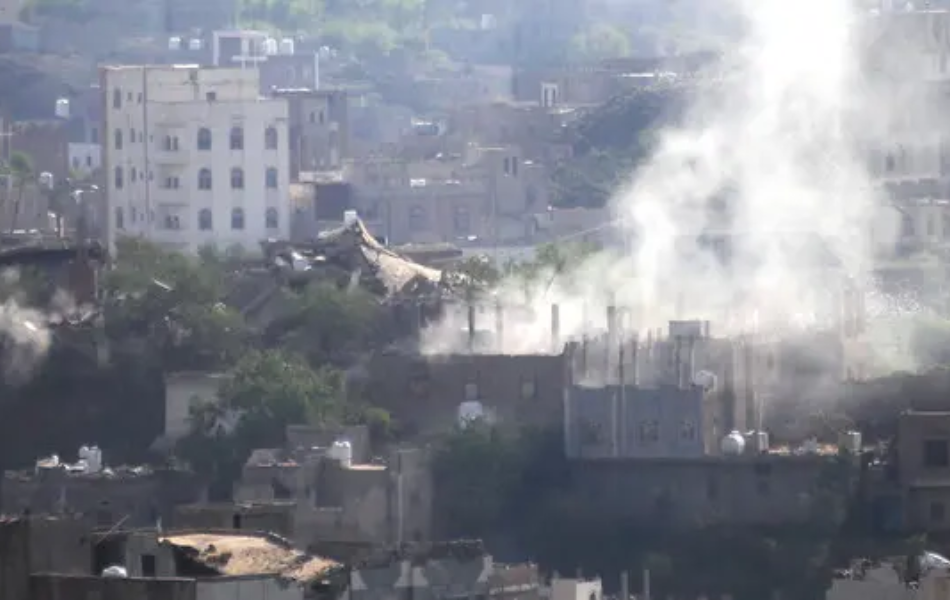
On Sunday, 22 November, the Taiz Siege Affairs Office announced that it had documented 227 civilian casualties resulting from shelling and sniper attacks carried out by the Houthi group against various residential villages and neighbourhoods across the governorate between 1 and 20 November.
The office stated that the toll comprised 80 civilians killed and 147 others injured over 20 days, indicating the continued loss of civilian lives in populated areas.
On 21 and 22 November, new reports emerged of five civilians killed, including three children and an ambulance crew member, and 20 others injured in separate incidents in Taiz and Aden. These incidents occurred after the period covered by the Siege Affairs Office's figures and are not included in its reported totals through 20 November.
On 21 November, the Taiz Siege Affairs Office reported that an ambulance crew member had been killed and six other people injured in Houthi shelling that struck an ambulance in the Al-Awat area of Sabir Al-Mawadim District, southern Taiz Governorate.
According to the report, the attack occurred while the ambulance crew was attempting to evacuate an injured civilian. One crew member was killed and others were injured, including the ambulance driver, who sustained a shrapnel wound to his face.
The vehicle also sustained partial structural damage, rendering it unable to continue providing medical services.
Al Hadath correspondent Taha Saleh confirmed the attack and the same casualty figures in a report published that evening, stating that the ambulance was carrying out a mission to evacuate an injured person when it came under shelling.
The published information did not identify the ambulance crew member who was killed or provide the names and ages of the six injured individuals. Nor did it specify the precise status of each injured person as a crew member or someone present in the vicinity of the vehicle.
Also on 21 November, the Siege Affairs Office documented the injury of Warda Abdulbaqi Ghanem (20), who was shot by snipers affiliated with the Houthi group while they were targeting Al-Qahf village in Al-Aqrud subdistrict, Al-Misrakh District, Taiz Governorate.
The report stated that the snipers were positioned on Jabal Al-Qarad Haysan, overlooking the targeted residential area.
The incident was corroborated by a report published by journalist Taha Saleh, which provided the victim's name, age and the location from which the shots were fired.
The available information did not specify the location of the injury on the victim's body or the medical treatment she received.
On 22 November, Al Hadath correspondent Taha Saleh reported that a 35-year-old woman had been killed in Al-Dhunaib village, Taiz Governorate, after being shot by snipers affiliated with the Houthi group who were positioned on Tabbat Al-Qasbaniyah.
The report did not identify the woman by name or provide further details about the circumstances in which she was targeted or the medical and emergency response that followed.
On the same day, the Siege Affairs Office announced that six civilians, including a girl, had been injured by Houthi shelling and sniper fire targeting several villages and areas in the Sabir districts of Taiz Governorate.
The office did not publish the injured persons' names, ages or details of their injuries, apart from confirming that a girl was among the victims.
Accordingly, reports published concerning Taiz on 21 and 22 November indicate that two civilians were killed, including an ambulance crew member, and 13 civilians were injured, including a girl, in separate incidents involving an attack on an ambulance, the shooting of a young woman, and shelling and sniper fire directed at residential areas.
In another incident on 22 November, Al Hadath correspondent Taha Saleh reported that three children had been killed and seven civilians injured in a drone attack attributed to the Houthi group targeting the Bir Ahmed area of Aden Governorate.
The preliminary report did not provide the names or ages of the three children, identify the seven injured civilians, or specify the nature of their injuries or the exact location of the attack.
This casualty toll remains based on the available journalistic report, pending detailed information from medical and other relevant authorities concerning the victims' identities and the circumstances of the attack.
An account published by Dhaneen Al-Hawshabi on 20 November revealed details of an assault attributed to the Houthi group against displaced families in the Khawr Umayrah area of Lahj Governorate while they were travelling to Aden in search of safety.
According to the information, a girl was killed and several family members, including children, were injured. Others were reported missing or detained in the Khaboub area, while some injured people were transferred to Al-Khokha Hospital, located in an area under the group's control.
The victims included Salim Ahmed Abdullah Thabet, who sustained an injury resulting in the amputation of one of his legs, and Asma Saleh Zaid, who was also injured and lost one of her legs in the incident.
Their son, Ahmed Salim (3), was reported missing, while the infant Maysu Salim (11 months) sustained minor injuries.
The incident resulted in the death of Lula Zain (3) and an injury to the leg of her sister, Raoud Zain (13).
The information also indicated that Aidarus Zain (one year and seven months old) had been taken to Al-Khokha with the injured, without specifying the nature of his condition or confirming that he had sustained a separate injury.
Khuloud Zain (9) was reportedly detained or trapped in Khaboub after falling into the hands of Houthi members, while Abdu Zain (4) was reportedly being held captive by the group in the same area.
The account indicated that Aref Zain was with his siblings in Al-Khokha and that Ibrahim Issa Ibrahim (17), Zain's nephew, had sustained a leg injury. The father and mother of the family were in Aden at the time the information was published.
The victims included Aseel Amin (3), who was injured, while Fatima Saleh Awad (19) was reported missing together with her nine-month-old daughter.
The account stated that the family's father was, and remained, in Aden.
The list also included Ali Saleh Zaid, who was reported to be injured and receiving medical care in Aden, and Sail Amin Abdullah and Kafi Ahmed Abdu, who survived the incident but, according to the account, remained detained by the Houthis in Khaboub.
The names provided indicate at least one girl killed and seven people explicitly identified as injured, including four children, in addition to three missing persons, including two children, and four people reported to be detained or in the group's custody, including two children.
The seven injuries do not include Aidarus, who was described as having been transported with the wounded without confirmation of a specific injury.
The account did not specify the exact date of the assault or provide definitive information about the missing persons' fate, the circumstances of detention or the identities of all the armed individuals involved.
The source indicated that photographs of the victims had been withheld out of concern that publication might expose those receiving treatment at Al-Khokha Hospital to additional risks.
A video report published by Al Jazeera Yemen on 22 November showed that severe shortages of fuel and medical supplies continued to affect hospitals in Taiz city amid restrictions imposed by the Houthi group on the entry of essential supplies needed to operate health facilities.
The report cited local authorities as saying that hospitals were approaching their 50th day without receiving the necessary medical supplies. The consequences of these shortages were not limited to dialysis units but also extended to operating theatres, intensive care units, incubators for premature and newborn infants, maternity departments and other essential services.
The report revealed that the medical oxygen generation plant at Al-Thawra Hospital, which previously produced approximately 100 oxygen cylinders before the latest military developments and tightened siege, was now unable to produce even half that quantity.
The plant was also no longer able to supply other health facilities with oxygen, having previously provided part of the requirements of the Yemeni-Swedish Hospital, which specializes in the care of children and newborns.
The report indicated that fuel shortages and the scarcity of medical supplies were weakening hospitals' ability to receive casualties resulting from clashes, shelling and sniper fire, depriving some patients of the medical care they needed.
In the same context, another Al Jazeera report published on 22 November addressed the worsening suffering of kidney failure patients in Taiz because of the siege and disruptions to dialysis services. The material provided did not include specific figures for the number of patients deprived of dialysis sessions.
In a video report published by Al Jazeera Yemen on 22 November, health workers in Taiz Governorate warned of the increasing spread of measles among children, alongside vaccine shortages and disrupted immunization campaigns resulting from the war and siege.
One speaker in the report stated that the Health Office had recorded more than 532 measles infections and four deaths since the beginning of August 2026 through the time of the report.
Health workers described the continued admission of patients despite limited resources and expressed growing concern that the disease would spread further because of disruptions to vaccination programmes and difficulties obtaining medicines and medical supplies.
The report also included accounts of the financial burdens borne by patients' families, amid complaints about the unavailability of some treatment supplies within health facilities and the need for families to search for them elsewhere.
These figures cover measles-related infections and deaths during the period specified by the source and are not included in the casualty toll resulting from shelling and sniper attacks.
In a report published on 22 November, the United Nations Population Fund (UNFPA) revealed growing risks facing pregnant women and newborns as a result of displacement associated with military operations in Taiz and along the western coast.
UNFPA estimated that more than 6,400 pregnant women were among the newly displaced, noting that at least 1,500 women might require emergency obstetric and newborn care to address potential complications.
It also estimated that approximately 600 displaced pregnant women would give birth during November alone, in conditions lacking basic health and medical infrastructure.
Citing International Organization for Migration data presented in the report, UNFPA stated that more than 320,000 people had been displaced since August 2026, including more than 80,000 during October alone, amid continued insecurity along the western coast and southern front lines in Taiz.
The Fund referred to widespread reports of sexual violence in affected areas, without providing a documented numerical toll for these incidents or details identifying the perpetrators in the published material.
At the national level, the report stated that more than 22 million people needed humanitarian assistance in Yemen in 2026, while 1.3 million pregnant and breastfeeding women were suffering from malnutrition. Fewer than two-thirds of health facilities were fully operational.
The report also noted that Yemen had one of the highest maternal mortality rates in the region, with three women dying every day from preventable pregnancy-related complications, while the ongoing escalation was intensifying existing health risks facing women and girls.
The report presented the testimony of Anisa Fadl, a midwife who was forced to flee her village in Taiz Governorate in early September after fighting spread to the area where she lived and worked.
Anisa explained that she fled hurriedly with other residents, without access to transportation, leaving behind her home and medical clinic. Both were subsequently looted and destroyed, including the theft of chairs, mattresses, medical equipment and examination beds.
Several years earlier, UNFPA had trained Anisa and provided her with basic medical equipment to establish a clinic offering maternal and newborn care in her local community. She lost the clinic during the military operations.
She recalled having to walk for three hours in the heat in search of safety, without transportation or safe drinking water. During the journey, she helped pregnant women, older women and children board a freight truck that happened to pass the group.
After reaching Aden, she resumed work just two days after being displaced. Despite severe shortages of medicines and medical supplies, she began providing delivery services, antenatal and postnatal examinations, guidance on breastfeeding, infant nutrition and hygiene, reproductive health care, psychosocial support and family planning.
The report also addressed the prevalence of early marriage and declining access to birth spacing and family planning services among affected women and girls.
The UNFPA report also documented the experience of Um Mohammed, who fled with her children from an area of fighting in Taiz while in the advanced stages of pregnancy.
According to her testimony, the family had to walk a considerable distance under shelling and the scorching sun, suffering from hunger, exhaustion and fear that she or her children might be injured.
After reaching a safer location and being welcomed by a host family, she went into labour within hours. The displaced midwife Anisa Fadl helped her deliver her baby without access to standard medical delivery equipment.
Um Mohammed explained that the midwife tied the umbilical cord using thread taken from a flour sack and cut it with a razor blade borrowed from a neighbour.
The newborn subsequently experienced breathing difficulties and required medical resuscitation. Both mother and child survived and were living in a displacement camp at the time of the report.
In a video published by UNICEF Yemen on 22 November, Zara Chitou spoke with her colleague Samar Al-Sahabi about the impact of renewed military operations on Yemeni children and families amid continuing displacement, deaths, injuries and disruption to health care and education.
Their discussion addressed children's need for protection and psychosocial support, as well as UNICEF's efforts to establish safe spaces offering a supportive environment for affected children, alongside child protection services.
The message emphasized that Yemeni children, after years of conflict, hunger and displacement, were facing additional risks as violence resumed, and that restoring safety and stability was an essential need for them and their families.
In information published on 21 November, journalist Fares Al-Humairi revealed that the Houthi group had introduced a fingerprint-based identification system at several security and military checkpoints established along main roads in rural districts of Taiz Governorate.
According to local sources cited by the journalist, the group was using the system to match residents' and travellers' identities against electronic databases, allowing checkpoint personnel to examine the personal information of people passing through.
The sources reported that at least three military personnel had been detained in the hours preceding publication after their information was matched against data allegedly seized by the group from the headquarters of the Tur Al-Bahah Military Axis and the Fourth Mountain Infantry Brigade.
The information also indicated that the group was using databases relating to certain formations affiliated with the National Resistance to verify the identities of travellers at Houthi checkpoints across Taiz.
The reports did not identify the detained military personnel or disclose their places of detention. Nor did they clarify the legal basis for the arrests or the measures in place to protect the personal data being collected and used.
On 20 November, journalist Ahmed Al-Shalafi published information concerning interventions carried out by the Houthi group in the administration of mosques and religious institutions in Al-Turbah city, parts of rural Taiz and the western coast between 1 and 15 November 2026.
The information included the removal of imams from Al-Sunnah, Ibn Taymiyyah and Al-Wafa mosques in Al-Turbah and their replacement with imams loyal to the group. It also referred to the group's assumption of control over Friday sermons at the Grand Mosque, while allowing the local imam to continue leading daily prayers.
Reports further described pressure on the imams of the Grand Mosque and Al-Tayyar Mosque to attend cultural courses organized by the group, the deployment of supervisors to monitor and direct sermons and religious activities, and threats to rename Ibn Taymiyyah Mosque as Imam Al-Hadi Mosque.
Regarding religious practices, the information indicated that the group had imposed the addition of the phrase Hayya ala Khayr Al-Amal ("Come to the best of deeds") to the call to prayer and replaced muezzins who refused to adopt the required formula.
These measures reportedly extended to Sam'e, Ash-Shamayatayn, Duba, As-Silu and Jabal Habashi, prompting local objections.
The reports also described the organization of near-daily lectures after the Maghrib prayer, the distribution of writings by Hussein Badr Al-Din Al-Houthi in mosques, villages and markets across the Al-Hujariyah area, and the incorporation of the group's political and ideological messages into sermons and religious lessons, particularly targeting young people and mosque attendees.
The account included information about a closed meeting held by the group with tribal sheikhs and community leaders inside the Grand Mosque in Al-Turbah on 11 November.
Participants were reportedly asked to encourage students to return to school, amid local concerns that they could be subjected to ideological mobilization activities.
The report also referred to requests for military personnel and former recruits to complete forms, pressure on local sheikhs to provide information about military personnel affiliated with government forces, and the use of certain mosques for organizational and mobilization meetings.
In Mawza District, reports described the raid and closure of a Quran memorization centre and the suspension of its educational activities.
Local accounts also reported that Al-Markaz Mosque in Ash-Shamayatayn District was raided on 11 November, with hundreds of books taken from its library, including works on Quranic interpretation, Hadith and the Prophet's biography, and subsequently burned.
In Al-Turbah city, information attributed to the Taiz Human Rights Center described the seizure of the Abdullah Al-Mubarak Complex, including its buildings and furnishings, the mosque, and its educational, health and social facilities.
The same source reported raids on approximately 40 homes in the residential village of Al-Kuwait in Al-Misrakh District, along with the seizure of facilities including a mosque, school, health centre and commercial premises.
According to the published information, some residents boycotted mosques whose imams had been replaced, while others objected to the imposition of new religious practices. There were also reports of security measures and arrests targeting individuals who opposed the group's activities.
These incidents relate to the period specified by the source, from 1 to 15 November, although their details were published on 20 November.
On 20 November, the Taiz Siege Affairs Office announced that tax revenue shortfalls and losses in the governorate had reached YER 1.025 billion during September and October 2026.
The office attributed these losses to military operations launched by the Houthi group against the governorate and the tightened siege imposed on Taiz city.
It stated that Houthi members had seized and looted several branches of the Tax Authority, forcing them to cease operations entirely and preventing staff from accessing their workplaces.
The affected facilities included the Tax Authority branches in Al-Mokha and Al-Turbah.
These figures demonstrate the damage inflicted on public revenue institutions in areas affected by military operations and the consequences for local authorities' ability to collect the resources required to maintain public services.
In a video published by the Siege Affairs Office on 21 November, Taiz residents described the difficulties they faced in securing basic necessities because of the continuing siege.
Their testimonies reflected the suffering of residents and displaced people resulting from shortages of household cooking gas, difficulties obtaining flour and food supplies, and restrictions on movement along closed roads.
One account directly referred to the obstruction of cooking gas, flour and humanitarian assistance, and described how some families had been forced to purchase food in small quantities because of limited income and rising prices.
The testimonies also addressed the use of firewood as an alternative to household cooking gas, placing additional burdens on families and affecting their health and living conditions.
The Food and Agriculture Organization's Yemen Market and Trade Bulletin for October 2026, issued on 21 November, documented the continued deterioration in Yemeni households' purchasing power as a result of renewed fighting, disrupted supply chains, rising transport and fuel costs, and humanitarian funding shortages.
The report stated that approximately 18.7 million people in Yemen, more than half the population, were experiencing acute food insecurity at Integrated Food Security Phase Classification (IPC) Phase 3 or above.
It noted that military operations that intensified in September around Taiz, along the western coast and in southern areas, together with the resulting displacement and disruption to roads and ports, had increased pressure on public services, trade and humanitarian access.
FAO data showed that flour and basmati rice prices in government-controlled areas had increased month-on-month by 7.4% and 6.3%, respectively, while sunflower oil prices rose by 3.3% and bean prices by 3.6%.
The cost of the Minimum Food Basket (MFB) also increased by 2% in the monthly comparison referenced in the report, standing 7% above its September 2025 level and 2% above the three-year average.
Meanwhile, the purchasing power of casual labour wages measured in terms of flour declined by 7.2% month-on-month and 23.1% year-on-year.
Casual labour wages in government-controlled areas fell by 0.4% on a monthly basis and remained 9.7% below their levels a year earlier, while agricultural wages increased slightly by 0.4%.
The report recorded a 1.5% decline in wheat and flour imports nationally, compared with a sharper 42.5% decline in imports through southern ports.
Recorded petrol and diesel imports also fell by 9.9%, although FAO noted that the absence of import records from some northern areas limited the ability to interpret the overall trend comprehensively.
Official diesel prices declined by 4.5% month-on-month, while petrol prices remained relatively stable. Nevertheless, fuel prices remained above their levels a year earlier and their three-year averages.
The report also noted a deterioration in the terms of trade for agricultural products and livestock measured against flour, despite monthly increases of 1.6% in goat prices and 2.4% in local sheep prices, which remained below their levels from the previous year.
These indicators concern the markets and trade flows covered by FAO's assessment and do not necessarily represent price changes within Taiz city alone.
SAM considers that the continued killing and injury of civilians through shelling, sniper fire and drone attacks in Taiz and Aden raise serious concerns about the Houthi group's compliance with the fundamental rules of international humanitarian law, particularly the principle of distinction between civilians and combatants, the prohibition of attacks against civilians and civilian objects, the principle of proportionality, and the obligation to take feasible precautions to avoid civilian harm.
The organization stresses that the killing of children in the Bir Ahmed attack, the killing of a woman by sniper fire in Al-Dhunaib village, and the injury of Warda Abdulbaqi Ghanem in Al-Qahf village require investigations to determine the firing positions, the nature of the targets and weapons used, and whether the rules protecting civilians were respected.
Deliberate attacks against civilians may constitute war crimes where the applicable legal elements are established.
The attack on the ambulance in Al-Awat is particularly serious, given reports that the shelling occurred while the crew was attempting to evacuate an injured civilian, resulting in the death of a crew member, injuries to six people and the ambulance being taken out of service.
Medical units, medical transport and health workers are protected under international humanitarian law, subject to the applicable legal conditions. Attacks against protected medical transport are prohibited.
SAM emphasizes that attacks exposing rescue teams to danger threaten not only health workers themselves but also undermine the community's capacity to evacuate wounded people, provide emergency care and save lives.
SAM considers that the assault attributed to the Houthis against displaced families in Khawr Umayrah, involving the death of a girl, injuries to children and adults, missing persons and detainees, including children, raises serious concerns about violations requiring an independent investigation.
The organization stresses that children are entitled to special protection during armed conflict and that parties to the conflict are obliged to protect civilians fleeing danger and refrain from exposing them to attacks, degrading treatment or unlawful deprivation of liberty.
It further emphasizes the need to establish the fate of missing persons, determine the whereabouts of detainees, investigate the legal circumstances of their detention, and guarantee their safety and communication with their families.
Reports concerning the use of biometric identification and seized databases at Houthi checkpoints raise serious concerns about the privacy of residents and travellers and the potential use of personal information for surveillance, discrimination and unlawful detention.
SAM stresses that identity verification procedures or restrictions on movement must not be used as a pretext for arbitrary arrest or targeting individuals because of their previous affiliations or personal information. The rights to liberty, security of person and privacy, together with applicable legal safeguards, must be respected.
SAM emphasizes that freedom of religion or belief includes the right of individuals and communities to practise their religion and manage their religious affairs without coercion or arbitrary interference.
Reports of the forced replacement of imams and muezzins, the use of mosques for political mobilization and intelligence gathering, raids on religious institutions, and the destruction of books raise concerns regarding freedom of religion or belief, freedom of expression, and cultural and educational rights.
These concerns do not relate to the legitimacy of any particular religious formula, but rather to the use of coercion, threats and armed control to impose it on residents and institutions.
The organization stresses that restrictions preventing medicines, fuel and oxygen from reaching Taiz hospitals, and the resulting deterioration in dialysis, surgical, intensive care, maternity and neonatal services, directly endanger the rights to life and health.
Parties to the conflict must respect and protect medical services, facilitate humanitarian relief operations in accordance with the applicable rules, and refrain from imposing unlawful restrictions that deprive civilians of necessary care.
SAM considers that continued restrictions on or obstruction of the entry of food, fuel and medical supplies, against the backdrop of UN warnings about worsening food insecurity, increase the risks facing Taiz residents, particularly children, pregnant women, patients and older persons.
Article 14 of Additional Protocol II to the Geneva Conventions prohibits starvation of civilians as a method of warfare, while international humanitarian law protects objects and materials indispensable to the survival of the civilian population.
The organization emphasizes the need to investigate the nature and consequences of restrictions imposed on the city and determine whether the practices attributed to the Houthi group constitute violations of these rules.
SAM stresses that responsibility for serious violations may extend to direct perpetrators, those who issue orders or plan the violations, and commanders whose responsibility is established under the applicable legal standards.
It emphasizes the importance of preserving medical, physical and digital evidence relating to the incidents, verifying the testimonies of victims and witnesses, determining the nature of the attacks and the means used, and ensuring that victims, detainees, witnesses and their families are protected from reprisals.
SAM Organization for Rights and Liberties condemns in the strongest terms the continuing Houthi violations against civilians. It stresses that ongoing shelling, sniper attacks, assaults on medical transport, and restrictions on the movement of people and supplies, amid deteriorating humanitarian conditions, require urgent and concrete measures to protect victims and prevent further violations.
The organization therefore calls for the following:
An immediate halt to attacks against civilians: The Houthi group must cease shelling, sniper attacks and other unlawful attacks against residential areas and civilian objects, and refrain from using methods of warfare that expose the population to dangers prohibited under international humanitarian law.
An investigation into the ambulance attack: An urgent and independent investigation must be launched into the shelling of the ambulance in Al-Awat on 21 November, identifying the ambulance crew member who was killed, the injured persons, the firing positions and those responsible for the attack, and ensuring accountability for anyone whose responsibility is established.
Investigations into the attacks of 22 November: Independent investigations must examine the killing of three children and the injuries sustained by seven civilians in Bir Ahmed, Aden; the killing of the 35-year-old woman in Al-Dhunaib village; the injuries to six civilians in the Sabir districts; and the injury of Warda Abdulbaqi Ghanem in Al-Misrakh. Victims must be guaranteed treatment, rehabilitation and reparations.
Protection of displaced people and clarification of the fate of missing persons and detainees: The incident in Khawr Umayrah, Lahj Governorate, must be investigated, and those responsible for the killing of Lula Zain and injuries to displaced family members identified. The fate of the child Ahmed Salim, Fatima Saleh Awad and her infant daughter must be established, along with the whereabouts of Khuloud Zain, Abdu Zain, Sail Amin Abdullah and Kafi Ahmed Abdu. Their safety must be guaranteed, and anyone detained without legal grounds must be released.
An end to arbitrary security restrictions at checkpoints: The Houthi group must cease any unlawful use of personal data and fingerprints to monitor or detain residents and travellers, disclose the fate of the three military personnel reportedly detained, guarantee the rights of all detainees and prevent their ill-treatment.
Protection of religious freedom and religious institutions: Coercive interference in mosque affairs must cease. The rights of worshippers, imams and muezzins to practise their religion must be respected. Places of worship must not be used for military mobilization or intelligence gathering. Reports of raids on religious facilities, confiscation and destruction of books, and seizure of institutional property must be investigated.
Lifting the siege on Taiz: Roads and access routes must be opened to civilians, commercial traffic and humanitarian relief without unlawful restrictions. The entry of food, fuel, household cooking gas, medicines and medical supplies must be guaranteed, and the population's essential needs must not be used as instruments of pressure or coercion.
Saving the health sector: Fuel, oxygen, medicines and medical supplies must urgently be provided to hospitals, and the continued operation of surgical theatres, intensive care units, neonatal incubators and dialysis units must be ensured. The movement of ambulances, health workers and patients must be protected.
Containing the measles outbreak: Urgent measures must be taken to resume immunization programmes, ensure the availability of vaccines and strengthen the capacity to diagnose and treat cases, prioritizing children in besieged areas and displacement sites.
Protecting pregnant women and newborns: The United Nations and donors must support emergency obstetric care, newborn care and reproductive health services in displacement sites, provide midwives and essential supplies for safe deliveries, and expand protection and psychosocial support services for women and girls.
Addressing food insecurity: The humanitarian response for the most vulnerable households in Taiz and other affected areas must be strengthened. Access to food assistance, water and fuel must be guaranteed, and livelihoods must be supported, particularly for families that have lost their sources of income because of military operations, displacement and the siege.
Ensuring accountability and justice: International and national human rights mechanisms must document and independently investigate violations, protect witnesses and victims, preserve evidence, hold those responsible for crimes and serious violations accountable, and guarantee the rights of victims to truth, justice and reparations.
SAM Organization for Rights and Liberties emphasizes that the figures announced by the Taiz Siege Affairs Office—80 civilians killed and 147 injured between 1 and 20 November—reflect a deeply alarming level of civilian casualties resulting from attacks attributed to the Houthi group.
Subsequent developments are particularly serious, with reports that five civilians were killed and 20 others injured in Taiz and Aden on 21 and 22 November, including three children killed in a drone attack and an ambulance crew member killed while attempting to rescue an injured person.
The humanitarian situation is further compounded by the reported assault on displaced families in Khawr Umayrah, involving the killing of a girl, serious injuries, missing persons and detentions, although the exact date of that incident remains unconfirmed.
At the same time, recent health and humanitarian reports reveal the declining capacity of hospitals to provide medical care and increasing risks facing pregnant women and newborns. More than 532 measles infections and four associated deaths have been recorded since early August, while more than 6,400 pregnant women are among the newly displaced.
The siege is also worsening economic and food security conditions, with tax revenue losses in Taiz exceeding one billion Yemeni rials during September and October, while the Food and Agriculture Organization warns that approximately 18.7 million people across Yemen are experiencing acute food insecurity.
SAM holds the Houthi group responsible for violations established to have been committed by its forces and for unlawful restrictions imposed on the movement of civilians and essential supplies in areas under its control.
The organization stresses that the continuation of these practices, despite mounting civilian casualties and repeated humanitarian warnings, demands effective international action that goes beyond verbal condemnation to ensure protection and accountability.
Ending attacks against civilians, lifting the siege on Taiz, protecting ambulances and medical facilities, establishing the fate of missing and detained children and other persons, ensuring access to food, medicines and water, and investigating crimes and violations and holding those responsible accountable are urgent legal and humanitarian obligations that cannot be delayed.