

Geneva – 25 November 2026
On 25 November each year, the world marks the International Day for the Elimination of Violence against Women, reaffirming its commitment to protect women and girls from all forms of violence, uphold their dignity and ensure their rights. The day is particularly significant in countries affected by armed conflict, where violence extends beyond direct attacks to threaten women’s lives and security, restrict their movement and deprive them of essential services.
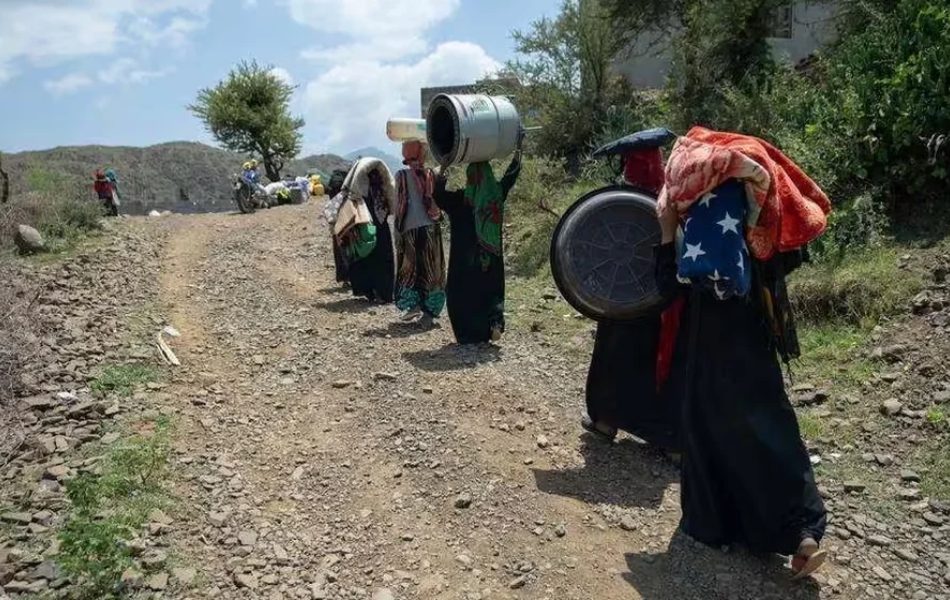
In Yemen, this year’s observance comes as women and girls in Taiz Governorate face the consequences of the latest military escalation by the Houthi group and the tightening of the siege imposed on the governorate. Since the escalation began in August 2026, shelling, sniper fire and restrictions on roads have endangered civilians and made it more difficult for women to access medical care, water, food and education. Some families have been forced to flee, while others remain in areas without safe means of protection or evacuation.
SAM for Rights and Liberties said the situation in Taiz illustrates how the effects of conflict and siege intersect. Women face danger in their homes and on roads, while collecting water or trying to reach a hospital. Many also bear the consequences of losing family members and livelihoods, alongside the burden of supporting and caring for their families as essential services deteriorate.
Killings and injuries: preliminary figures and documented incidents
A preliminary review of records through 24 November 2026 identified 30 records classified as deaths and 100 records classified as injuries among women and girls. These are entries in the register, not a final count of individually verified people. The records include possible duplication, variations in the spelling of names, and cases in which the classification does not match the injury description.
The recorded incidents were concentrated in Sabr al-Mawadim, particularly al-Shaqb, al-Najada and Kahlan; al-Masrah, including al-Aqroudh, al-Dimnah and Wutair; and Taiz city neighbourhoods, including al-Mudhaffar. Other recorded locations include Jabal Habashi, Hayfan, al-Mukha and al-Wazi’iyah. Several records do not specify a district and should not be assigned to a particular area until verified.
The records include the killing of Asia Abdulsamad in shelling, Taiba Abdulraqeeb by sniper fire in al-Shaqb, and Maya Maher in the shelling of her family’s home in Kahlan. The database also records the deaths of four girls and women from al-Khaz‘ah village in Hayfan District. Women and girls were also recorded as injured in Kahlan, al-Shaqb, al-Aqroudh, al-Najada and al-Dhabab, by sniper fire, shrapnel and gunfire.
On 6 October, Aisha Emad Darham, aged six and a person with a disability, was killed along with her grandparents when the family home in al-Sarm, al-Aqroudh, was shelled. On 19 October, Mushira Mohammed Qasim Ali al-Sabri was killed with her father when a shell struck their home in al-Adn village, al-Masrah District. That month, Raghad Jamil Saeed Abdu was killed by shrapnel in Sina’a neighbourhood, and Nadia Ali bin Ali Abdu Hassan was killed by Houthi sniper fire in Aqaqa, west of Taiz city.
On 1 November, Hayat Qaed Ali Mohammed, 35, and Layan Shaif Ali Abdu, eight, were killed, while Hanan Shaif Ali Abdu was injured, in a drone attack on the Old Airport area. On 3 November, Dina Mahmoud Ahmed Hammoud, 13, was injured by shrapnel in al-Aqroudh.
On 5 November, Badriya Mohammed Mahmoud Haidar, 40, was killed after being struck by shrapnel in Wutair, al-Masrah District. That day, Fatima Ali Hammadi, 70, sustained multiple shrapnel injuries, and Alya Mahmoud Saif Mohammed, 17, was injured by shrapnel to the face.
SAM also documented injuries to Asma Hassan Mohammed Salam, 35, and her two children, aged six and three and a half, when shelling struck near their home in al-Zahra as she went to collect water from a charitable distribution point. Muntaha Abdu Hizam, 35, was injured by sniper fire in al-Qahfah, and Ruqaya Abdulwahab Ahmed Mohammed Yahya, 55, was shot in the shoulder in al-Aqroudh.
The effects of attacks are not limited to direct injuries. On 16 November, Faikha Qasim Anam, 50, died after her family was unable to take her for medical care because of continued sniper fire against residential villages in al-Aqroudh. Her case illustrates how danger along roads and the inability to reach medical care can contribute to loss of life.
Kahlan and al-Shaqb: danger follows women inside villages and along roads
Women and girls in Kahlan and al-Shaqb face recurring risks from shelling and sniper fire, as well as difficulties travelling between homes, water sources, farmland and health facilities. Attacks on roads and ambulances increase the risk of injury and delay the transfer of wounded people to hospitals.
On 12 September, the Ministry of Human Rights reported that a pregnant woman and her fetus were killed in shelling in al-Shaqb. On 9 October, Dhikrayat Abdulwahid Ahmed Yahya was killed in shelling of villages in the area. Field accounts also reported the killing of a woman and injury to a girl in al-Shaqb, while continued attacks on the road to the village prevented their evacuation.
On 20 October, Taiba Abdulraqeeb Abdu Abdullah, 18, was killed by a gunshot to the chest in al-Shaqb. The ambulance transporting her was also attacked, killing its driver and injuring the accompanying doctor.
On 21 October, a shell struck a family home in Kahlan, killing Maya Maher Mahmoud Hazzaa and injuring six civilians. Those identified among the injured included Maria Adel Abdulghani Saad, 25, and Doaa Abdulkarim Saif Abd, 24, who sustained shrapnel injuries to the head; Nihal Mahmoud Hazzaa, 21, who sustained shrapnel injuries to her body; and Ilaf Bassam Mahmoud Hazzaa, a child injured in the face.
According to an urgent alert issued by SAM on 27 October, villages in Kahlan were struck by more than 200 rocket and artillery shells within 20 hours. This figure indicates the intensity of shelling over a short period and the danger faced by residents inside their homes, including women and children.
On 8 November, Safiya Abdu Saeed Ahmed, 51, and Samira Ahmed Mahyoub Mohammed Qahtan, 42, were injured when civilian vehicles came under fire in villages in al-Najada. On 17 November, Fawzia Sharaf Hammadi, 45, was shot in Kahlan. The girls Amal Mukhtar Hazzaa Ali Qasim, 12, and Lin Mukhtar Hazzaa Ali Qasim, seven, were also injured in an attack that killed their brother and injured another family member.
Women in both areas live with the fear of sniper fire and shelling. The danger restricts their access to food, water and medical care, while attempts to evacuate the wounded expose them to further risk.
Movement restrictions, searches and messages intended to spread fear
Restrictions on movement directly affect the lives of women and girls. They obstruct the movement of civilians and patients, delay ambulances, and restrict access to food, medicine, water, schools and health facilities. When roads are closed or exposed to shelling and sniper fire, families have fewer options for relocating to safer areas, while attempts to evacuate the wounded or obtain essential supplies become dangerous.
In a briefing published on 9 October, SAM cited a report that members of the Houthi-affiliated women’s units known as the Zainabiyat had arrived in western rural Taiz on 8 October, alongside reports of searches of homes and mobile phones. SAM was unable to independently verify the number of personnel involved or the number of homes and devices searched.
These reports raise serious concerns about the use of women in surveillance and search operations, and the resulting risks to residents’ privacy and personal security. They do not, by themselves, establish that specific individuals entered Taiz city to conduct espionage. SAM calls for the incidents to be investigated and for the nature of the operations and the responsible authorities to be established.
In its report “Messages Under Fire”, SAM documented 11 text messages retained by one family. The head of the household said that more than 30 messages had been received on his phone and his wife’s phone by mid-October. According to the report, the messages called on recipients to surrender or cooperate with the group and warned of destruction; they were received amid military escalation and shelling.
The report states that one message reached the wife on the evening of 16 October, while shelling could be heard around the city. She called her husband, asking where the family could go and whether the city would be destroyed. SAM said the content, timing and context of the messages raised concerns that they were being used to exert psychological pressure and spread fear among civilians. The organization’s assessment of responsibility was based on the combined indicators it reviewed, rather than the sender ID alone.
Landmines: a threat to women and family livelihoods
SAM has recorded reports of landmines and improvised explosive devices on rural roads and around villages, farmland and grazing areas in Taiz. These hazards threaten women and girls who rely on farming, herding, and collecting water and firewood. They also restrict movement and impede displaced families from returning to their homes and livelihoods.
An account shared with SAM by paramedic Jamil Abdullah Ismail described a woman from al-Shaqb who was injured in a landmine explosion and taken to al-Thawra Hospital. The paramedic said the ambulance was attacked by shelling as it returned to the area to transport the body, while residents, including women and children, had gathered nearby.
Field reports also documented the killing of Shuaib Ali Thabit, 12, in a mine explosion while he was herding livestock in Jabal Habashi, and the injury of Hadi Hael Awad Mohammed, 11, near his home in al-Ghullah, Mawza District. The latter incident resulted in the amputation of his right foot and left hand and an injury to his right eye.
Women bear additional responsibilities when family members are injured or disabled or lose their livelihoods. They may have to provide care and support their families amid limited access to treatment, rehabilitation, prosthetics and humanitarian assistance.
Denial of medical care and reproductive health services
The deterioration of health services directly affects women and girls, particularly pregnant and breastfeeding women, patients and older women, amid shortages of fuel, medicines and oxygen and difficulties in moving patients and medical teams.
On 17 November, the Governor of Taiz said that approximately 491,000 women of reproductive age had been affected in their access to reproductive health services, and that only 26 per cent had been able to benefit from them. According to this estimate, nearly three out of every four women in the stated group had not accessed the services. The Governor also said that more than 40,000 pregnant women faced difficulties accessing safe childbirth services.
Data cited by SAM estimated that more than 147,600 women and girls in Taiz city were unable to access reproductive health services. SAM’s report When Treatment Becomes Impossible also referred to more than 13,000 pregnant women unable to obtain basic health care. These are separate estimates and should not be added together because they differ in scope and source and may cover overlapping groups.
Health indicators cited by the organization included the disruption of reproductive health services in 74 health facilities, the complete closure of 120 facilities and the partial operation of 66 facilities, within the scope of the data cited in the briefings. The number of operational incubators at Al-Sabeen Hospital fell from 40 to 10, a decline of 75 per cent. Data from the World Health Organization, cited by the UN Office for the Coordination of Humanitarian Affairs, reported damage to 28 health facilities and seven ambulances.
These indicators should not be added together as if they measured the same thing: some concern service disruption, while others describe the status of facilities or equipment. Taken together, however, they show the declining ability of women to obtain treatment and safe childbirth services, increasing the risk of complications and preventable deaths.
Displacement, education, food and water
According to data from the UN Refugee Agency based on the International Organization for Migration’s Displacement Tracking Matrix, 353,279 people, representing 58,873 households, had been internally displaced since the escalation began, as of 16 November. The United Nations Population Fund reported that women and children made up more than half of those displaced, while women were the primary providers in approximately one-third of displaced households.
Displaced women, particularly pregnant and breastfeeding women, women supporting their families, women with disabilities and older women, face difficulties accessing safe shelter, health care, food, water and psychosocial support. The loss of housing and income and the breakdown of protection networks increase the risks of violence, exploitation and early marriage.
In education, the Ministry of Human Rights reported on 2 October that 243 schools had been disrupted, affecting the right to education of more than 140,000 students. Field reports also stated that 21 schools had been used for military purposes. These figures include students of all genders, but they also indicate the impact on girls, who face additional barriers related to unsafe travel, poverty and household responsibilities.
On 17 November, the Governor of Taiz said that available food stocks covered only 10 per cent of the population’s needs, that food, medicine and water supplies had fallen substantially, and that food prices had risen by approximately 60 per cent. The Public Health and Population Office recorded 2,738 measles cases and 26 deaths by the end of October, while approximately 347,000 children had been deprived of measles and rubella vaccinations.
Women and mothers bear a substantial share of the burden caused by shortages of food, water and fuel. They are often responsible for meeting their families’ needs and caring for sick people and children, and may have to travel along unsafe routes to collect water or reach medical care.
Legal responsibility and urgent demands
SAM for Rights and Liberties condemns violations attributed to the Houthi group against women, girls and civilians in Taiz. The organization calls for an end to attacks on residential neighbourhoods and villages and for the removal of restrictions preventing civilians, patients, humanitarian supplies and medical supplies from moving freely.
The organization states that attacks directed against civilians or civilian objects, indiscriminate or disproportionate attacks, attacks on ambulances and medical personnel, the use of starvation, and unlawful forced displacement may constitute serious violations of international humanitarian law and may amount to war crimes where the requisite legal elements are met. The Ottawa Convention prohibits the use of anti-personnel mines by States Parties.
SAM calls for an end to shelling, sniper fire and attacks on civilians; the opening of roads for patients, ambulances and aid; and the identification and clearance of mine-contaminated areas. It also calls for an end to arbitrary searches of homes and mobile phones, the use of communications networks to send threatening messages or pressure residents, and restrictions on freedom of movement and access to information.
The organization further calls for treatment, rehabilitation and psychosocial support for injured women and girls; access to reproductive health and safe childbirth services; protection for displaced women; and the reopening of schools and their removal from military use.
SAM calls for independent and effective investigations into the killing and injury of women and girls, attacks on ambulances, landmine use, deaths caused by the inability to access medical care, and reported searches and threats delivered through communications networks. Those responsible should be held accountable in accordance with the law. The organization also urges the United Nations and international actors to strengthen monitoring, protection and accountability, and to place the needs of women and girls at the centre of the humanitarian response and efforts to end the conflict.
On the International Day for the Elimination of Violence against Women, SAM stresses that protecting women in Taiz requires more than condemning abuses. It requires ending sniper fire and shelling, lifting restrictions on roads, ensuring access to medical care, water and food, and guaranteeing that women and girls can live, move, learn and receive care safely and with dignity.