

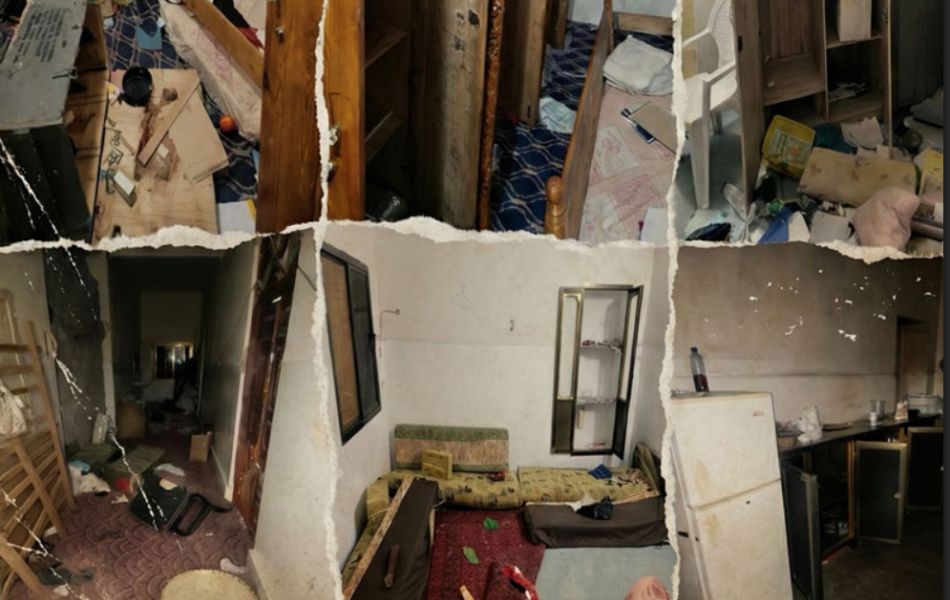
SAM Organization for Rights and Liberties stated that civilians in the city of Seiyun and Wadi Hadramout were subjected to serious violations of human rights and international humanitarian law between 3 and 15 December 2025. These violations were allegedly committed by armed forces believed to be affiliated with the Southern Transitional Council (STC), in the context of military movements carried out outside the framework of Yemen’s internationally recognized state institutions.
This statement is based on a detailed, attached human rights report prepared by the organization, titled “When Homes Are Seized and Displacement Begins: Testimonies of Civilians Who Fled Seiyun,” issued today, Sunday, 4 January 2026. The report documents nine cases of grave violations, based on direct field missions and face-to-face interviews with victims and their families.
According to the report, the violations included the forcible storming of civilian homes using armed force, forced evictions under threat, systematic looting of private property, and the conversion of civilian residences into military sites. They also included arbitrary arrest and enforced disappearance, as well as serious injuries resulting from direct gunfire against individuals in civilian status. These practices led to widespread internal displacement, particularly toward Marib Governorate, and left profound humanitarian and psychological impacts, especially on women and children.
Among the documented cases, the report records raids on civilian homes in the early hours of the morning using armored vehicles and military equipment, with entire families forced to leave their homes within minutes under threat of being shot, without being allowed to take personal documents or essential belongings. In other cases, individuals were detained at checkpoints while attempting to flee areas of tension in civilian clothing and without carrying weapons, before being taken to unknown locations. The fate of some of them remains unknown as of the date of the report’s preparation. These incidents were accompanied by the looting of vehicles and commercial shops, depriving families of their sole sources of livelihood.
SAM Organization emphasized that the documented incidents do not constitute isolated acts or individual misconduct, but rather reveal a systematic pattern of violations committed in the context of the exercise of effective control on the ground, accompanied by an almost complete absence of protection and accountability mechanisms. Priority in documentation was given to evidence based on direct observation and corroborated testimonies, in light of conflicting narratives and misinformation surrounding the events.
The organization stressed that the grave violations documented give rise not only to the responsibility of the direct perpetrators on the ground, but also extend to the potential criminal responsibility of the leadership of the Southern Transitional Council, as the authority exercising effective control over the forces involved and possessing the power to issue orders, prevent violations, or punish those responsible. Under the principles of international criminal law, particularly the doctrine of command and superior responsibility, military and political leaders may incur criminal liability if it is established that they knew, or should have known, of the commission of such crimes and failed to take the necessary measures to prevent them or hold perpetrators accountable.
The organization further noted that responsibility may also extend to the United Arab Emirates, as a state providing political and military support to the Southern Transitional Council, if it is established that such support—including funding, arms, training, or logistical assistance—made a substantial contribution to enabling the perpetrating forces to commit the documented violations, with knowledge of their nature or through willful disregard of clear risks. Under the Articles on Responsibility of States for Internationally Wrongful Acts adopted by the International Law Commission, a state that aids or assists in the commission of an internationally wrongful act bears responsibility if it is aware of the circumstances. Any subsequent withdrawal or official denial of involvement does not absolve it of such responsibility.
From a legal perspective, the report concludes that the documented acts may amount to war crimes, in particular the crime of pillage, serious violations of the prohibition of forced displacement, arbitrary detention, enforced disappearance, and ill-treatment, under the Geneva Conventions, the International Covenants on Human Rights, and the Rome Statute of the International Criminal Court.
SAM Organization called for the immediate cessation of all such violations, the unconditional release of all arbitrarily detained persons or the immediate disclosure of the fate of those forcibly disappeared, and the guarantee of civilians’ safe return to their homes or the provision of fair and effective compensation. It also demanded independent, transparent investigations extending to chains of command and support, leading to accountability and the prevention of impunity.
The organization urged the internationally recognized Yemeni government, the United Nations, and the international community to take urgent action to protect civilians in Wadi Hadramout, ensure respect for international humanitarian law and human rights, and prevent the normalization of violations under any political or security pretexts. It affirmed that the accompanying human rights report constitutes a comprehensive documentation reference and places before the international community a legal and moral responsibility to act urgently to protect civilians and secure justice for the victims.