

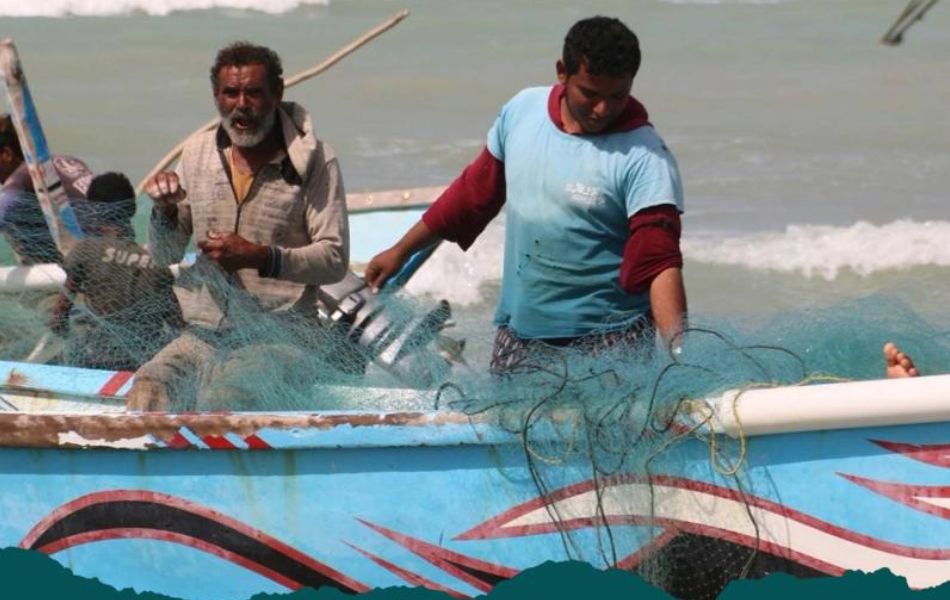
New Report Highlights the Harms Suffered by Yemen’s Fishing Communities and Their Calls for Reparations
Global Rights Compliance (GRC), together with Musaala Organization for Human Rights, the Yemeni Coalition for Monitoring Human Rights Violations (Ras’d Coalition), and SAM Organization for Rights and Liberties, has released a new report documenting the harms suffered by fishing communities along Yemen’s west coast and examining their needs, priorities, and preferences for reparations.
Read the StoryMap here: link
Based on 84 interviews with survivors, relatives of victims, and other stakeholders, as well as extensive open-source and field research conducted between 2024 and 2025, the report documents patterns of harm affecting fishermen and their communities and highlights the absence of meaningful mechanisms for accountability and redress.
Fishing communities play a vital role in supporting local economies and food security in Yemen. However, years of conflict and economic crisis have made fishing increasingly dangerous and undermined livelihoods across the country’s western coastline. The report finds that fishermen have been exposed to a range of harms, including airstrikes, landmines and explosive remnants of war, arbitrary detention, enforced disappearance, torture, ill-treatment, confiscation of boats and equipment.
The findings identify violations of international human rights law and international humanitarian law committed by multiple actors, including the Saudi/UAE-led coalition, the Houthis, the internationally recognised government of Yemen, and Eritrea. These violations have had severe and long-lasting physical, psychological, and socioeconomic consequences for affected individuals and communities, contributing to displacement, food insecurity, and the loss of livelihoods.
Despite the scale of these harms, the report found no evidence that victims have received reparations or meaningful recognition from those responsible. Existing mechanisms established to address civilian harm have largely failed to provide effective and transparent responses.
Interviewed fishermen consistently identified restitution and financial compensation as their primary reparative priorities, particularly to replace destroyed or confiscated boats and fishing equipment. They also highlighted the need for physical and mental health support, legal accountability, stronger protections for the fishing sector, educational opportunities for children, and measures to prevent future violations.
Many stressed that a lasting end to the conflict remains essential to any sustainable improvement in their circumstances.
The report concludes that continued documentation, monitoring, and engagement with affected communities are critical to advancing victims’ rights to truth, justice, and reparations. It also underscores the broader need to place victims at the centre of discussions on Yemen and to ensure meaningful pathways to accountability and redress for those affected by years of conflict and abuse.
Speaking together, Lina Baddour of GRC; Mutahar Al-Bathigi of the Ras’d Coalition; Mahdi Balghaith of Musaala; and Tawfik Saeed of SAM described:
“We hope that the project's findings and recommendations will contribute to raising greater awareness of the situation of fishermen and the violations they have endured, while placing this long-overlooked issue higher on national and international advocacy and accountability agendas. Ultimately, protecting fishermen's rights is not only about safeguarding their livelihoods; it is about recognizing their human dignity, ensuring their right to justice, and preventing their suffering from being forgotten or remaining beyond accountability. Every documented case represents another step towards uncovering the truth, recognizing victims, securing appropriate reparations, and advancing accountability and transitional justice in Yemen.”