

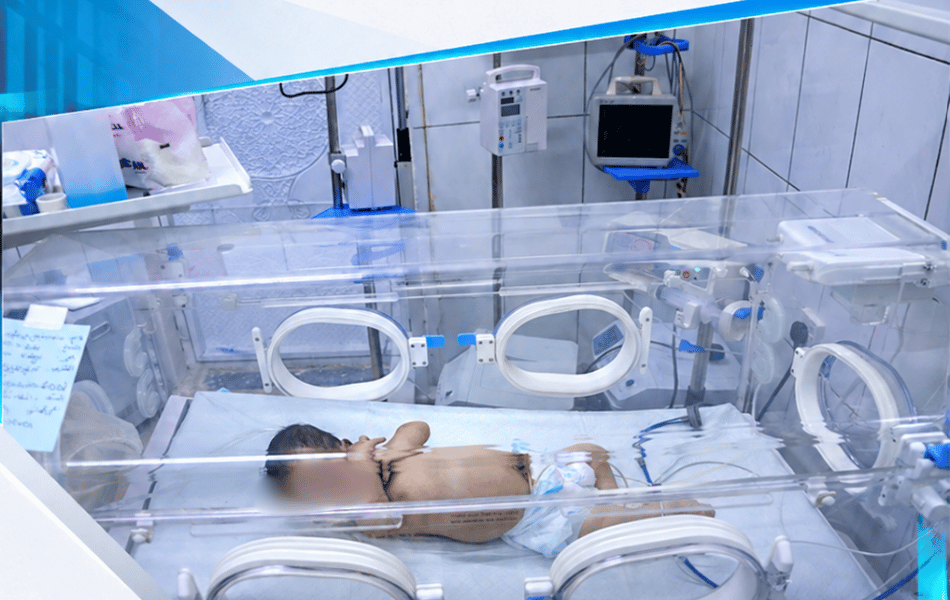
SAM launches its report, "When Treatment Becomes Impossible," examining the impact of the Houthi siege on the health of patients in Taiz. The report—the third release in the "Witness and Impact" series—documents the deterioration of healthcare services and severe shortages of fuel, oxygen, and medicine, while exposing the repercussions of road closures and attacks on patients’ lives, medical facilities, and ambulances.
SAM Organization for Rights and Liberties has released its human rights report, "When Treatment Becomes Impossible: The Impact of the Houthi Siege and Attacks on Healthcare and Patients’ Lives in Taiz," as the third edition in its "Witness and Impact: Mini Human Rights Files" series. Covering the period from August to November 2026, the report documents the humanitarian and health consequences of the siege imposed on Taiz by the Houthi group. It details how road closures and the obstruction of medical supplies and fuel—coinciding with attacks on health facilities and ambulances—have degraded therapeutic services and directly threatened patients’ lives, particularly those most in need of continuous and urgent medical care.
The report provides a detailed picture of the scale of deterioration across the health sector, drawing on testimonies from doctors, hospital officials, and patients, alongside verified health and humanitarian data. It also monitors the impact of the siege and military operations on the continued operation of health facilities and the population’s ability to access essential services. Furthermore, it presents quantitative and qualitative indicators revealing the widening gap between medical needs and available capacities, highlighting how restrictions on movement and supplies have become direct threats to the rights to health and life.
The report revealed that 120 health facilities have completely ceased operations, and 66 others are operating only partially in Houthi-controlled districts, while services at 12 hospitals and 18 health centers face the risk of disruption. It also recorded acute shortages of medical supplies at 42 health facilities, in addition to 98 health facilities operating partially or rendered out of service. These indicators cover different scopes and classifications and do not represent a single cumulative total.
According to the report, available fuel for health facilities covers only 5% of actual needs, while oxygen supplies do not exceed 2%, and medicines, medical supplies, and emergency equipment stand at 30%. This exposes hospitals to escalating risks regarding the shutdown of electrical generators, operating rooms, intensive care units (ICUs), neonatal incubators, ventilators, and oxygen production plants, alongside the disruption of cold chains for vaccines and medicines, and severe difficulties in transporting patients and emergency cases.
The report warned that the lives of 192 patients in intensive care units, 154 infants in incubators, and more than 1,100 kidney disease patients are at grave risk if supply disruptions persist. It estimated the monthly fuel requirement for the monitored health facilities and ambulances at over 156,000 liters, amid declining supplies that threaten the continuity of life-saving services.
Kidney Patients, Pregnant Women, and Children
The report documented the direct repercussions of the siege on kidney failure patients, noting that the Dialysis Center at Al-Thawra Hospital Authority receives more than 400 patients and conducts approximately 120 dialysis sessions daily, at a time when patients face growing obstacles in reaching the center and receiving regular treatment. It revealed that more than 30 patients from outside the city were unable to reach the center in recent weeks, while others were forced to stay near the hospital out of fear of missing their scheduled sessions. Meanwhile, the transit time for dialysis solutions arriving from Aden increased from one or two days to two or three weeks. The report also recorded a reduction in the duration of dialysis sessions for some patients at Al-Jumhouri Hospital from four hours to two and a half hours due to shortages of fuel and medical supplies.
Regarding maternal and newborn health, the report revealed that more than 13,100 pregnant women were unable to access basic healthcare, and essential reproductive health services were disrupted for more than 147,600 women and girls. It showed that only five out of 27 facilities designated for emergency obstetric and newborn care were operating partially, indicating a sharp decline in the capacity of services dedicated to mothers and children.
At the Yemeni-Swedish Hospital, the number of operational incubators dropped from 40 to just 10, and the average number of daily deliveries fell from about 10 to five amid shortages of fuel, oxygen, and medical supplies—compounding the risks facing premature infants, newborns, and cases requiring specialized care.
The report documented the case of a seven-month-old infant whose family was delayed by three days for a scheduled surgery due to difficulties reaching the hospital; his condition subsequently deteriorated, and he passed away after being admitted to intensive care. This incident underscores the dangers patients face due to delayed access to medical care, while noting that determining the direct medical cause of death requires reviewing the medical file and completing verification of the circumstances surrounding the case.
On the child health front, the report revealed more than 52,000 cases of acute malnutrition among over 168,000 children screened in Taiz during 2026. It also showed that 186,415 children under the age of five were affected by the deterioration of health services, with 5,057 cases of severe acute malnutrition and 27,752 cases of moderate acute malnutrition recorded, in addition to 9,454 infants being deprived of routine vaccinations. These indicators are based on different monitoring scopes and must not be aggregated as independent cases.
In a related context, the report documented 2,738 measles infections and 26 deaths in Taiz from the beginning of 2026 through the end of October, amid declining immunization and preventive care services. It warned that continued disruption of vaccination programs, coupled with deteriorating primary healthcare services, increases the likelihood of infectious disease outbreaks and exacerbates risks to children, particularly in areas where accessing health facilities or securing timely medicine and treatment is difficult.
Water and Waste Within the Health Crisis
The health repercussions of the siege were not limited to hospitals and patients, but extended to the water and public sanitation systems, further compounding health risks to the population. The report revealed that Taiz city’s daily water requirement is approximately 35,000 cubic meters, whereas available supplies prior to the recent escalation did not exceed 5,000 cubic meters per day—before additional sources and main wells broke down, widening the deficit in usable water supplies.
The report monitored that water pumping systems serving nearly three million people are at risk of shutting down due to the diesel crisis, coinciding with a threefold increase in the cost of trucked water. This has doubled the living burdens on families and restricted their ability to secure their basic water needs.
It also documented that restrictions on roads leading to landfills have caused waste to accumulate inside residential neighborhoods and flood channels, resulting in environmental health degradation and heightened risks of diseases linked to contaminated water, waste, and disease-carrying insects.
The report warned that the convergence of declining water supplies, disrupted sanitation services, weakened immunization programs, and degraded health facility capacities creates an environment conducive to disease outbreaks, heightening the health vulnerability of the population—particularly children, women, the elderly, and individuals with chronic illnesses.
Attacks on Facilities and Ambulances, and Accountability
The report documented a series of attacks and damages affecting health facilities and ambulances during the military operations witnessed in Taiz and other areas over the monitoring period, highlighting the threat these assaults pose to the lives of patients and health workers and to the continuity of medical services.
On November 2, the report documented an attack on the Al-Saqiyah Health Center in Al-Mudaraba district, Lahj governorate, attributed to the Houthi group, which resulted in the killing of five people and the injury of 15 others, including health workers. SAM emphasized the necessity of conducting an independent investigation to determine the nature of the attack, the impact site, the type of weapon used, and the party responsible for firing it, with the aim of establishing individual and command responsibility and holding perpetrators accountable.
In Taiz, the report documented the targeting of an ambulance in the Al-Shaqab area on October 20, killing its female driver and an injured 18-year-old girl, Taiba Abdulraqeeb, injuring an accompanying doctor, and destroying the vehicle. It also recorded the targeting of another ambulance in the Al-Awat area on October 28, putting it out of service, with ongoing verification still needed to confirm the final casualty toll in this incident.
At the national level, the report showed that 27 health facilities and seven ambulances were damaged or destroyed, and six health workers were killed since the onset of the military escalation in August 2026—signaling the expanding scope of dangers facing health facilities and medical personnel and the declining capacity of the health sector to respond to growing needs. This toll pertains to attack-related damages at the national level and is distinct from the indicators of service and facility shutdowns in Taiz.
SAM affirmed that the Houthi group bears responsibility for the siege imposed on Taiz, the closure of roads, and the obstruction of patient movement and medical and humanitarian supplies, as well as responsibility for attacks attributed to its forces once established by independent investigations. It stressed that attacks on civilians, medical facilities, ambulances, and health personnel, as well as the imposition of arbitrary restrictions on the access of aid and relief, may constitute grave violations of international humanitarian law and international human rights law, and that establishing criminal responsibility for individual incidents requires independent investigations based on verified evidence.
The organization called for the immediate lifting of restrictions on civilian movement and the opening of roads for patients, ambulances, humanitarian aid, fuel, and medicines; ensuring the protection of medical facilities and personnel; and securing regular and sufficient supplies of oxygen, fuel, dialysis solutions, surgical supplies, and essential medicines. It also urged the resumption of immunization and therapeutic nutrition programs, ensuring water access and the continuity of public sanitation services, conducting independent and transparent investigations into attacks on health facilities and ambulances, preserving evidence, establishing responsibility, holding perpetrators accountable, and ensuring redress for victims and their families.
SAM noted that the arrival of four trucks loaded with medical supplies in Taiz on November 4 represents an important step toward alleviating part of the urgent needs, but stressed that the delivery of limited aid does not mean the end of the siege or the resolution of its cumulative effects, nor can it serve as a substitute for guaranteeing a regular, safe, and sustainable flow of medical and humanitarian supplies, freedom of movement for patients and health workers, and the lifting of restrictions preventing the population from accessing life-saving healthcare.